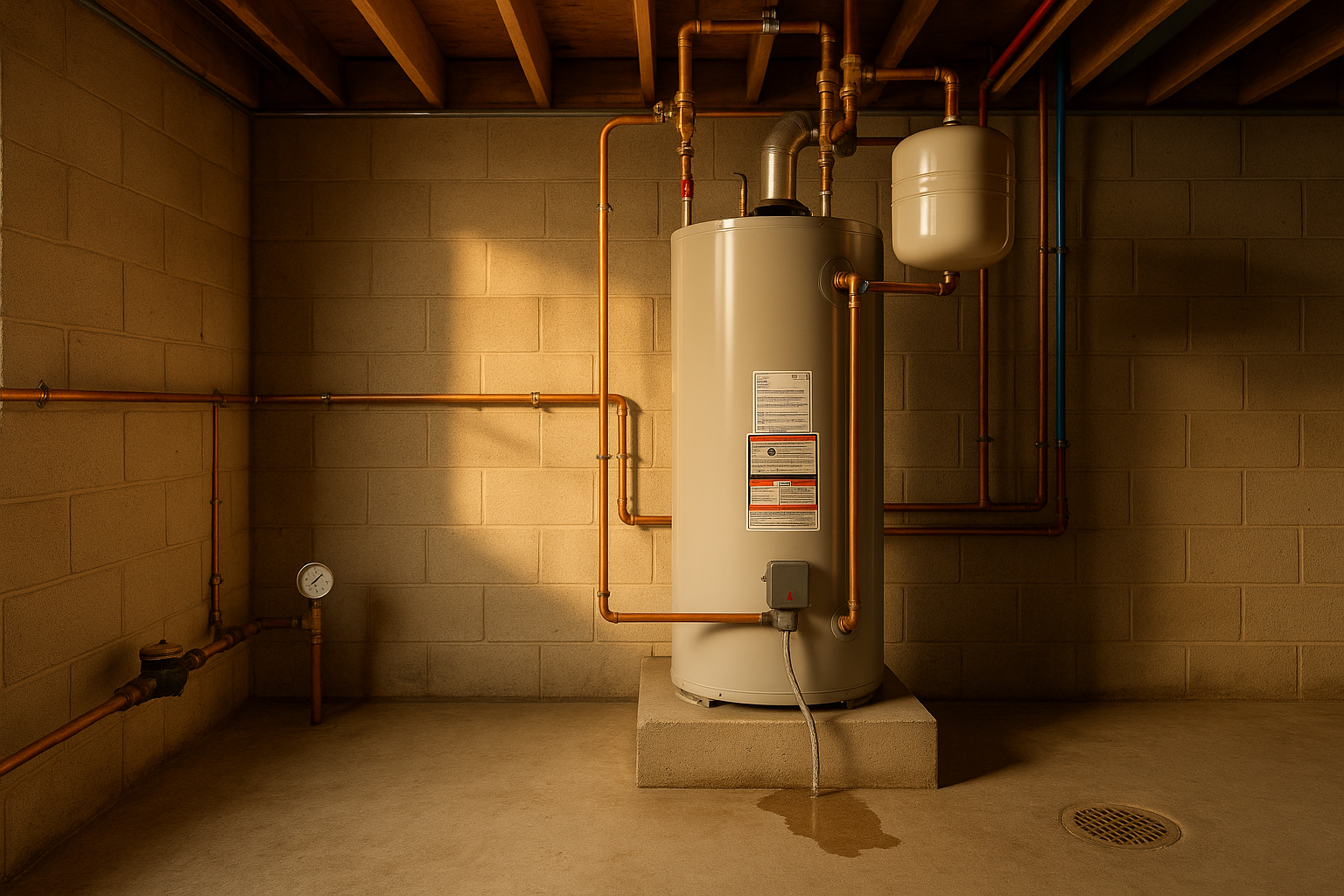
Last winter, my buddy Jake called me in a panic. His water heater's relief valve was dripping again—just enough to keep a small puddle on his Carmel basement floor. He'd replaced the valve twice in five years, and still, every time the kids took back-to-back showers, the little copper pipe spat water. 'What gives?' he asked. 'Do I need a whole new heater?' Turns out, Jake's problem wasn't the heater. It was a missing expansion tank. His house had a check valve on the water meter (pretty common around here), and that created a closed system. When the water heated up, it had nowhere to expand, so the pressure spiked and the T&P valve let it out. A $150 tank and an hour of work, and his puddle problem vanished. If this sounds familiar, keep reading.
What a Water Heater Expansion Tank Actually Does
Think of an expansion tank like a shock absorber for your plumbing. When water gets hot, it expands—by about 2.5% in volume from 50°F to 140°F. On an open system, that extra volume just pushes back into the city main. No big deal. But if you've got a check valve, a backflow preventer, or a pressure reducing valve (PRV) somewhere between your house and the street, you've got a closed system. That expanding water has to go somewhere. Without an expansion tank, it shoves against the walls of your water heater, your pipes, and any weak points like faucet seals or that T&P relief valve. The expansion tank is basically a little chamber with a rubber bladder inside—half air, half water—that gives that extra volume a place to go. Pressures stays steady, components last longer, and your basement floor stays dry.
Do You Really Need One in Indiana?
Short answer: if your home has a closed plumbing system, yes. And a lot of Indianapolis-area homes do. Many municipalities (including Indianapolis, Greenwood, and Fishers) require check valves or dual-check backflow preventers at the meter to protect the public water supply. If you've got a PRV because the street pressure is over 80 psi (not uncommon in older parts of Indy or Avon), that's another closed-system trigger. Even homes on private wells—we'll get to that—often have check valves that shut the door on thermal expansion. Indiana plumbing code (based on the IPC) says you need a way to control thermal expansion on a closed system. So if your builder didn't install one, it might have been an oversight or the system was open at the time. But things change—water utilities add check valves years later. A pressure test will tell you for sure.
Signs You Need an Expansion Tank (or Yours Has Failed)
Jake's dripping T&P valve is the classic clue. But there are others. Maybe you hear a sudden clunk or knock when the washing machine shuts off—that's water hammer, but thermal expansion can make it worse. Or your toilets randomly run for a few seconds when nobody flushed (pressure changes push water past the fill valve). Ever notice the kitchen faucet gets hard to turn on after a shower? That's pressure climbing. Other red flags: frequent pinhole leaks in copper pipes, water heater rumbling, or an expansion tank that feels heavy and full of water (tap it—if it sounds dull instead of hollow, it's waterlogged). Worst case? The T&P valve might not open when it should, and you're looking at a tank rupture. Yikes.
Sizing, Setup, and the Precharge Thing
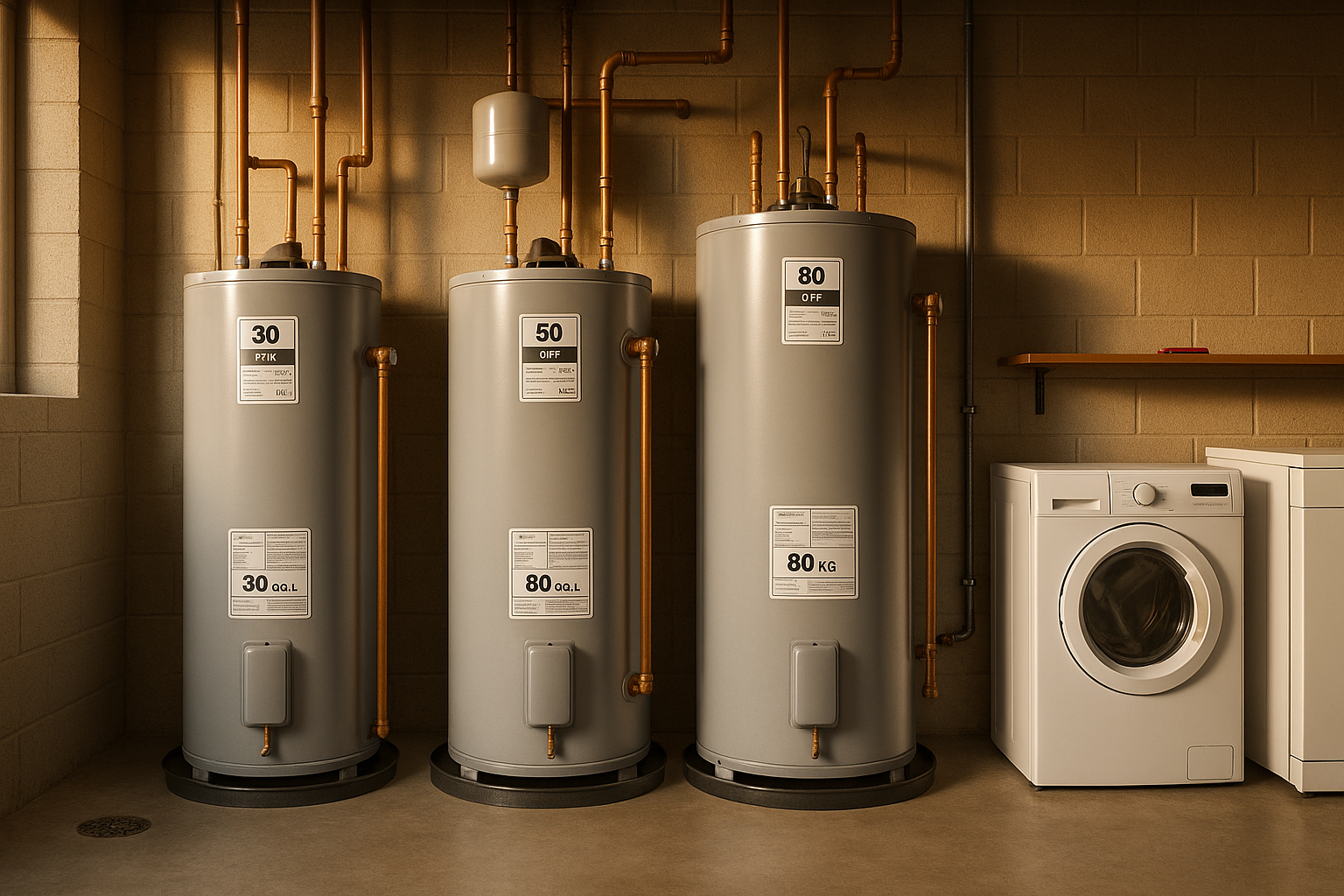
Picking the right expansion tank isn't rocket science, but it matters. The general rule: match the tank size to your water heater's gallons. For a standard 40- or 50-gallon heater, a 2-gallon expansion tank works in most Indy homes. Go up to a 75-gallon heater, you'll want a 4.5-gallon tank. But if your incoming water pressure is high (say, above 70 psi), you might need to bump up the size a notch. The trickier part is setting the precharge. That's the air pressure inside the tank's bladder, and it needs to match your house's static water pressure. We use a gauge on a hose bib, measure it, then pump up the tank's Schrader valve (same as a bike tire) to the same number. Skip this step, and the tank can't do its job right. Installation is pretty straightforward: we mount it on the cold-water line near the water heater, with a bracket supporting the tank's weight, a shut-off valve, and a fitting that allows us to isolate it for service. Copper, PEX, or a mix—we adapt to what you've got.
Where It Goes and How Long It Lasts
You'll usually spot the expansion tank up above or right beside the heater, hanging vertically or slightly angled. Orientation matters a bit: some manufacturers want it pointing up or down, but the key is that the connection faces the water supply so air doesn't get trapped. In a typical Midwestern basement with low headroom, we often mount it horizontally along a joist. It doesn't affect hot water capacity—just sits there quietly doing pressure math. Lifespan? In central Indiana, with our hard water (12–20 grains per gallon is common in Noblesville and Westfield), the bladder inside takes a beating from mineral buildup and pressure cycles. Most last 5–10 years. When we replace a water heater, we usually recommend swapping the expansion tank at the same time—the rubber bladder ages right along with the heater. An annual pressure check and a tap test will let you know when it's time.
Water Softeners, Wells, Septic, and Drains—How They Connect
A lot of our customers have water softeners because, well, Central Indiana water is practically crunchy. But a softener doesn't solve thermal expansion; it just removes minerals. Actually, if you have a softener and a closed system, the expansion tank becomes even more important because softened water is a bit more aggressive and can speed up valve wear. If you're on a private well—pretty common in Zionsville or Brownsburg—you almost certainly have a check valve inline to keep the pump from backflowing. That means your well system is closed from the start, so an expansion tank is a must. And if your home is on a septic system, every extra drop of water that goes out that T&P valve ends up in your drain field. Over time, that can add to the hydraulic load and shorten the life of your leach field, especially in heavy clay soils like we have around here. Making sure the expansion tank is right keeps that unnecessary water out of the septic. Same goes for floor drains: if your T&P discharge pipe empties into a floor drain (common in Greenwood basements), a constantly dripping valve means you're sending extra water into the drain system for no reason. We'll often tie in a little observation port or route the drain line to a spot where you'd notice a drip, just so problems don't hide.
Tankless Heaters and Other Wrinkles
Yes, even a tankless water heater can need an expansion tank if you've got a recirculation loop, a buffer storage tank, or just a closed system and a large enough hot-water demand. The pressure spike happens no matter how you heat the water. And if your Northside home has a fancy whole-house water filter or a backflow valve on an irrigation system (common in Fishers and Carmel), you've created a closed loop. Skipping the expansion tank might void your water heater's warranty—most manufacturers spell it out: no thermal expansion control on a closed system, and you're on your own for repairs. It's also worth knowing that an expansion tank won't fix water hammer banging. That's a separate issue needing water hammer arrestors. But if you've got both problems (and many homes do), we can address them together.
What WaterPros Actually Does When We Show Up
We don't just sell you a tank. We start with a quick pressure test—checking static and dynamic pressure, verifying if your system is closed—and then we size the right expansion tank for your setup. We'll look at your water heater's age, the water quality, and whether you've got a softener or other gear in line. If the tank needs replacing, we do it clean: proper bracketing, isolation valve, dielectric unions where needed, and a Schrader cap that actually stays on. We'll check the precharge before we leave and show you the pressure reading. No mess, no surprises. If you're in Indianapolis, Westfield, or Avon and you're seeing drips or just planning a water heater replacement, grab a quote right here and we'll come out for that pressure check. Easy.
Some Natural CTA Text
If your water heater's acting up or you're just doing your homework before a replacement, getting the expansion tank right is one of those small, code-required details that saves you from big headaches. We can drop by, measure your pressure, and tell you exactly what you need. No pressure to buy—just an honest look. Schedule a pressure test and quote here.
More from Our Blog
- Gas Water Heater vs. Electric in Indiana
- Water Softener Salt vs. Potassium in Indiana
- Low Water Pressure Causes & Fixes in Avon
- New Well Drilling Cost in Hamilton County
- Septic Tank Pumping Frequency in Indiana
Need a plumber you can call back?
Licensed Indiana plumbers, flat-rate pricing, and a written warranty on every job.