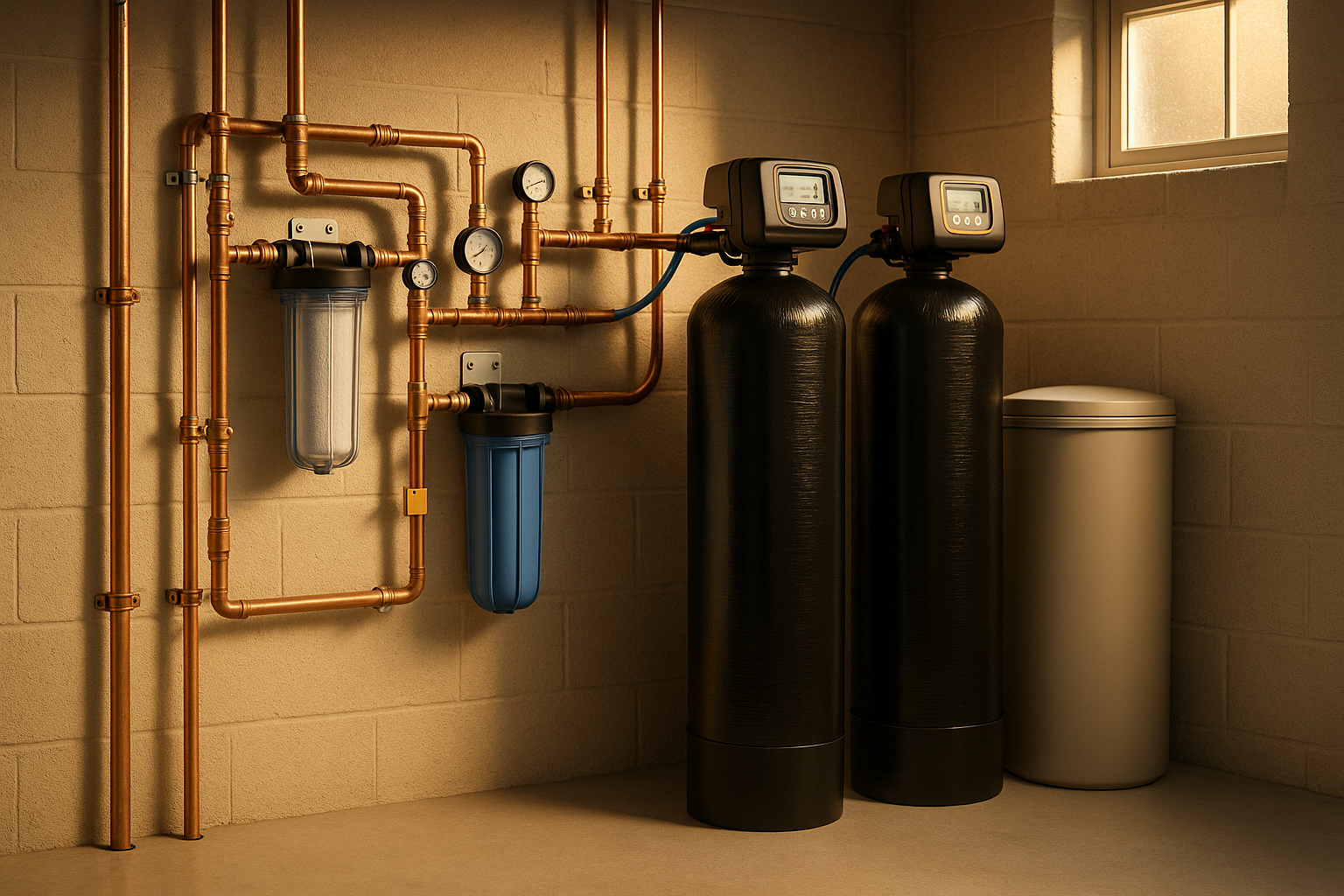
Indianapolis water is reliable, but it isn’t one‑size‑fits‑all. From chloramine taste and odor on city water to iron and hardness on private wells, the right solution protects fixtures, improves taste at every tap, and preserves pressure. WaterPros plans and installs whole‑home filtration systems built specifically for Central Indiana conditions, with clear scopes, premium materials, and craftsmanship you can see.
Why Indianapolis Homes Choose WaterPros
- Built for local water: Citizens Energy Group supplies much of Indy from the White River, Fall Creek, and groundwater wells. Municipal water commonly uses chloramine—best addressed with catalytic carbon.
- Real hardness here is often 12–20 grains per gallon. We verify at the visit and size softeners and filters to match your home’s usage.
- Older neighborhoods like Meridian‑Kessler, Irvington, and Broad Ripple can have legacy plumbing. Lead risk varies by home; testing and targeted filtration matter.
- Surrounding communities (Carmel, Fishers, Zionsville, Greenwood, Avon, New Palestine) include both municipal and private‑well homes with different needs—from iron and manganese to sulfur.
If you’re comparing options for water filtration Indianapolis homeowners trust, WaterPros brings a planning‑first process and a clean, code‑conscious installation that respects your home and schedule.
Built for Local Water: What We Test and Solve
We begin with a quick, in‑home water test and a usage audit. Typical Indy‑area goals include: - Limescale reduction to protect glass, fixtures, and appliances - Chloramine, chlorine, and taste/odor improvement - Iron and manganese staining control for private wells - Sediment capture to protect downstream valves and cartridges - PFAS and lead risk mitigation via appropriate technologies - Microbiological protection for wells when needed
Right‑sized systems are matched to your home’s flow rate (gpm), pipe size, and number of fixtures so showers stay strong and modern faucets perform as expected.
Systems We Design and Install
Sediment Prefilter
A first‑stage sediment and carbon filter system prevents sand, rust, and fine particles from reaching valves and appliances. We specify accessible housings with pressure gauges where appropriate for visual performance checks.
Catalytic Carbon (with KDF as needed) for Chloramine
Indianapolis municipal water typically uses chloramine. Catalytic carbon excels at reducing chloramine and improving taste and odor. We size media volume and contact time to your flow and include service life expectations up front. KDF can be paired for added chlorine/chloramine support and heavy‑metal adsorption in specific cases.
Water Softener for Hardness
Hard water drives limescale. A right‑sized softener reduces spotting, protects glass and fixtures, and helps water heaters operate efficiently. We set salt‑saving regeneration profiles based on your actual hardness and usage to balance performance and efficiency.
Iron/Manganese Filtration for Wells
For private wells around Marion, Hamilton, Hendricks, Hancock, and Johnson counties, we tailor iron and manganese filtration—often with air‑injection oxidizing media or specialty resin—based on onsite testing and confirmed water chemistry.
UV Water Purification (Mainly for Wells)
Ultraviolet disinfection is an excellent final barrier for private wells where microbiological protection is desired. We ensure proper prefiltration, target UVT, and lamp access for service.
Reverse Osmosis at the Kitchen
For the cleanest drinking water, a point‑of‑use reverse osmosis (RO) system pairs perfectly with a whole‑home filter/softener. RO targets dissolved contaminants—including PFAS and lead at the tap—while the whole‑home system handles hardness, taste/odor, and sediment everywhere else.
Our Planning‑First Process
1) In‑home water test and usage audit: We check hardness, iron/manganese (as needed), and discuss taste/odor concerns. We review fixture count, simultaneous‑use patterns, and future projects like bathroom remodels or a finished basement.
2) Plumbing review: We confirm pipe size, valve condition, drain availability, and electrical/space requirements. We look for potential pressure or flow bottlenecks.
3) Right‑sizing and options: We model expected flow (e.g., 8–15 gpm for many 2–3 bath homes; higher for larger homes) and specify tank/media sizes, valve type, and bypass arrangement to preserve pressure.
4) Clear scope and quote: You’ll receive a written plan including equipment and media details (NSF/ANSI–relevant certifications such as 42/53/401/55 where applicable), install notes, maintenance intervals, and ownership costs.
5) Tidy, code‑conscious install: We protect floors, route piping neatly, label bypasses and shutoffs, and commission the system with post‑install verification for hardness reduction and carbon performance.
Installation Craftsmanship and Code Considerations
- Neat piping runs with accessible filter housings and isolated shutoffs
- Proper drain connection with a visible air gap and attention to backflow prevention
- Pressure management if static pressure is high; we can incorporate PRVs as needed
- Corrosion‑resistant valves and unions for future service
- Labeled bypasses so you can switch to raw water if ever required
- Basement, utility room, or garage installs with freeze protection where needed
Typical installation takes half a day, with water off for 30–90 minutes depending on complexity. We coordinate to minimize downtime and clean up before we leave.
Clear Scope, Maintenance, and Ownership Costs
- Filter/media lifespan: Sediment cartridges may be 6–12 months depending on water; catalytic carbon media commonly 5–10 years (usage dependent); softener resin often much longer with proper pretreatment.
- Salt optimization: We program efficient regeneration based on tested hardness and actual usage. We’ll show you how to monitor the brine tank and set reminders.
- Verification and reminders: After startup, we verify hardness reduction and check pressure/flow. We can send maintenance reminders and return for scheduled service.
- Total cost of ownership: Your proposal outlines equipment, install, expected media changes, and service visits over 3–5 years so you can compare options clearly.
Common Questions
Do I need a whole‑house filter, a softener, or both?
City homes most often combine catalytic carbon (for chloramine and taste/odor) with a softener (for hardness). Wells may add iron/manganese filtration and UV. We design to your test results and usage.
Will a carbon filter remove chloramine used in Indianapolis municipal water?
Yes—when it’s catalytic carbon properly sized for your flow. We specify media volume and expected service life to align with your household demand.
Can you reduce PFAS and lead at the whole‑house level or only at a drinking tap?
RO at the kitchen is highly effective for PFAS and lead at the tap. Whole‑home PFAS reduction can be addressed with large‑capacity carbon or specialty media; for lead that originates in premise plumbing, point‑of‑use is often the most reliable approach. We’ll explain the tradeoffs.
How do you size a system without hurting pressure?
We match valve size, tank/media volume, and bypass diameter to your pipe size and peak flow (gpm). The goal is appropriate contact time and minimal pressure drop during simultaneous showers.
What maintenance is required?
Sediment cartridges are typically replaced 1–2 times per year; catalytic carbon media is replaced based on water usage and quality; softeners need periodic salt refills and occasional resin care. Your plan includes intervals and estimated costs.
Is UV necessary on city water?
Generally no. It’s most useful on private wells. We’ll recommend UV only if your water source or test results justify it.
Can you work with my existing softener or plumbing?
Often yes. We can integrate with a functioning softener, replace media, or re‑pipe for better flow. If replacement is the smarter long‑term choice, we’ll show you why.
How long is installation and will the water be off?
Most installs complete in 4–8 hours with 30–90 minutes of water downtime. We coordinate timing to limit disruption.
Whole‑Home Benefits You’ll Notice
- Less limescale on fixtures, tile, and shower glass
- Smoother showers and better soap performance with softened water
- Better‑tasting, cleaner‑smelling water at every tap
- Protection for dishwashers, washing machines, and water heaters—pair perfectly with our water heater services at /water-heater-replacement-indianapolis/
- Cleaner ice and coffee when paired with kitchen RO
Ready to Plan Your System?
Start with an in‑home water test and a clear, written plan. Use our quick form to schedule at Get Your Quote. Get a Free Deck Consultation. We’ll provide a right‑sized, code‑conscious design, a tidy installation timeline, and maintenance details you can count on.
Ongoing Support and Service Area
We serve Indianapolis and nearby communities including Carmel, Fishers, Zionsville, Greenwood, Avon, and New Palestine. Private‑well homeowners can also explore our well services at /well-pump-replacement-indianapolis/. If you ever need help beyond filtration—leaks, valves, or fixture issues—our team handles repairs at /plumbing-repair-indianapolis/. Post‑install, we remain available for adjustments, media changes, upgrades, and seasonal checks so your system keeps performing year after year.
Need a plumber you can call back?
Licensed Indiana plumbers, flat-rate pricing, and a written warranty on every job.