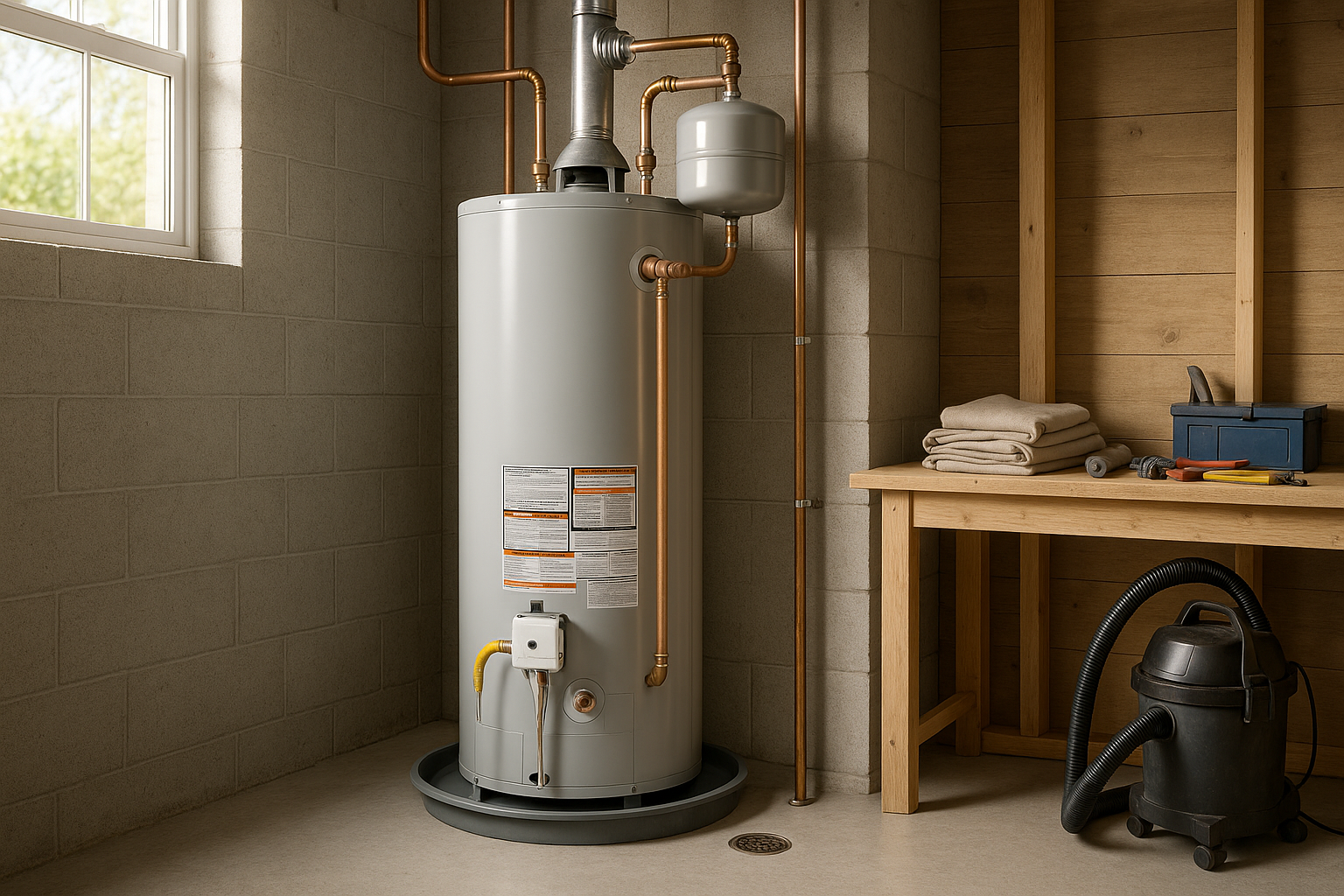
If you’re weighing water heater replacement cost in Indianapolis, you want clear, local numbers and a scope that avoids surprises. WaterPros specializes in code‑compliant, premium installations across Marion County and surrounding suburbs, and this guide explains typical installed prices, what’s included, the cost factors that move the needle, and how our planning‑first process keeps the timeline smooth and the work area clean.
Typical installed costs in Indianapolis
Every home is different, but these are the real‑world ranges we see for a complete, code‑compliant installation in the Indy area. Final pricing depends on site conditions and any required upgrades (see Cost Factors below).
- Standard 40–50 gal gas tank: $1,400–$2,800 installed
- Standard electric tank: $1,200–$2,400 installed
- Power‑vent gas tank: $2,200–$3,800 installed
- Tankless (non‑condensing): $3,000–$4,800 installed
- Condensing tankless: $4,500–$7,500 installed
40 vs 50 gallons
- 40‑gallon water heater replacement cost typically falls near the lower half of the standard gas/electric ranges above when site conditions are straightforward.
- 50‑gallon water heater cost in Indianapolis trends a few hundred dollars higher due to unit price and handling, and sometimes venting or gas sizing checks.
Gas vs electric
- Gas vs electric water heater cost differences usually come down to venting and the gas line. Electric tanks can be simpler in basements without vent paths, but may require a dedicated circuit and breaker capacity.
Power vent and direct vent
- Power vent water heater cost is higher because of the motorized fan, PVC venting, and a 120V outlet requirement. A direct vent water heater price can also rise if wall or roof penetrations are needed.
Tankless options
- Tankless water heater cost in Indianapolis depends on venting runs, gas line sizing (often 3/4" to 1"), and condensate handling. Condensing models are more efficient but typically require a condensate neutralizer and drain routing.
What’s included with a WaterPros replacement
Our quotes are itemized and fixed‑scope, so you know exactly what you’re getting. A typical installation includes:
- New water heater sized to your household and fuel type
- Safe reconnection of water, gas, or electrical
- T&P relief valve piping to an approved discharge location
- Startup, combustion/operation and safety checks
- Haul‑away and proper recycling/disposal of the old tank
- Clean site protection, sweep/vacuum, and debris removal
We call out anything that’s optional or code‑driven. Clear scope prevents change orders.
Cost factors to plan for
A few variables can raise or lower the cost to replace water heater in Indianapolis. During our planning‑first walkthrough (in person or virtual), we verify each of these:
- Capacity and recovery: 40 vs 50+ gallons, first‑hour rating, and simultaneous fixtures.
- Fuel type: Gas, electric, or propane; availability and utility rates.
- Venting: Condition and size of existing B‑vent or masonry chimney; need for liner, PVC venting, or new terminations. Older Indy homes commonly need venting tune‑ups for modern appliances.
- Location and access: Tight utility closets, finished basements, and stairs influence labor time.
- Electrical: Dedicated 240V circuit for electric tanks; 120V outlet for power‑vent and tankless.
- Gas line sizing: Tankless or power‑vent units may need a larger line or regulator update for proper BTU delivery.
- Expansion control: City water with backflow/check valves often requires a thermal expansion tank by code. Typical expansion tank cost is modest when installed with the heater.
- Drain pan and drain line: Recommended in finished basements or utility closets without a nearby floor drain.
- Condensate handling: High‑efficiency or condensing tankless models need a neutralizer and approved drain route.
- Water quality: Central Indiana’s hard water accelerates sediment buildup and anode wear, which can shorten lifespan. We’ll discuss periodic flushing and anode maintenance.
- Optional comforts: Recirculation loop/pump for faster hot water at distant taps can add material and labor.
Local code, permits, and inspections
Most Indianapolis/Marion County replacements require a plumbing permit and final inspection. Expect permit and inspection fees within a modest range; WaterPros handles the paperwork and scheduling for you. We’ll also review:
- Code requirements for water heater replacements in Marion County and nearby jurisdictions.
- When a thermal expansion tank is required (often on city water systems with check valves).
- Whether your existing chimney or B‑vent can be reused safely with the new appliance.
- Combustion air and clearances, especially in tight mechanical closets.
Our planning ensures your new installation passes inspection the first time and performs safely for years.
Tank vs tankless in Central Indiana
Both options work well here—your usage pattern and home layout drive the choice.
- Upfront cost: Tankless installs often cost more due to venting, gas line sizing, electrical outlet, and condensate routing.
- Efficiency and comfort: Tankless provides continuous hot water and space savings; condensing units are highly efficient. Tanks are simpler and have lower initial cost.
- Payback: Tank vs tankless payback depends on usage, energy rates, and whether venting or gas upgrades are required. We provide side‑by‑side totals and estimated operating cost.
- Noise and placement: Power‑vent tanks and tankless units use fans; we’ll review vent runs and bedroom adjacency to minimize noise.
- Recirculation: A tankless recirculation pump reduces wait time at distant fixtures but adds to upfront and operating cost.
Sizing: what’s right for your home
- A family of 3–5 typically finds a 50‑gallon gas tank (or a high first‑hour 40‑gallon) a dependable fit. For electric, consider recovery rate if back‑to‑back showers are common.
- For tankless, we size to your simultaneous fixtures and winter inlet temperatures typical of Central Indiana.
Timeline and disruption
- Like‑for‑like tank swaps are commonly completed same‑day or next‑day once approved. If you need same‑day water heater replacement in Indianapolis, ask—we prioritize no‑hot‑water situations.
- Tankless or major rework may take a full day.
- We outline water‑off windows, protect floors, and stage tools to maintain clean work zones—important in finished basements and tight closets common in Carmel, Fishers, Zionsville, and Greenwood.
Warranties and quality materials
We install quality‑brand units and pro‑grade components. We’ll review manufacturer tank or heat‑exchanger warranty terms and available labor coverage options line‑by‑line, so you can compare value—not just a headline number.
Ways to save without cutting corners
- Right‑size capacity and features for your usage.
- Reuse compliant venting or gas/electrical infrastructure where it’s safe and approved.
- Schedule during standard hours when possible.
- Check current utility or manufacturer promotions; we track offers and share what’s relevant. See our latest insights on the WaterPros blog.
Our planning‑first estimate process
1) Walkthrough and documentation - On‑site visit or guided photo/measurement review to confirm venting, gas/electric, drain path, and clearances.
2) Code and condition check - We verify permit needs, expansion control, combustion air, and any venting or chimney liner updates.
3) Itemized, fixed‑scope proposal - You’ll receive good/better/best options with clear inclusions, optional upgrades (like recirculation), and a precise timeline.
4) Clean communication and scheduling - We coordinate permit, inspection, and install day logistics, keeping water‑off time as short as possible.
Start the process now and get transparent pricing from a specialist. Visit WaterPros or skip to the quick form to request your itemized quote.
FAQs: Indianapolis water heater pricing and planning
What is the average cost to replace a 50‑gallon water heater in Indianapolis?
Most 50‑gallon gas tank replacements land between $1,400 and $2,800 installed, depending on venting, access, and code items like expansion control. Electric 50‑gallon units are commonly $1,200–$2,400.
Do I need a permit to replace a water heater in Indianapolis or Marion County?
In most cases, yes. A plumbing permit and final inspection are required. WaterPros handles the permit paperwork and coordinates inspection.
How long does a like‑for‑like water heater replacement take?
A straightforward tank swap typically takes 2–4 hours on site. Complex venting or power‑vent/tankless installs can take longer—often a full day.
Is a thermal expansion tank required on city water in Indianapolis?
Often yes. With check valves/backflow at the meter, an expansion tank is typically required to control pressure. We confirm and include it in your quote when needed.
What are the real costs to switch from a tank to a tankless system?
Beyond the unit price, budget for PVC venting, a 120V outlet, proper gas line sizing, and condensate neutralizer/drain. Installed totals usually fall between $3,000–$7,500 depending on model and site conditions.
Can my existing vent or chimney be reused for a new water heater?
Sometimes. Older masonry chimneys may need a stainless liner; B‑vent size and condition must match the new appliance. We evaluate reuse vs. update for safety and code.
What size water heater do I need for a family of 3–5?
A 50‑gallon gas tank is a common fit. For electric, we consider recovery rate. For tankless, we size by simultaneous fixtures and winter inlet temps.
How does hard water in Central Indiana affect lifespan and maintenance?
Hard water accelerates sediment buildup and anode consumption. Plan for periodic flushing and, when appropriate, an anode check or upgrade to extend service life.
What’s included in a WaterPros quote?
A line‑item scope: unit model, labor, reconnections, T&P discharge, haul‑away, safety checks, permit handling, and any code items (expansion tank, venting, pan/drain) clearly identified.
Are there rebates available right now?
Promotions vary by season and manufacturer. We’ll check current utility and manufacturer offers and include applicable savings. You can also browse updates on our blog.
How much does it cost to add a drain pan and floor drain to a basement install?
Pans are modest; routing a drain line to an existing floor drain is usually straightforward. Installing a new floor drain is a larger plumbing project—we’ll price it separately if requested.
Ready for clear, local pricing?
WaterPros makes it simple to get the right system, installed cleanly and inspected once. Tell us about your home and usage, and we’ll deliver an itemized, fixed‑scope proposal with two or three configuration options and a realistic timeline.
Prefer to talk it through? Get a Free Deck Consultation and we’ll walk you through tank vs tankless tradeoffs, code items, and total installed cost—no pressure. Start now at our quick quote form. We serve Indianapolis and nearby communities including Carmel and Fishers.
For neighborhood‑specific questions—from older Indy basements with masonry chimneys to tight utility closets in newer suburbs—our local team is ready to help.
Need a plumber you can call back?
Licensed Indiana plumbers, flat-rate pricing, and a written warranty on every job.