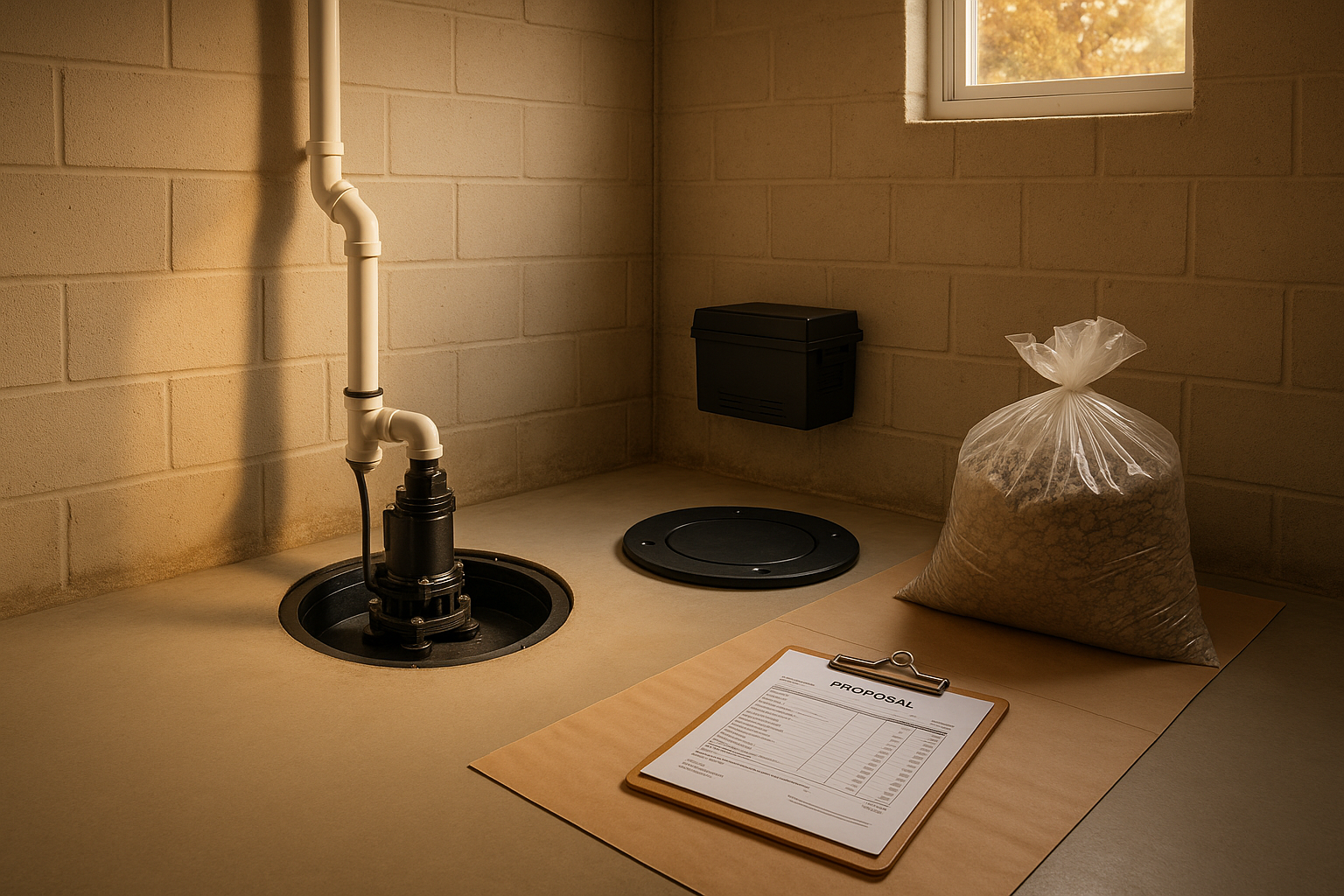
Indianapolis basements and crawl spaces face a familiar mix: clay-heavy soils that hold water, spring thunderstorms, and late-summer downpours that push groundwater against foundations. WaterPros designs and installs sump systems that match our local conditions. We lead with planning, specify reliable materials, and deliver a clean, code-aware installation—so your basement stays dry without the noise, mess, or guesswork.
A planning‑first sump assessment for Indianapolis homes
Before we ever plug in a pump, we map the water. Our on-site evaluation focuses on the actual sources of intrusion and the structural details of your home.
- Water pathways: wall-floor joints, cracks, utility penetrations, and slab seams
- Hydrostatic pressure patterns tied to clay soils and high-water-table pockets near the White River, Fall Creek, and Pleasant Run
- Best pit placement for efficient collection and short, serviceable runs to discharge
- Local code considerations (Marion County/Indianapolis prohibits tying sump discharge into the sanitary sewer)
What we look at and why it matters
- Existing drainage: If you already have an interior French drain, we’ll confirm it can terminate to the new pit. If not, we can integrate a new interior perimeter drain for balanced collection.
- Slab and finishes: We plan the core cut precisely and protect finished areas with dust control, floor protection, and isolated work zones.
- Discharge routing: We survey daylight options, popup emitters, or approved storm connections where available via DPW guidance and Citizens Energy Group service areas.
Typical timeline
- Day 1: On-site evaluation and pump sizing discussion
- Within 24–48 hours: Written plan, options, and fixed quote
- Installation: Most standard basement sump pump installations are completed in one day, including cleanup and debris haul-away
Right‑sized equipment and premium components
A reliable sump system is built on correct sizing and quality materials. We specify components to match Indianapolis groundwater conditions and your home’s layout.
Pump sizing and head height
We select a cast-iron submersible sump pump based on: - Gallons per minute (GPM) demand during peak storms - Total dynamic head (vertical lift to grade + friction losses in the piping) - Duty cycle and expected run frequency in clay-heavy soils - Pit geometry and float range to minimize short cycling
Right-sizing avoids two common mistakes: an undersized unit that can’t keep up during storms and an oversized unit that short cycles and wears prematurely. We calculate head height from the pump base to the discharge termination and consider elbows, check valves, and line length.
Premium materials and quiet operation
We standardize on durable, serviceable parts: - Sealed, flush-mount sump basin and lid (reduces odor and moisture migration, keeps the area tidy) - Schedule 40 PVC sump pump discharge line with solvent-welded joints - Quiet check valve installation (spring or diaphragm “silent” style) placed close to the pump to limit water hammer - Isolation unions for fast service and clean replacements - Rubber isolation pads and lid gasketing to reduce noise and vibration
Battery backup and smart monitoring
Indianapolis storms and brief grid interruptions often go together. We offer: - Battery backup sump pump systems sized to your pit and discharge height - Vented battery cases installed off the floor and properly secured - Smart water-level and power-loss alerts via app or text for peace of mind while traveling
Discharge routing and freeze protection
We route per Marion County rules—no sanitary sewer tie-ins. Common terminations include daylight to grade, popup emitters, bubbler pots, or approved storm connections where permitted. To manage freeze–thaw cycles, we design with: - Proper slope and depth, avoiding long, flat runs - Freeze guard fittings that bypass ice blockages - Insulated or protected sections where needed - Cleanouts or unions at strategic points for maintenance
Electrical best practices
We coordinate electrical details to match code and manufacturer requirements: - Dedicated 15–20A circuit where feasible - GFCI/AFCI protection where required by current code - Tidy cable management and drip loops to protect connections
Clean, code‑aware installation with a clear scope
Our installers protect your home and communicate each step.
- Dust control: Containment barriers, HEPA vacuums at the core drill, and floor protection
- Precise coring: We core the slab cleanly, set the sump pit and basin level, and seal edges neatly
- Exterior work: Careful excavation for discharge, restored landscaping, and sealed wall penetrations
- Debris removal: We haul away concrete spoils and packaging
- Final walkthrough: We test float operation, verify check valve performance, confirm discharge at the exterior, and review maintenance basics
You’ll receive a line-item scope with options for battery backup, high-water alarms, smart monitoring, and maintenance plans. No surprises, no vague bundles.
Replacement, upgrades, and maintenance
If your pump is aging, noisy, or short cycling, we evaluate whether it’s a sizing issue, a worn impeller/float, or a clogged sump pit. We can: - Replace like-for-like or upsize based on updated GPM needs - Swap in a quiet check valve and add isolation unions for future service - Clean and reset the pit and float range - Inspect and flush the discharge line, adding freeze protection where appropriate
We also offer annual service checks to test floats, clean the basin, and verify exterior flow—useful in neighborhoods like Broad Ripple, Meridian-Kessler, Irvington, Fountain Square, and Speedway where older basements and mixed soils are common.
Pricing clarity: what affects sump pump cost in Indianapolis
While each home is different, these factors shape your sump pump installation cost: - Scope: New pit and basin vs. reusing an existing pit (when safe and code-compliant) - Discharge length and complexity: Number of turns, exterior distance to daylight/popup - Site conditions: Finished spaces requiring extra protection and restoration - Components: Cast-iron pump capacity, quiet check valve, sealed lid, unions, high-water alarm - Options: Battery backup sump pump, smart monitoring, freeze guard fittings - Electrical: Dedicated circuit needs or panel limitations - Permitting/inspections: Guidance through Indianapolis Department of Business and Neighborhood Services where applicable
We present everything as a clear, line-item proposal so you can choose the right balance of performance and budget.
Ejector pump vs. sump pump: know the difference
- Sump pump: Moves groundwater from a sump pit to the yard or approved storm outlet; never to the sanitary sewer.
- Ejector pump: Moves wastewater from lower-level plumbing fixtures into the sanitary sewer. It uses a sealed basin with dedicated venting and check/valve assemblies rated for sewage.
If you’re unsure which you have, we’ll identify it during the assessment and propose the correct solution.
FAQs
Do I need a sump pump in Indianapolis if my basement only gets damp after heavy storms?
Dampness after storms points to rising groundwater and hydrostatic pressure—common in Central Indiana’s clay soils. A properly placed pit with a right-sized submersible sump pump can intercept that water before it pushes inside, especially when paired with interior drains where needed.
How long does installation take, and will you protect finished areas?
Most standard installs finish in one day. We use dust containment, floor protection, and HEPA control during slab coring and keep pathways tidy. We coordinate with you to protect finished rooms and restore the workspace on completion.
Can you reuse my existing sump pit and discharge line?
Often, yes—if the pit is correctly sized, structurally sound, and in the right location. We’ll camera or test the sump pump discharge line where applicable. If the line is undersized, back-pitched, or tied to sanitary (not allowed), we will propose replacement.
What size pump do I need?
We size by GPM at your total dynamic head—vertical lift plus friction from fittings and pipe length. Indianapolis homes commonly lift 8–12 feet to grade, then run horizontally outside; we match horsepower, impeller type, and float range to your conditions.
Where should the discharge line go? Can it tie into sanitary?
By local rule, sump discharge cannot enter the sanitary sewer. We route to daylight, a popup emitter, a bubbler pot, or an approved storm connection where permitted. We’ll review DPW and Citizens Energy Group guidance during planning.
How do you prevent freezing in winter?
We keep runs short and sloped, add freeze guard fittings at the exterior, avoid shallow flat sections, and insulate select runs as needed. We also design for easy access and service.
What’s the difference between routine maintenance and replacement?
Annual maintenance includes testing floats, cleaning the pit, checking the quiet check valve, and verifying exterior discharge. Replacement is recommended if the pump shows persistent noise, tripping breakers, frequent short cycling, or inadequate pumping during storms.
Should I add a battery backup or alarm?
If outages or travel are concerns, we recommend a battery backup sump pump with a high-water alarm and smart notifications. It’s a reliable safety net during storm-related interruptions.
Do you handle permits and electrical?
Where permits or inspections apply, we provide guidance and coordinate with the Indianapolis Department of Business and Neighborhood Services. We ensure electrical details meet current code and manufacturer specs.
Why WaterPros
- Specialist approach: sump systems tailored to Indianapolis soils and storm patterns
- Planning-first process: we identify water sources, pit placement, and the right discharge path before work begins
- Premium, quiet components: cast-iron submersible pump, sealed basin, Schedule 40 PVC, silent check valve, and unions
- Clean communication: line-item scope, clear options, and a realistic one-day installation timeline for most homes
- Ongoing support: straightforward workmanship terms in writing and optional annual service checks
Have questions about pump sizing, pit location, or backup power? Get a Free Deck Consultation and we’ll walk through options on-site, then provide a written plan and fixed quote. When you’re ready to move forward, you can reserve your installation date.
- Start here: Request your assessment
- Learn more about our approach: WaterPros homepage
- Related help: Plumbing repair in Indianapolis
- Insights and maintenance tips: WaterPros Blog
WaterPros installs sump pumps across Warren, Pike, Washington, Lawrence, and surrounding townships—serving older homes and new builds alike with code-aware craftsmanship, durable materials, and quiet performance you can live with every day.
Need a plumber you can call back?
Licensed Indiana plumbers, flat-rate pricing, and a written warranty on every job.