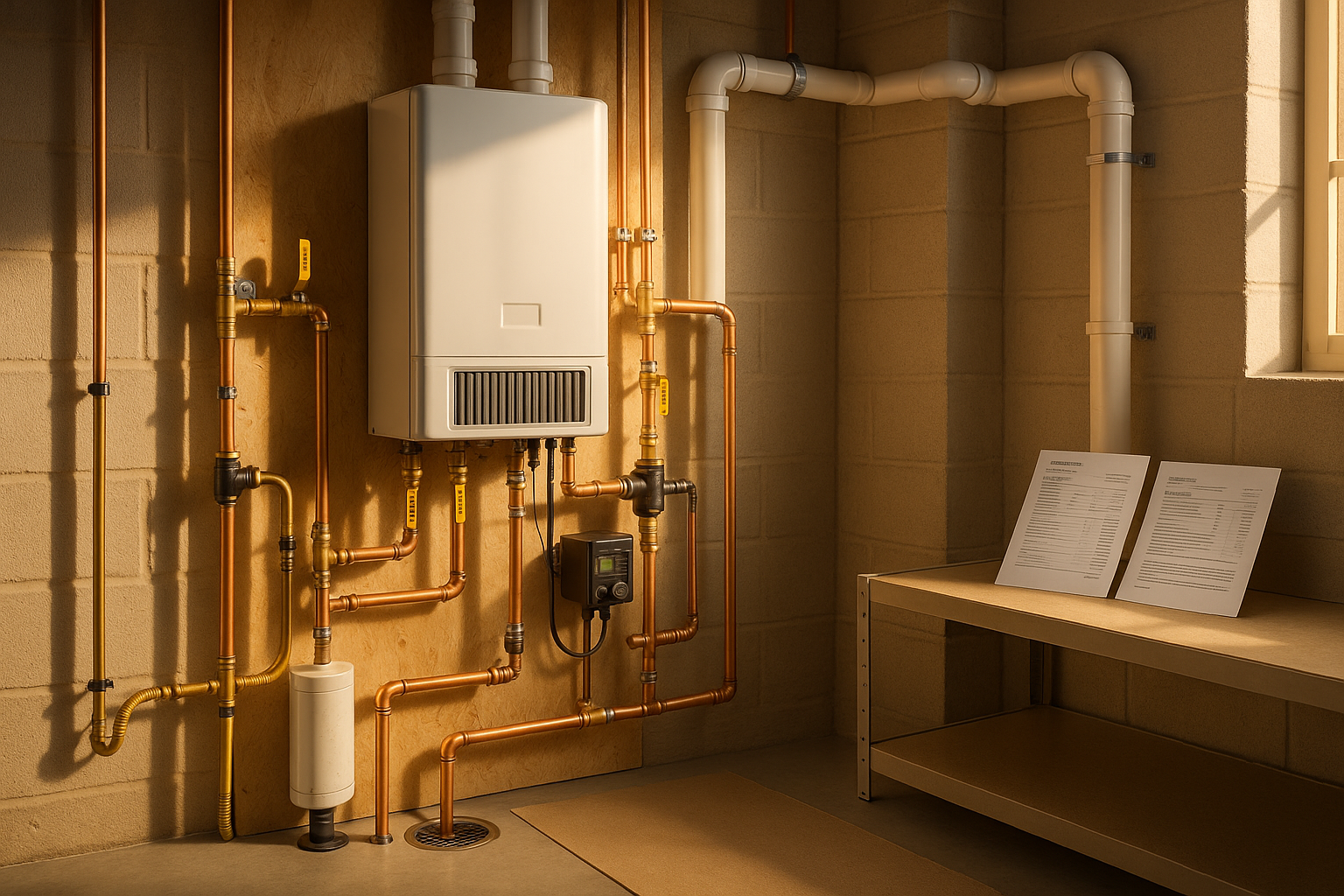
If you’re considering a tankless water heater in Indianapolis, WaterPros makes the conversion practical and predictable. We plan the system around your home’s layout, winter groundwater temps, and hot-water demand, then deliver a clean, code-compliant install with premium materials and clear communication from start to finish.
A planning‑first tankless conversion built for Indy homes
Before we recommend a unit, we complete an on‑site assessment. We measure fixture counts and simultaneous-use needs, check winter inlet water temperatures common in Central Indiana, and confirm where a vent can safely route without compromising your finished spaces. We document the plan in writing so you know what’s included, what’s changing, and why.
Right-sizing for real performance
Choosing between models isn’t just about BTUs on the spec sheet. Cold-season groundwater in Indianapolis can drop significantly, which reduces flow rate if a unit is undersized. We calculate your required temperature rise and expected simultaneous fixtures (showers, dishwasher, laundry) to select the correct condensing tankless water heater and recirculation approach. We’ll also outline the tradeoffs in tankless vs. tank water heater performance for your home, including potential placement changes and service clearances.
Gas supply, venting, and condensate—done right
Tankless units need a properly sized gas line and, in many cases, a meter/regulator that can support full-fire operation. We verify capacity at the appliance, coordinate with Citizens Energy Group if a meter upgrade is needed, and upsize interior piping where required. For venting, we design a path that meets Marion County and Indianapolis requirements—stainless or approved PVC with correct slope, termination clearances, and freeze protection at the exterior. Condensing units produce condensate; we route to a floor drain with a neutralizer canister and air gap, all neatly labeled.
Hard water strategy and simple maintenance
Hard water is common in the Indy area. To protect your investment, we install isolation valves and flush ports at the heater and recommend a water softener or scale-reduction media where appropriate. Annual flushing/descaling keeps efficiency high and helps maintain manufacturer warranty terms. We’ll show you how maintenance works and offer an optional service plan for reminders and performance checks.
What your tankless conversion includes
Our proposals are itemized and straightforward. Typical scope includes:
- In-home evaluation and documented sizing (fixture counts, temperature rise, recirculation options)
- Permit procurement, scheduling, and code-compliant installation for Indianapolis/Marion County
- Clean removal and disposal of the old tank water heater
- Premium materials: clean copper/PEX routing, drip leg on gas, dielectric unions as needed, isolation valves with labeled handles
- Gas line sizing and fittings; meter/regulator coordination if capacity upgrades are required
- Tankless water heater venting with proper clearances, slope, and freeze protection
- Condensate routing to floor drain with neutralizer and air gap
- Electrical needs addressed (receptacle and GFCI where required; panel capacity review for electric accessories)
- Startup and commissioning: flue-gas check, leak checks, temperature programming, and homeowner walkthrough
Most conversions are completed in a single workday once utilities and permits are set. We protect flooring and finishes, and we leave the mechanical area tidy.
Recirculation options for faster hot water
If your furthest bathrooms take too long to get hot water, we’ll evaluate:
- Dedicated return line: Best performance and efficiency in homes that can accommodate a return loop (common in newer builds and remodels).
- Demand-controlled or cross-over recirculation: Uses the existing cold line as a return path with a smart pump and check valves. This reduces wait times with minimal wall opening.
We’ll explain the pros and cons, noise considerations, control options, and how each affects operating cost. The goal is fast hot water without wasting energy.
Local code, permitting, and placement considerations
We manage Indianapolis permits and Marion County inspections, including any vent or combustion-air documentation the inspector requests. Placement matters: utility rooms in Broad Ripple or Meridian‑Kessler basements often require careful vent routes; Irvington and Fountain Square homes may need creative condensate solutions and freeze-safe exterior terminations. We’ll confirm combustion air, clearance to openings and grade, and the best wall for vent exits. Where electrical outlets are not present, we plan for a safe, code-compliant circuit and GFCI if required.
Clear pricing and the real factors behind cost
We’re frequently asked about tankless water heater cost in Indianapolis. The honest answer: the price depends on gas line sizing, vent length/material, condensate routing, recirculation choice, and whether Citizens Energy must upgrade your meter or regulator. Our quotes are itemized by equipment, labor, permits, accessories, and any line/vent upgrades—so you can see exactly where the investment goes and compare options. We’ll also discuss the long-view on operating cost, maintenance, and lifespan versus a standard tank.
Brands and models we service and install
We install and service leading condensing models and match capacity to your fixtures, habits, and space. If you prefer a specific platform, we’re experienced with popular lines from Navien and Rinnai and will align the venting, gas, and recirculation design to that choice. We’ll also review control interfaces, noise expectations, and maintenance access so you know what daily use feels like.
Mistakes to avoid when going tankless
- Undersizing based on brochure flow rates that don’t account for cold winter inlet temperatures.
- Reusing an undersized gas line that starves the unit at high demand.
- Improper vent slope or terminations too close to windows, doors, or grade.
- Skipping condensate neutralization, which can damage drains.
- Ignoring hard water—scale build-up reduces efficiency and reliability.
- No recirculation plan in larger homes, leading to long waits and frustration.
Frequently asked questions
How much does a tankless water heater conversion cost in Indianapolis?
Costs vary with gas line upgrades, vent route/length, condensate routing, and recirculation options. After an on-site evaluation, we provide an itemized, fixed-scope proposal so you can compare options without surprises.
Do I need a larger gas line or meter to run a tankless unit?
Often, yes. We calculate total connected load and verify line sizing and pressure at the appliance. If the meter/regulator is undersized, we coordinate with Citizens Energy Group to request an upgrade and adjust interior piping as needed.
What permits and inspections are required in Indianapolis or Marion County?
Water heater permits and final inspections are typically required. We obtain permits, schedule inspections, and design venting/combustion air to local requirements. You’ll get email confirmations so you know the schedule.
Can you install venting through a side wall, and what clearances are needed?
Sidewall venting is common with condensing tankless units. We design to manufacturer specs and local clearances for doors, windows, and grade, ensure proper slope to manage condensate, and add freeze protection where needed.
What size tankless water heater do I need for my home?
We size to simultaneous demand and temperature rise. Homes with two to three full baths often need a mid-to-large condensing model; larger households or spa fixtures may require higher capacity or paired strategies. We’ll calculate it during the assessment.
How do cold Indianapolis winters affect flow rate and performance?
Lower inlet temperatures reduce the maximum flow a unit can deliver at setpoint. We account for Indy’s winter groundwater temps so your system maintains comfortable shower temps even on the coldest days.
Can a recirculation pump be added to reduce hot water wait times?
Yes. We offer dedicated return loops or demand-controlled systems that use the existing cold line as a return. We’ll recommend the best fit for your layout and efficiency goals.
How often should a tankless water heater be flushed or descaled here?
Typically annually in the Indy area due to hard water. With a softener or scale-reduction media, intervals may extend. We include isolation valves and ports to make service quick and clean.
Is a water softener recommended for Indianapolis water?
In most cases, yes. Softening or scale control helps maintain efficiency, reduces maintenance frequency, and supports long-term reliability.
What’s the difference between condensing and non‑condensing tankless units?
Condensing units extract more heat from exhaust gases, enabling PVC or polypropylene venting (where allowed) and higher efficiency. Non‑condensing models have hotter exhaust and different venting materials. We’ll outline the best match for your home.
How long does installation take, and will hot water be unavailable during the swap?
Most conversions are completed in a day. Hot water is typically off during the swap window; we’ll communicate the timeline in advance and coordinate to minimize downtime.
Are there rebates or incentives available in Indiana?
Utility and manufacturer incentives change. We’ll flag current offers during your quote and provide any documentation you need for submission.
Can you convert from an electric tank to a gas tankless system?
Yes, but additional steps are required: new gas service and venting, potential Citizens Energy meter work, and electrical for controls/recirculation. We’ll assess panel space and circuit needs and present a phased plan if helpful.
What warranties are provided?
Manufacturer warranties apply per model and terms. We detail workmanship coverage in your written proposal and remain your point of contact for service.
Ready to plan your conversion?
Let’s design a tankless solution that suits your home, your water, and our winters. Use our quick form to Get a Free Deck Consultation—we’ll treat your submission as a request for a tankless assessment and follow up with a documented scope and itemized quote. Prefer to review related options first? See our broader service overview at /water-heater-replacement-indianapolis/ or browse insights on our /blog/.
When you’re ready, schedule through /#quote. You’ll get one point of contact, a clear timeline, and a premium, code-compliant installation from a local specialist.
Need a plumber you can call back?
Licensed Indiana plumbers, flat-rate pricing, and a written warranty on every job.