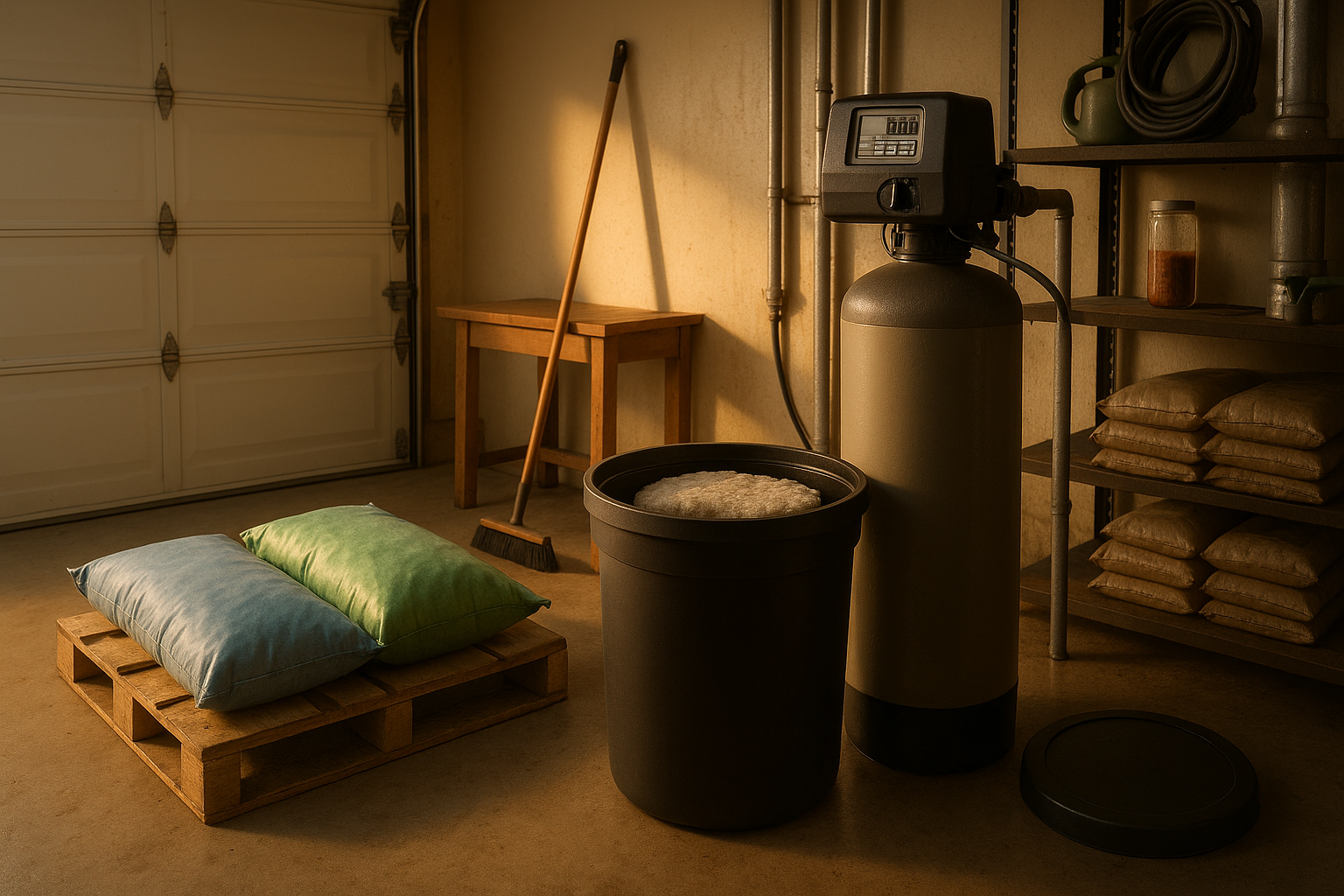
My neighbor Mike in Fishers called me last winter, panicked because his water softener quit making soft water. He'd switched to potassium chloride pellets on his doctor's advice to cut sodium, but a month later, the soap wouldn't lather and his skin felt itchy. He thought potassium was supposed to work better. We poked around his garage—humid, typical Indiana winter—and found the brine tank half-full of a cement-like crust. The potassium had bridged, so no brine was being made. It wasn't the softener's fault; it was just potassium being picky about moisture. That's when Mike realized that water softener salt vs potassium Indiana isn't just about what you pour in the tank. It’s a whole calculation involving your home’s water, your family’s health, and how much you like scraping chunks out of a brine tank on a Saturday. So, if you’re a Noblesville homeowner staring at bags in the store, wondering if you should go with the blue bag or the green bag, here’s the straight talk.
The Real Difference: Salt vs. Potassium
Both sodium chloride (plain salt pellets) and potassium chloride work in the same ion-exchange softener. You don’t need a new unit, and potassium won’t damage your resin tank. That’s a myth. But here’s the kicker: potassium is less efficient. Its ions are bigger, so they don’t swap for hardness minerals as eagerly. In practical terms, you’ll use more media per regeneration, and you may need to set your softener to regenerate more often to keep up.
If you switch to potassium, plan on bumping your hardness setting 10% to 30% higher. For Indiana’s notoriously hard water—some parts of Hamilton County push 25 grains per gallon—that extra percentage adds up. Don’t just guess. Get a proper water test first. The folks at WaterPros do free tests and can tell you exactly what your water’s throwing at you, then help you dial in the right number on the control head.
The Cost Reality Around Indianapolis
Walk into any big-box store in Noblesville or Westfield, and you’ll see solar salt pellets stacked by the pallet. A 40-pound bag runs about $6–$8. The same size bag of potassium chloride? Often $20–$25—sometimes more in winter when stores shift inventory to road salt and potassium gets scarce. I’ve had customers in Carmel drive to three stores before they find potassium in February. Meanwhile, you can always get solar salt delivered by a local supplier. When we talk about water softener salt vs potassium Indiana, the wallet vote usually goes to salt. If you’re set on potassium, plan ahead. Order early in the fall or set up recurring delivery with a company like WaterPros that keeps potassium in stock for folks who need it.
Sodium Worries and Health
The biggest reason homeowners ask about potassium is health. “My doctor told me to watch sodium; is softened water going to raise my blood pressure?” Good question. An ion-exchange softener adds a small amount of sodium to your water—maybe 20–40 milligrams per glass for very hard water. For most people, that’s not a problem. But if you’re on an extremely low-sodium diet, those milligrams can matter. That’s when potassium starts to look attractive—it swaps sodium out of the picture entirely.
But here’s a simpler fix that I’ve seen work in a hundred Indianapolis-area kitchens: install a reverse osmosis drinking water system under the sink. It strips out virtually all sodium, plus other stuff you don’t want. So you soften all the water for your appliances and skin, but you drink and cook with RO water. We’ve written a whole article on that: reverse osmosis systems around Indianapolis. It’s a popular setup in Fishers and Zionsville.
And no matter which pellet you choose, the water feels exactly the same on your skin—silky and soap-friendly.
Brine Tank Bridging: Why Potassium Gets Crusty
Back to Mike’s garage. The thing with potassium chloride is it loves to absorb moisture from the air. In a typical Indiana basement or attached garage—especially during our humid summers or when you’ve got a furnace running in winter—that moisture condenses in the brine tank. The potassium pellets clump together and form a hard crust that floats on top of the water. That crust, called a bridge, stops the water from dissolving salt to make brine. Result: no soft water.
To keep potassium happy, only fill the tank one-third to one-half full. Break up any crust you see with a broom handle. Keep the lid sealed tight. Some folks mix salt and potassium pellets 50/50 to reduce bridging while they test the waters. Mixing is safe and doesn’t hurt the softener; it just splits the difference on sodium and bridging.
Septic Systems and Chloride Discharge
A lot of my customers on septic—like homeowners out in the rolling spreads north of Noblesville—worry that salt-based softeners will kill the bacteria in their tank. Not true. Chloride is chloride, whether it comes from sodium chloride or potassium chloride. The bacteria don’t care. The real question is how much chloride gets flushed to the drain field, because too much can affect soil structure over many years.
So rather than chasing zero chloride, the smarter move is to make your softener as efficient as possible. A metered (demand-initiated) unit regenerates only when it really needs to, not on a dumb timer. Setting the hardness correctly and using the right salt dose reduces waste. If you’ve got a septic system, getting your softener tuned up every few years is worth more than switching pellet types. Check out our blog for more tips on keeping your whole plumbing system healthy.
Well Water and Iron in Noblesville
If your home draws from a private well around here—say in the White River corridor or the limestone pockets near Westfield—you’re probably dealing with iron and manganese on top of hardness. That reddish-brown staining in the toilet tank? That’s iron. Potassium and salt both can handle moderate iron, but neither is a cure-all. Iron can foul the resin bed over time, reducing efficiency no matter which media you use.
A water test tells the tale. You might need a dedicated iron filter or at least a regular resin cleaner. And if you’re drilling a new well or having trouble with an old one, we’ve covered what a new well costs in Hamilton County. The point is: don’t ignore the iron. It’ll fight your softener harder than you think.
Outdoor Spigots and Why You Should Bypass
Here’s a mistake I see a lot in Avon and Brownsburg: folks run softened water to their lawn sprinklers or garden hose. Softened water—whether sodium or potassium—isn’t great for plants. The sodium (or potassium) builds up in the soil and can harm roots. Plus you’re just pouring expensive media into the grass. Keep your outdoor hose bibs on the hard-water bypass. If your house was plumbed correctly, at least one spigot in the front and back should already be on the hard line. If not, it’s a simple plumbing fix. And while we’re talking about outdoor water, make sure your downspouts and grading drain water away from the foundation. Standing water against the house causes all kinds of problems, from damp basements to foundation cracks. That’s a drainage issue we handle regularly, from Noblesville to Plainfield.
Switching Settings Without a Headache
You don’t need to be an engineer to switch media. Grab your softener’s manual (or look up the model online). Find the hardness setting. When you go to potassium, increase that number 10–30%. A good starting point is 20% extra. Then, if you notice hard water signs a few days before the scheduled regeneration, bump it up a bit more. Most modern softeners have a demand-initiated regeneration feature that adjusts automatically once you set the correct hardness. That’s key for efficiency.
Worried about voiding the warranty? You won’t. Manufacturers know people switch between salt and potassium. Just don’t pour anything weird in there. Clean the brine tank before you switch—scoop out the old gunk, wipe it down, maybe sanitize with a little bleach and rinse thoroughly. It’s a 15-minute job.
So, What’s the Right Pick for Your Home?
After 20 years of staring into Hoosier brine tanks, here’s my simple take. If you’re on a typical budget and nobody at home is on a strict sodium-restricted diet, use solar salt pellets. They’re cheap, easy to find, and forgiving. If your doctor wants you to shave every milligram of sodium, then pair an RO drinking system with either media—or go full potassium plus RO for belt-and-suspenders. If you’re on well water with iron, get that test, use a resin cleaner, and consider a dedicated iron filter. And whatever you choose, get the softener tuned right.
Mike? We scooped out his brine tank, switched to a 50/50 mix, bumped his hardness setting 15%, and showed him how to break bridges. Now he gets soft water without the Saturday headaches. Your setup might be just as easy.
The team at WaterPros knows Noblesville water—and the quirks of every neighborhood from Greenwood to Zionsville. We’ll come out, run a free hardness and iron test, check your softener’s settings, and give you an honest recommendation. No pushy sales, just good advice from folks who live here too. If you’re ready to stop guessing, grab a free quote or just ask a question—we actually pick up the phone.
Need a plumber you can call back?
Licensed Indiana plumbers, flat-rate pricing, and a written warranty on every job.