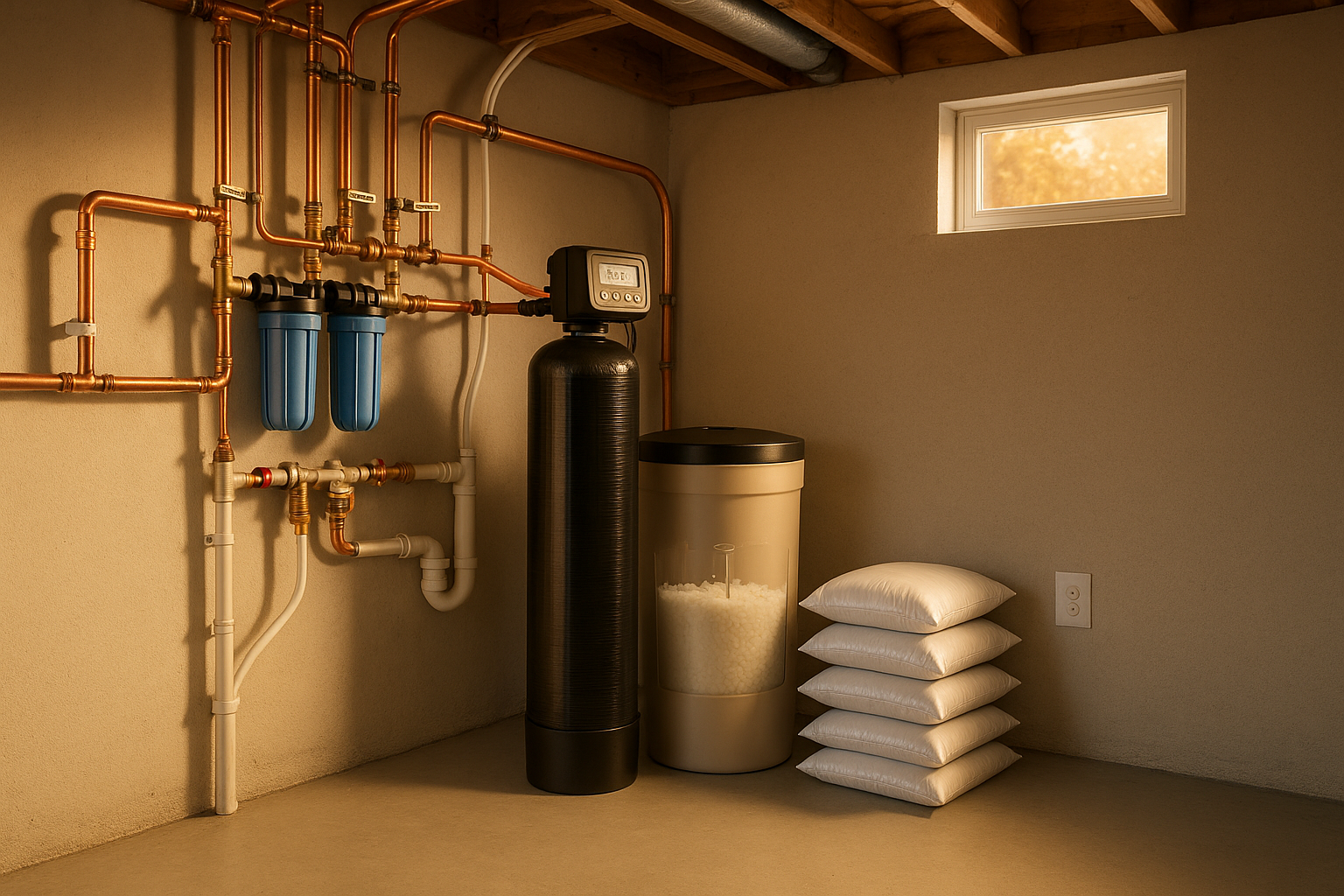
Indianapolis water is commonly hard—many homes test in the 14–20 gpg range—so choosing and sizing a softener correctly affects both your upfront price and ongoing salt/water use. This cost guide from WaterPros outlines realistic installed pricing in Indy, the factors that change your number, and a planning-first path to a clean, code-compliant install you can compare apples-to-apples.
Typical installed pricing in Indianapolis
- Most homeowners invest $1,800–$4,500 for a metered, high-efficiency water softener installed, tuned to local hardness.
- Basic like-for-like replacements can start around $1,200 when the loop, drain, and power are already in place.
- Premium twin-tank systems with pretreatment commonly run $4,500–$7,500+ depending on hardness, iron content, location, and routing.
Installed pricing typically reflects: on-site water test and sizing, equipment and valves, tie-in to existing plumbing, code-compliant discharge with air gap, startup/programming, and haul-away of an old unit when replacing.
What changes your price (beyond the equipment)
- Replacement vs. first-time install: Replacing an existing softener at the same spot is simplest. New installs may require adding a softener loop, shutoffs, and a proper bypass.
- Drain access and routing: Older Indy basements sometimes lack a handy floor drain. Running a new discharge to a utility sink or approved sanitary drain with a visible air gap adds time/materials.
- Electrical: Many valves need a 120V receptacle. Adding a GFCI outlet at the mechanical area can affect scope.
- Long plumbing runs or finished spaces: Finished basements, tight mechanical rooms, and slab-on-grade homes may require creative routing and careful finish work.
- Code and backflow details: Discharge must route to sanitary, not storm; air-gap and cross-connection protection are required. Suburbs can add local rules that influence placement and parts.
Equipment options and right-sizing for Indy water
Standard metered single-tank
- Equipment: ~$800–$1,800 (valve, mineral tank, brine tank)
- Installed in Indy: often $1,600–$3,200 depending on tie-in conditions
- Good baseline performance when sized/tuned to 14–20 gpg and typical household use
Premium high-efficiency single-tank
- Equipment: ~$1,800–$3,200
- Installed: generally $2,400–$4,500
- Benefits: demand-initiated regeneration (DIR), fine-tuned salt settings, lower salt/water use. This tier is popular for reducing monthly salt cost in Marion County and surrounding suburbs.
Twin-tank continuous softening
- Equipment: ~$2,800–$5,500
- Installed: commonly $4,500–$7,500+
- Benefits: soft water 24/7 (no downtime during regeneration), efficient use of resin bed—useful for larger households, high hardness, or unpredictable peak usage.
Salt-free conditioners (what they do—and don’t)
- Equipment: ~$1,000–$3,000; installed pricing varies by plumbing complexity
- They condition scale but do not actually remove hardness ions. In Indy’s 14–20 gpg conditions, a true softener is the reliable way to fully eliminate hard-water spotting and scale. Consider salt-free only when the goal is partial scale control and low maintenance, not soap performance or spot-free results.
Sizing basics for Indianapolis hardness
- Capacity is set by household size, water use, and measured hardness.
- Example: Four people, ~18 gpg, ~60–70 gal/day each often need ~48,000-grain with a metered control to balance salt efficiency and reserve capacity.
- Heavy use, higher hardness, or well water with iron/manganese can push capacity up or require pretreatment to protect resin.
Right-size first, then choose between standard, high-efficiency, or twin-tank based on performance goals and ownership cost.
Add-ons and upgrades that influence budget
- Sediment/carbon prefilters: $150–$600 for cleaner inlet water and taste improvement
- Iron/manganese filtration: $600–$2,000+ depending on media and oxidation method—common for many wells in Hendricks, Hamilton, and Johnson counties
- Bypass/manifold upgrades: $100–$350 for clean serviceability and future maintenance
- Drain/air-gap assemblies: $75–$250 for compliant discharge to a utility sink or floor drain
- Drinking-water filtration (reverse osmosis add-on): $450–$1,200 for a dedicated tap and fridge line
Explore broader filtration options in our local overview: /water-filtration-indianapolis/.
Operating costs, maintenance, and lifespan
- Salt: Typically $8–$20 per month in Indianapolis with a metered, high-efficiency setup and tuned salt settings. Twin-tank and well-optimized single-tank systems often use less salt per gallon softened.
- Water/sewer for regeneration: Settings and hardness drive usage. Demand-initiated systems help minimize waste under real Indy usage patterns.
- Annual check/service: Often $120–$250 for inspection, cleaning, and settings review—this “water softener maintenance cost” helps avoid resin fouling and drift.
- Resin life: Quality resin can last 10–15+ years when protected from iron/sediment and sanitized as needed.
- Resin replacement cost: Highly variable by tank size and media—expect parts and labor to commonly land in the mid-hundreds when needed; planning pretreatment can postpone or prevent this expense.
Municipal vs. well water around Indianapolis
- City water (Citizens Energy Group) is typically hard and may carry chlorine/chloramines; softener sizing plus a simple carbon prefilter often improves results and taste.
- Wells in the donut counties frequently present iron, manganese, or sulfur. Proper testing before sizing avoids premature resin fouling and repeat service calls. In some cases, an iron filter ahead of the softener is essential.
Code, placement, and permitting notes
- Discharge: Route to an approved sanitary drain with a visible air gap—never to storm. A utility sink with an air-gap adapter is a common solution in Indy basements.
- Backflow/cross-connection: Follow best practices on bypass and check local rules for your suburb.
- Permits: A straightforward replacement may not require a separate plumbing permit in some jurisdictions, while new loops, electrical work, or relocations can. We plan the scope to your address and confirm what’s required before work begins.
- Space and access: A softener plus brine tank typically fits a compact corner near the water main. In tight mechanical rooms or finished spaces, careful layout and labeling improve service access.
What’s included in a WaterPros quote
- On-site water test for hardness and indicators of iron/manganese
- Right-size recommendation with model/specs and clear options (standard, high-efficiency, twin-tank, or salt-free conditioner)
- Plumbing, electrical, and drain/air-gap scope tailored to your home
- Code and best-practice notes for Indianapolis/your suburb
- Haul-away of old equipment (when replacing)
- Startup, programming, and homeowner walkthrough
- Transparent warranty terms and local support
Timeline and our planning-first process
- Assessment and quote: Usually scheduled within a few days
- Install duration: 2–5 hours for typical replacements; up to a day for complex reroutes or finish work
- How we price: WaterPros itemizes materials, labor, any permits, cleanup, and verification so you know exactly what’s included—no vague allowances, no surprises.
FAQs: Water softener cost and choices in Indianapolis
How much does a water softener cost in Indianapolis for a typical 3–4 bedroom home?
Most 3–4 bedroom homes land around $1,800–$3,800 installed with a metered, high-efficiency single-tank—assuming an existing loop, nearby drain with air gap, and power.
What factors most affect my installed price: hardness, family size, or system type?
All three matter. Hardness and family size set capacity; system type (standard vs. high-efficiency vs. twin-tank) sets performance and ownership cost. Site conditions—drain, electrical, and access—round out the budget.
What grain capacity softener do I need for 14–20 gpg water and a family of four?
A well-tuned ~48k grain system is a common starting point for ~18 gpg and average use. Heavier use, higher hardness, or iron in well water can push capacity up or require pretreatment.
What is the difference in cost and performance between single-tank and twin-tank systems?
Twin-tank systems cost more upfront but provide continuous soft water and improved efficiency under variable demand. Single-tank high-efficiency systems are cost-effective for most Indy homes when sized and programmed well.
Are salt-free conditioners a good option for Indianapolis water, and how do costs compare?
They’re viable for scale conditioning but won’t deliver true “soft” water. Costs are often similar to entry-to-mid softeners, but performance goals differ. For spot-free fixtures and soap performance, a true softener is best.
Do I need a permit or inspection for a water softener in Indianapolis or my suburb?
It depends on scope and jurisdiction. Simple replacements may be exempt; new plumbing/electrical can trigger permits. We confirm requirements during planning so your install is compliant.
Can I install a softener if I don’t have a nearby floor drain or 120V outlet?
Yes. We can route a code-compliant discharge to a utility sink with an air gap and add a nearby GFCI receptacle where appropriate. These items are included in a fixed-scope quote when needed.
How much should I budget annually for salt and maintenance in Indianapolis?
Plan roughly $8–$20/month for salt (less with fine-tuned settings) plus $120–$250/year for a checkup, cleaning, and any filter changes.
Will a softener harm my septic system, and how do I minimize salt discharge?
Properly sized, efficient systems and tuned regeneration settings minimize discharge. If you’re on septic, ask about settings, brine efficiency, and routing best practices. For broader septic needs, see /septic-services-indianapolis/.
How long does installation take, and what is the typical project timeline?
Most installs finish in 2–5 hours. More complex reroutes or finish work can take a day. Quotes are usually turned around within a few days of your water test.
What add-ons should I consider for city vs. well water near Indianapolis?
- City: a carbon prefilter for taste/chlorine plus right-sized softener
- Well: iron/manganese filtration ahead of the softener when indicated by testing; consider RO for drinking/cooking
Where should the discharge line go, and what is an air gap/backflow requirement?
The discharge goes to an approved sanitary drain with a visible air gap to prevent backflow. A standpipe at a utility sink or a floor drain with an air-gap fitting is common.
Ready for clear numbers you can trust?
Start with an on-site water test and a written, fixed-scope quote tailored to your home, hardness, and layout. Click /#quote to schedule—our team will outline good, better, and best options with exact inclusions so you can compare confidently. Get a Free Deck Consultation is the button label you’ll see on our site—use it to book your no-pressure water assessment and pricing.
If you’re exploring whole-home filtration beyond softening, visit /water-filtration-indianapolis/ for local options and add-ons.
WaterPros is a specialist, planning-first home-service brand. We design around Indianapolis conditions, specify quality materials, and communicate the scope clearly—so your system performs on day one and for years to come.
Need a plumber you can call back?
Licensed Indiana plumbers, flat-rate pricing, and a written warranty on every job.