Last October, my neighbor in Broad Ripple came home to a flooded basement. Not from a storm—from a garden hose he’d forgotten to disconnect. The spigot froze one night, burst inside the wall, and dumped water for hours before he noticed. He’s not alone. Every fall, we get calls from homeowners who figured they’d get to it later, until ‘later’ meant water damage and a hefty repair bill.
That’s the thing about fall around here. It sneaks up on you. One week you’re raking leaves in a t-shirt, the next there’s frost on the grass and a freeze warning. In Indianapolis, that first hard freeze usually hits mid-to-late October, and if your plumbing isn’t ready, things can go sideways fast. We’re talking burst hoses, frozen pipes in crawl spaces, and sump pumps that quit when you need them most.
But a little seasonal maintenance makes all the difference. Here’s what to check now, before you’re stuck dealing with a mess.
Get the Outside Ready
Start with the easy stuff. Walk around your house and pull every garden hose off its spigot. Even a frost-proof hose bib can’t drain if a hose is attached—water gets trapped, freezes, and cracks the pipe. Once they’re off, close the interior shut-off valves that feed outdoor faucets if you have them. Then open the spigot to let any leftover water drain out. Pop an insulated cover on each one. They’re cheap, and they work.
While you’re out there, check where pipes come through the wall. Seal any gaps around hose bibs and sill plates with exterior-grade caulk. Drafts let cold air right up against pipes, and that’s all it takes. If you’ve got an irrigation system or a backflow preventer, have it winterized by a pro—most leaks we see in spring come from blown-out check valves that froze solid.
Also look at your downspouts. Are they dumping water right next to the foundation? Extend them at least six feet away. Leaves and debris clog yard drains fast in fall, and if that water can’t get away, your sump pump ends up working overtime. A lot of homes in Carmel, Fishers, and Zionsville have basements, and a short-cycling pump is a great way to burn one out just before a big storm.
Pipes in Crawl Spaces, Garages, and Those Weird Cold Spots
Unheated spaces are where pipes freeze first. Garages, crawl spaces, even kitchen sinks on an exterior wall if the cabinet’s shut tight. Foam pipe insulation is your friend. It’s simple to install, and for most exposed runs it’s enough. Slip it over cold and hot water lines both—yes, hot water pipes freeze too, just maybe a little later.
If you’ve got pipes running through a really drafty crawl space (plenty of homes in Greenwood and Brownsburg do), think about heat cable. The self-regulating kind turns on when it senses cold. It’s not a permanent fix for bad insulation, but it’ll get you through a bitter night. And if you’re not sure whether your crawl is tight, check for daylight around the floor joists—wherever light comes in, cold air follows.
Sump Pump Check
Your sump pump probably sat idle all summer. Now’s the time to test it. Dump a bucket of water in the pit and make sure it kicks on, the float moves freely, and the water actually leaves the house. Check the discharge line outside. It should slope away from the foundation and not be clogged with leaves or dirt. Also, look at the check valve. It’s that little flapper thing in the vertical pipe that stops water from rushing back down. If it’s stuck open, your pump works twice as hard. A battery backup is worth every penny—heavy fall rains plus power outages aren’t uncommon in Avon and Plainfield, and you don’t want to discover your pump is dead when there’s already six inches of water.
Water Heater and Fixture Tune-Up
Central Indiana water is hard. Like, 12 to 20 grains per gallon hard. All that dissolved calcium and magnesium ends up inside your water heater, building up scale that makes it less efficient and shortens its life. A quick annual flush helps a lot. Connect a garden hose to the drain valve, run it to a floor drain or outside, and let it flow until the water runs clear. While you’re at it, check the anode rod (or have a plumber do it). That’s the sacrificial metal rod that corrodes so your tank doesn’t.
Set the thermostat to 120°F. That’s hot enough to kill bacteria, safe enough to avoid scalds, and it saves energy. Test the temperature and pressure relief valve—lift the lever and let it snap back. It should release a burst of hot water. If it doesn’t, or if it keeps dripping after, it needs replacing. Also, if you’ve got an expansion tank (that little blue or gray tank above the heater), tap it. It should sound hollow on one side, full on the other. If it’s waterlogged, your water pressure might spike when the heater runs, and that’s hard on pipes.
Hard water is a big deal here, not just for heaters but for every fixture in your house. If you’ve got a water softener, make sure it’s full of salt and cycling properly. We’ve seen softeners in Noblesville and Westfield that hadn’t been touched in years, and the scale buildup on showerheads and faucets was incredible. Eventually that scale cuts water flow and eats away at rubber seals. A softener isn’t a luxury around here—it’s a tool that saves you money on repairs and replacements later. (We talk more about that in our hard water and appliance damage post.)
Don’t forget toilets and sinks. Drop a little food coloring in the tank; if it shows up in the bowl without flushing, the flapper’s shot. Jiggle the shut-off valves under sinks and toilets—if they’re stiff or look crusty, they’re one emergency away from not working. Those old multi-turn valves with rubber washers are notorious for failing right when you need them. Swapping them out for quarter-turn ball valves is a small upgrade that pays off.
Drains, Sewers, and the Stuff You Can’t See
Holiday cooking is right around the corner. That means greasy stuff going down kitchen sinks. Slow drains now will only get worse when you’re hosting fifteen people. Clean out P-traps under bathroom and kitchen sinks—a bucket and a wrench, ten minutes, done. Run some cold water through the garbage disposal with a few ice cubes to knock off old gunk. But skip the chemical drain cleaners. They’re awful for your pipes, especially older galvanized or cast-iron lines that are common in neighborhoods like Meridian-Kessler and Irvington. Those chemicals can eat right through the metal over time.
Speaking of older lines: tree roots and sewer laterals don’t mix. If you’re in an established neighborhood with big maples and oaks, roots will find any tiny crack in a clay pipe. Signs of trouble are slow drains across the whole house, gurgling toilets, or a sewage smell in the yard. We’ve pulled roots out of laterals in Broad Ripple that looked like a bird’s nest. A camera inspection clears up the guessing, and if you catch it early, a simple cleaning can buy you years. (We’ve got a sewer gas smell guide that explains other warning signs.)
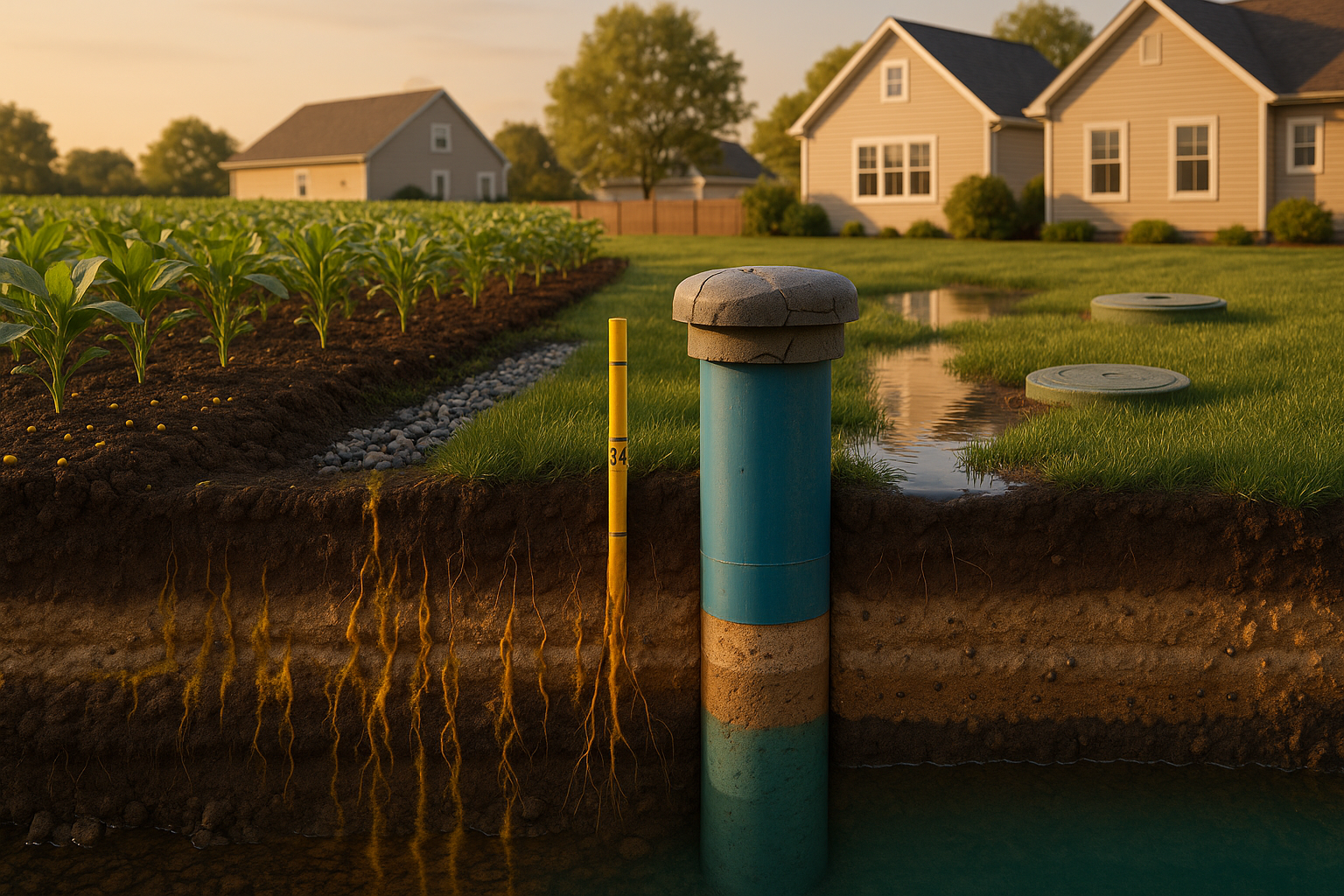
If your home is on a septic system—more common in outlying parts of Hendricks or Boone County—fall is a good time to check the tank level and have the system inspected. Heavy autumn rains can saturate a drain field that’s already struggling, and a backup into your basement is about the worst thing you can imagine. WaterPros does septic checks, and a quick pump-out now is a lot cheaper than a drain field replacement.
Wells are another thing. A lot of homes in the countryside near Brownsburg or Avon rely on private wells, and fall rains can spike nitrate levels. It’s smart to test your water this time of year and make sure your pressure tank is holding its charge. A failing pressure tank makes your pump cycle on and off constantly, which wears it out fast.
Small Leaks, Big Problems
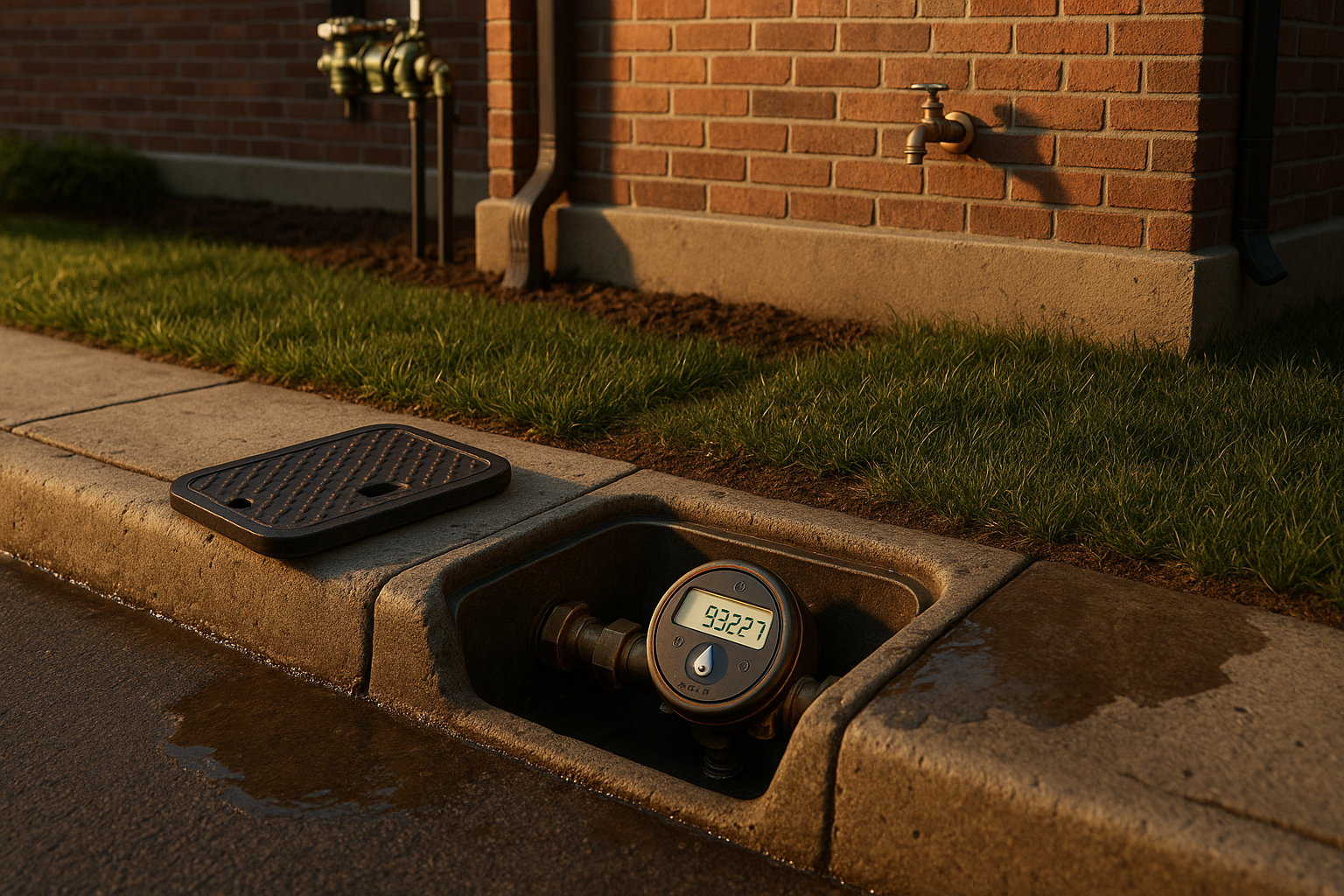
Go look at your water meter. Don’t run any water for a couple hours, then check if the little dial has moved. If it has, you’ve got a leak somewhere. It might be a running toilet (those dye tests again) or a slow drip under a sink you haven’t noticed. Even a tiny leak wastes gallons over a month and can spike your water bill. We’ve seen hidden leaks send bills into the stratosphere.
Check under every sink and around every toilet for moisture or water stains. Feel the walls around hose bibs inside. If you find a small drip, fix it now. A tiny leak that’s barely noticeable in October turns into a burst pipe once it freezes. Freezing water expands with unbelievable force—it’ll split metal, let alone copper or PEX.
When to DIY and When to Call In
Let’s be real. You can handle taking off hoses, putting on bib covers, and slipping foam insulation on pipes. Testing a sump pump with a bucket is easy. Dye testing toilets takes two minutes. These are things that don’t need special tools or knowledge.
But some stuff is just smarter to leave to a licensed plumber. Anything with gas (like a gas water heater) is an obvious one. Winterizing an irrigation backflow preventer—unless you’ve got a big compressor and know the right blowout points, don’t guess. Replacing a main shut-off valve that’s forty years old? That can go sideways in a hurry. And if you’ve got signs of sewer trouble, a camera inspection isn’t something you can DIY with a phone and a long stick.
WaterPros does fall plumbing tune-ups that hit every point on this list. We check the outdoor stuff, test pressure, inspect the water heater and expansion tank, run through all your fixtures, and look at the sump pump. You get a straightforward report with photos, and we don’t push repairs you don’t need. It’s the same kind of inspection we recommend when you’re buying an older home in Indy, just simpler.
Don’t Wait for the First Freeze
Here’s the bottom line: the first freeze in Indianapolis usually hits by late October. Plumbers’ schedules fill up fast once it does, and an emergency call during a cold snap costs more and takes longer. A little preventive work now saves you from standing in a flooded basement on a Saturday morning.
If you want peace of mind, request a fall plumbing inspection and winterization quote. We’ll come out, do the checks, and make a clear plan for anything that needs attention. No jargon, no upsells—just good, practical help so you can enjoy the holidays without plumbing surprises.
Need a plumber you can call back?
Licensed Indiana plumbers, flat-rate pricing, and a written warranty on every job.