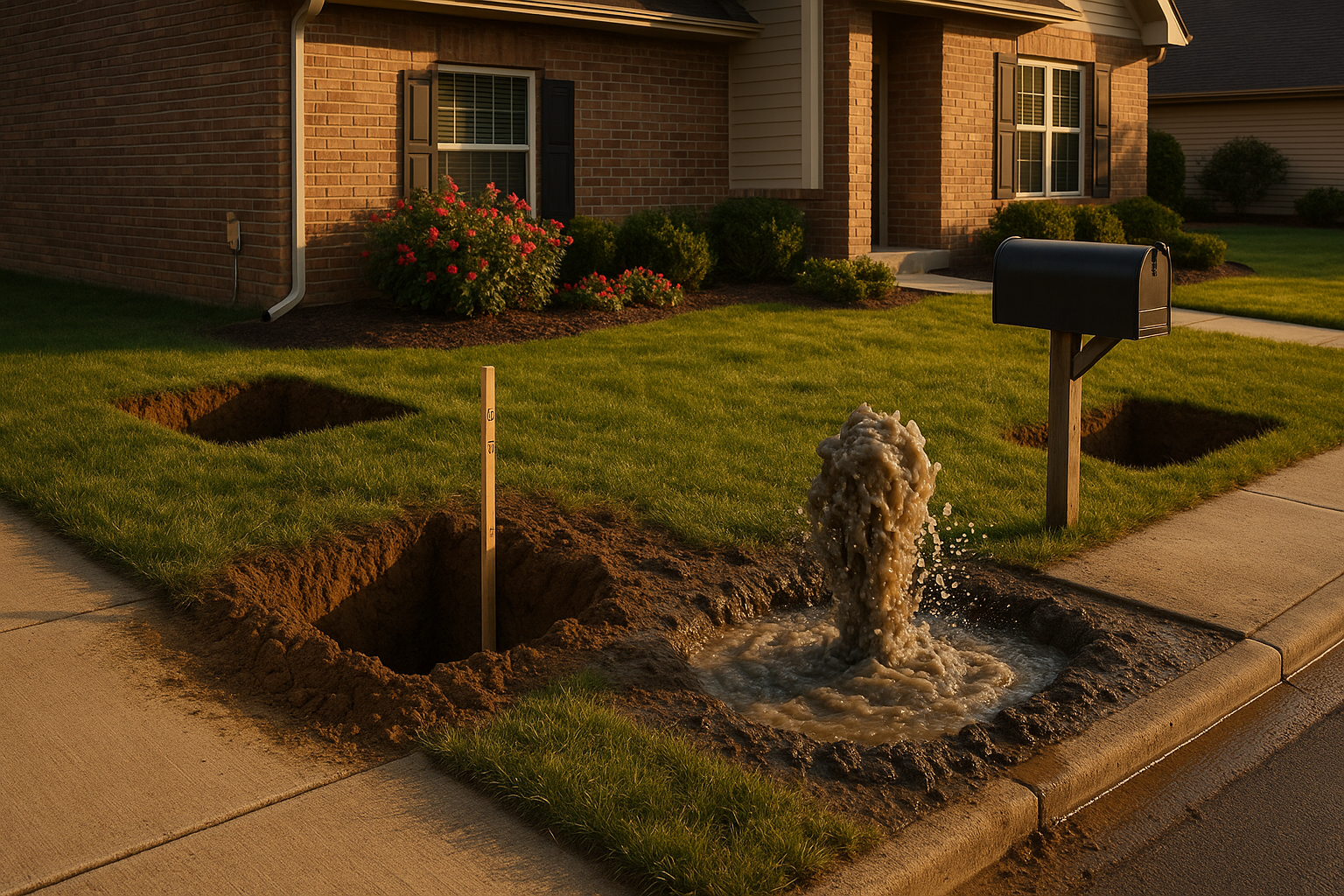
Mark stood in his front yard on a Tuesday morning, staring at a small geyser of dirty water bubbling up near his mailbox. The smell hit him before his brain caught up. Sewage. In the flower bed. A week earlier, his basement guest bathroom had been gurgling, but he'd brushed it off as a fluke. Now, he knew: his sewer line was toast.
If you're a homeowner in Westfield, you've either been through something like this or you're living in fear of it. Sewer line trouble isn't just gross—it's expensive and disruptive. But here's the thing: the way you fix it makes all the difference. And in a town where clay soil and old pipes often collide, knowing your options can save your lawn, your driveway, and maybe your sanity.
What Does Sewer Line Replacement Actually Cost in Westfield?
Let's cut to the numbers. In our experience around Westfield, a full residential sewer lateral replacement typically lands between $5,000 and $18,000. That's the common range for a straightforward job. If your line runs under a driveway, crosses a busy street, or needs a very deep dig—say, over 12 feet down—you could be looking at $20,000 to $30,000 or more. Yes, that stings. But don't panic yet.
Why such a spread? A few things control the price tag. The length of pipe you're replacing (per foot costs add up fast), the method you pick (trenchless vs. digging), and how much restoration your yard needs afterward. In Westfield, where many homes have mature trees and pristine lawns, restoration isn't cheap.
Trenchless Sewer Repair: The Yard-Friendly Option
So, you've heard about trenchless methods—CIPP lining and pipe bursting—and you're wondering if they're worth it. Short answer: often, yes. Instead of a giant trench from your house to the street, trenchless work only needs a couple of small access pits. One near the house, one near the curb. That's it.
CIPP lining (that's cured-in-place pipe) is like putting a new pipe inside your old one. We feed an epoxy-saturated liner through the broken pipe, inflate it, let it cure, and boom—you have a smooth, seamless new pipe that can last 50 years or more. In Westfield, this runs about $80 to $150 per foot, depending on the access and condition.
Pipe bursting is different. It pulls a brand new HDPE pipe through the old line, bursting the old pipe outward as it goes. This is better when the old pipe is collapsed or badly offset. Cost per foot is similar, maybe $100 to $200, but it often needs a bigger pit at the starting point and can handle more severe damage.
Trenchless isn't magic, though. It works best when the old pipe is still a continuous channel—even if it's cracked or root-packed. If your line has major dips (bellies) or is completely collapsed in multiple spots, you might need a hybrid approach. But for most homes in Westfield subdivisions, where root intrusion and minor cracks are the top offenders, trenchless is a solid choice. And yes, we do this with the sticky glacial-till soil that makes digging a headache.
When You Still Need Open-Cut Excavation
Open-cut is the "big dig" method. It's straightforward: dig a long trench, yank out the old pipe, lay in the new one, bury it. Per-foot cost can be similar to trenchless when you're just counting the pipe work. But here's what gets you: after the pipe is in, you still have to fix your yard. Grass seed, sod, sprinkler lines, pavers, concrete drives, sidewalks—that all adds hundreds or thousands to the job. And your yard looks like a construction zone for weeks while it heals. For homes in neighborhoods like The Village or downtown Westfield, where a front lawn is part of the curb appeal, trenchless usually sparks a lot less regret.
Local Stuff You Never Thought About Until Now
Westfield isn't just any suburb. Our dirt is heavy, sticky clay that shifts with the seasons. Freeze-thaw cycles in the winter can nudge shallow pipes out of alignment. The frost line here is about 36 inches down, so any new pipe has to be set deep enough to avoid freezing. And many older homes—especially those built before 1980—still have original clay tile or something called Orangeburg pipe. Orangeburg was a fiber-based pipe that was popular mid-century, and it tends to collapse or blister over time. If a camera inspection shows you have that stuff, you're probably looking at replacing the whole thing, not just patching it.
Permits are another thing. In Westfield, you'll need a permit for a sewer line replacement, and if your work touches a street or sidewalk right-of-way, there's more paperwork. WaterPros handles all that—Indiana 811 locate calls, Hamilton County permits, even coordinating with the city if we need to work near the street. You shouldn't have to become a bureaucrat to fix your sewer.
And while we're talking about systems, remember that many homes in this area have water softeners. The brine discharge from a softener can corrode metal fittings over time, and sometimes those drain lines tap into the sewer lateral. During a camera inspection, we'll check for softener-related wear and tear. (By the way, WaterPros installs and services water softeners, too, so we can talk about whether your whole setup is playing nice together.)
Does This Apply if I'm on Septic?
Nope. If your house out in the countryside has a septic system, the game changes. Sewer laterals go to a city main; septic lines go to a tank and drainfield. WaterPros does septic inspections and maintenance, but that's a different story. Check out our septic system inspection guide if that's you.
Similarly, if you get your water from a well, WaterPros is a licensed well drilling contractor. But for today, we're talking about what happens after the water goes down the drain.
How WaterPros Keeps Your Estimate Realistic
Nobody likes a lowball number that balloons into a nightmare. That's why we start every job with a sewer camera inspection. We run a high-resolution camera down your line, mark the trouble spots, and give you a video to keep. Then we put together a fixed-price proposal. Not a "starting at" number—a real, detailed line-item quote showing the footage, the method we recommend, any tie-ins or cleanouts, and what restoration allowances look like. No hidden fees, no add-ons you didn't ask for.
We also walk you through what to expect day-of. Most trenchless jobs finish in one to two working days after the permit clears. You can usually use your plumbing at night, even during the work. We set up temporary bypass pumping for the daytime hours while we’re working. We minimize the mess, we protect your landscape, and when we leave, the only sign we were there is a flushable toilet that actually drains.
We’ve seen too many homeowners spend money on spot repairs that buy them six months before the next collapse. If your line is falling apart in multiple spots—heavy root intrusion, cracks every few feet—go full-length replacement with trenchless if you can. It hurts once, then it's done. Read more about trenchless repair methods in Carmel if you're weighing whether lining or bursting is better for your situation.
But What About Drain Cleaning? Is That Enough?
A quick rooter job can clear a clog for a while. And sometimes that's all you need. If your camera inspection shows minor root intrusion and pipe walls in good shape, we might suggest hydro jetting and annual maintenance instead of replacement. But if the camera reveals cracks, offsets, or corrosion, cleaning is just a Band-Aid. We talk more about hydro jetting vs. snaking here.
Your Top Worries, Answered Honestly
"Will trenchless cost more than digging?" It depends. On a per-foot basis, trenchless is often comparable. The savings come from skipping restoration. So the all-in price is usually lower if you factor in repairing your yard, driveway, and sidewalks.
"Will my yard get ruined?" With trenchless, disruption is minimal—usually a couple of 3x4-foot pits that we backfill and dress with topsoil. Your grass recovers in a few weeks. Open-cut? You'll have a ditch-shaped scar for a season.
"Is the liner stuff safe?" The epoxy we use meets ASTM F1216 standards and is cured with steam. Once hard, it's inert and safe for your home's plumbing. No chemical leaching into the ground.
"Can you fix just a section?" Sometimes, yes. But if your line is older clay or Orangeburg, a spot fix often leads to another break a year later. Full-line trenchless is the better long game for compromised old pipes.
"What if I have a water leak or drainage issue too?" Good point. A saturated yard can stress a sewer line. WaterPros also handles drainage solutions—French drains, downspout rerouting, sump pump installs—to keep water away from your foundation and your sewer pipe. Everything's connected.
"How fast can you start?" We aim for same-week camera inspections, and once you approve the estimate and permit is in hand, most jobs kick off within a week or two.
Ready to Know What's Going On Down There?
Stop losing sleep over a mysterious sewer problem. Start with a camera inspection—it's the only way to truly know what you're dealing with. WaterPros serves all of Westfield and surrounding areas: Indianapolis, Carmel, Fishers, Zionsville, Noblesville, Greenwood, Brownsburg, Avon, Plainfield. We'll get a clear picture of your line, talk through your options, and give you a price that won't change on you.
Book your inspection and fixed-scope estimate here — no pressure, just honest answers.
Need a plumber you can call back?
Licensed Indiana plumbers, flat-rate pricing, and a written warranty on every job.