It was a Tuesday morning, and the shower water was up to my ankles. Called a plumber, he ran a snake through the line, water drained, I paid the bill, and life went on. Six weeks later, same thing. This time the toilet burped when I ran the washing machine. That’s when I learned the difference between a quick snaking and a real cleaning.
That’s a story we hear a lot around here. Homeowners in Greenwood, especially in older neighborhoods near Old Town or around the mature trees south of County Line Road, deal with drain clogs that keep coming back. The question they end up asking us is simple: do I need a regular drain cleaning, or is it time for hydro jetting? Let’s walk through it plain and simple.
What’s the Difference Between Snaking and Jetting?
Drain cleaning usually means running a metal cable with a cutting head (an auger or snake) down your pipes. It punches a hole through the clog. That gets water moving again—for now. But it doesn’t scrub the pipe walls. So all the gunk, grease, and scale stays stuck on the sides, waiting to catch more debris.
Hydro jetting uses a high-pressure hose with a special nozzle. Water blasts out at up to 4,000 PSI (or less, depending on the pipe). It scours the inside of the pipe clean. Think pressure washer for your sewer line. The difference is like running a string through a dirty straw versus scrubbing the straw with a brush and hot water.
When Snaking Gets the Job Done
If your clog is recent and soft—like a wad of toilet paper or a small blockage in an otherwise clear line—snaking works just fine. It’s fast, usually 30–90 minutes, and costs less. For a simple single sink or tub backup, snaking is often the right call. You might pay in the low hundreds for a main line snake, depending on access.
But if you’ve got older pipes, especially clay tile or cast iron, snaking won’t fix the buildup that narrows the pipe over time. In Greenwood, homes built before the 1970s often have clay tile laterals with joints that shift and catch debris. A snake just clears a path, but the pipe stays rough and narrow.
When Hydro Jetting Is the Better Bet
Hydro jetting is the go-to when you’ve got: - Grease buildup (common in kitchen lines, especially if you cook a lot). - Scale from hard water (all over Johnson County, our water is hard—more on that later). - Tree root intrusion (hello, maples and sycamores that love moisture). - Repeat clogs that come back every few months.
Jetting doesn’t just punch a hole; it restores the pipe’s full diameter. For cast iron pipes that have years of scale, we use a special descaling nozzle that chips away mineral buildup. For roots, we have root-cutting nozzles that shred them and flush out the tendrils. Snaking might poke a hole through roots, but the roots grow right back. Jetting removes more organic matter and buys you more time.
One thing that surprises folks: hard water isn’t just a shower-door nuisance. Those minerals build up inside pipes too. We’ve seen cast iron laterals in Greenwood so choked with scale that the opening was no bigger than a fifty-cent piece. That’s where jetting shines. And if you’re tired of the hard water causing problems, we do install water softeners—check out our guide on hard water solutions in Indianapolis. A softener won’t reverse pipe scale, but it’ll stop new buildup. And if your water comes from a private well, you’re probably dealing with extra minerals. We can talk about that too—we’re not just plumbers, we’re also well drilling contractors and water treatment specialists.
Restaurants along US-31 and County Line Road call us for regular grease-line jetting to stay ahead of backups. For homeowners with heavy-use kitchen sinks, that same principle applies.
Why Camera Inspections Are a Must
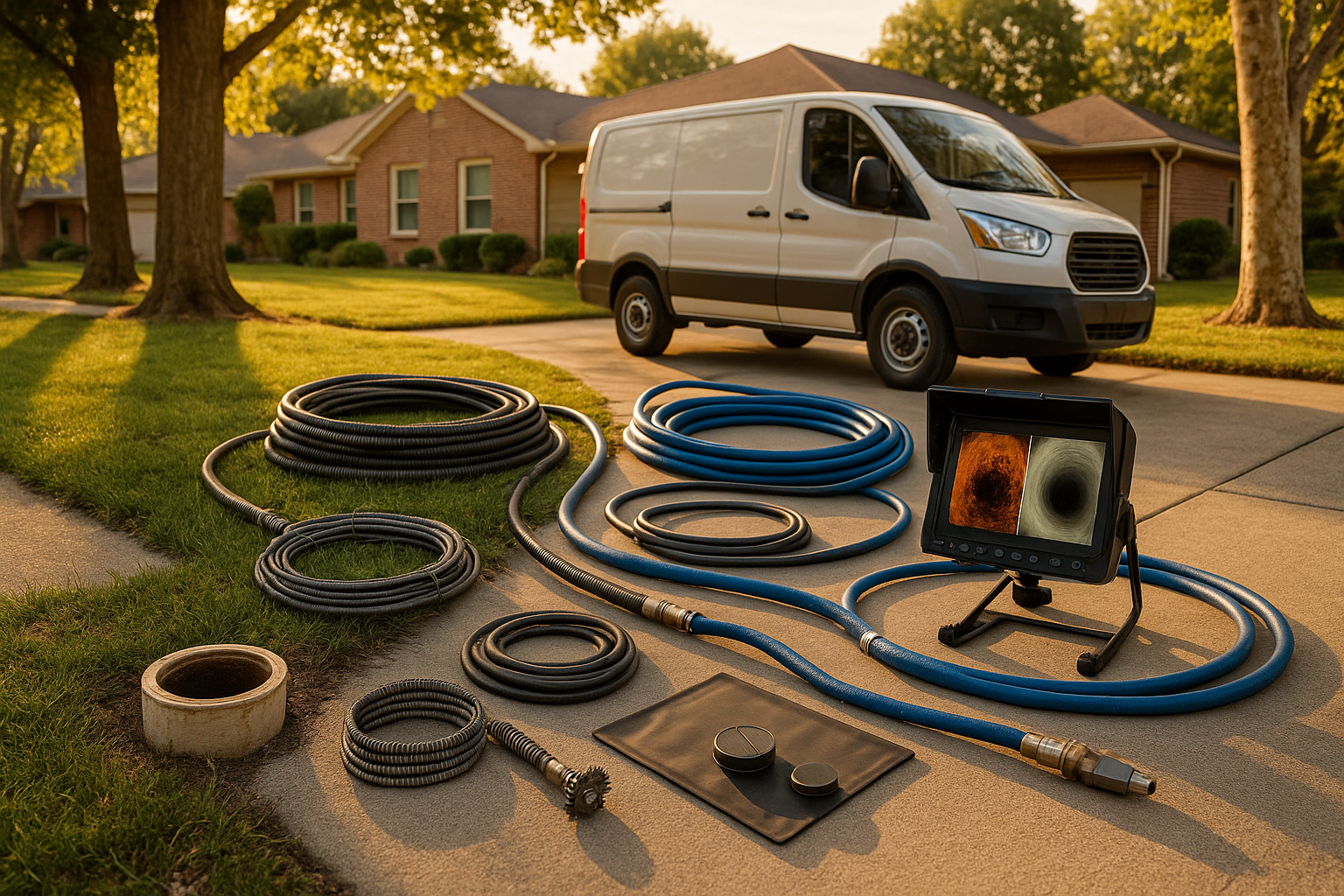
Before we snake or jet, we always send a camera down. It’s a waterproof camera on a flexible rod. We look at what’s blocking the pipe, check for cracks, bellies, or collapses. This tells us whether jetting is even safe. If the pipe is broken or has offset joints, high-pressure water could make things worse. The camera gives us a clear picture, and we show you the video so you know exactly what’s going on. No guesswork.
In Greenwood, with so many older clay and cast iron lines, we’ve found everything from collapsed sections to Orangeburg pipe (that’s a fiber conduit pipe used in the 1950s and ‘60s, super fragile). Jet a crushed Orangeburg line, and you’ll have a real mess. So the camera is step one. If we spot a break or major offset, we can talk about trenchless repair options—like what we’ve done over in Carmel with trenchless sewer fixes.
Old Pipes in Greenwood: Safe Jetting Practices
Yes, hydro jetting is safe for most pipes—when done right. PVC and cast iron in good shape can handle high pressure. Clay tile can too, as long as it’s not already crumbling. We adjust the pressure and nozzle based on what we see in the camera. For delicate pipes, we use lower PSI and a gentler nozzle. We also make sure your clean-out is accessible. Most Greenwood homes have an exterior clean-out near the driveway or in a landscape bed. That’s the point of entry. We use backflow prevention devices and containment mats to keep basements and yards clean—more on that in our backflow prevention guide for Indianapolis. No water shoots back into your house.
If you’re on a septic system—and some properties south and west of Greenwood are—jetting is still fine for the house lateral, but we don’t blast the septic tank or drain field. That would disturb the bacteria and could damage components. Our team knows the difference. We also handle septic system inspections if you’re having recurring problems (we’ve got an article on septic inspections in Noblesville).
And don’t forget your yard drains—if surface water is pooling and finding its way into your sewer, that could be a drainage issue. We handle drainage service too, from fixing slope problems to installing proper outlets.
What About Cost and Mess?
Hydro jetting costs more than snaking—figure it’s a higher-ticket service, often a few hundred dollars more, depending on the length of the line and severity. But consider this: if you’re paying for snaking every few months, jetting might save you money in the long run. We give a written quote after the camera inspection so there’s no surprise.
Cleanliness wise, we’re meticulous. We run a hose from our truck, use clean-out plugs, and contain any splatter. No chemicals, no stink. Just water. It’s safe for your landscaping and hardscapes.
Preventative Plans and When to Call
In Greenwood, mature trees and spring rains are a recipe for root intrusion. Heavy downpours saturate the soil, and roots seek out any tiny leak in your sewer line. A main line that was just “slow” can become a full backup after a storm. That’s why many homeowners here opt for a preventative camera check and jetting every couple of years, especially if they know they have clay tile laterals.
Also, if your home has downspouts or yard drains tied into the sewer (older homes sometimes do), excessive rainwater can overwhelm a partially clogged line. A well-maintained drainage system can prevent that.
Get a Straight Answer from WaterPros
If you’re tired of recurring clogs, or you just want to know what’s really going on in that underground pipe, let’s get a camera down there. It’s the only way to know if snaking or hydro jetting is the right call. We’ll show you the video, explain what we see in plain English, and give you a fair price before any work starts.
You can get a free quote and schedule your camera inspection. No pressure, no jargon. Just a local crew who knows Greenwood’s dirt, trees, and pipes like the back of our hand.
Need a plumber you can call back?
Licensed Indiana plumbers, flat-rate pricing, and a written warranty on every job.