It was a sticky July afternoon when my buddy texted me a picture—a small pool of water spreading across his basement floor in Meridian-Kessler. His water heater was leaking, and he was about to start pulling up carpet remnants with a panicked look. “What do I do? Is this dangerous?” I told him to take a breath and do three things right then. Because honestly, the first five minutes after you spot a water heater leaking make all the difference.
Cut the Power and Water Now
First, safety. If the water is close to any cords or electrical stuff, that’s a shock risk. For an electric water heater, find the breaker in your panel and flip it off. No hesitation. If it’s gas, turn the gas control knob to “off”—you’ll see a little dial on the front near the bottom. Then, close the cold-water shutoff valve above the tank. It’s usually a ball valve or a gate valve. Turn it clockwise until it stops. If the leak is really roaring, you can also lift the metal lever on the temperature and pressure relief valve (the T&P valve) to relieve pressure, but be careful—hot water might spray out. That’s step one. You’ve stopped the active danger.
Now, you’ve bought yourself some time to figure out what’s actually going on. I’ve seen homeowners in Fishers and Greenwood do this and save their finished basements. It’s not rocket science, but it’s nerve-wracking when you’re watching water creep across the floor.
Where’s the Water Coming From?
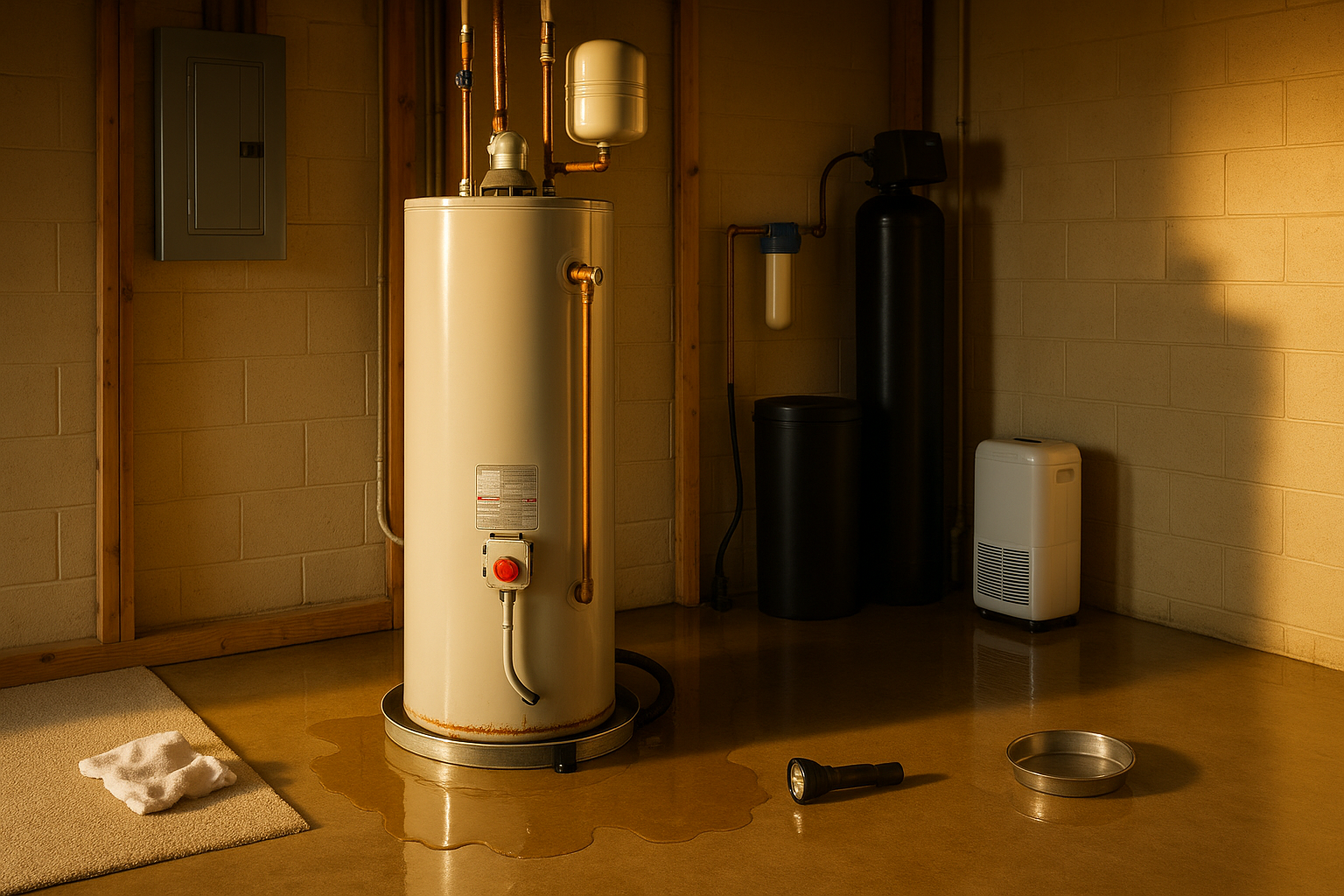
Grab a flashlight and a towel. You need to pinpoint the source. Wipe everything dry and watch closely. Here are the usual suspects:
Top of the heater
Check the cold-inlet and hot-outlet pipes, plus any flexible connectors. A loose nut or a corroded fitting can drip. I’ve tightened a few of these in Zionsville kitchens and stopped leaks in three minutes. If it’s from a threaded connection, you might just need to snug it up (gently) or replace a rubber gasket. Not a huge deal.
The T&P valve and drain pipe
If water is trickling from the end of a small pipe on the side or near the floor, that’s likely the T&P release. This valve opens when pressure or temperature gets too high. In Indianapolis, a lot of our water systems are “closed,” meaning pressure can spike from thermal expansion. If you’ve got a dripping T&P valve, do NOT cap it—that’s like plugging a pressure cooker. It needs checking, and you likely need a thermal expansion tank (which I’ll get into).
The drain valve near the bottom
That little plastic spigot at the base can fail. I once had a client in Avon whose drain valve had a slow drip after he tried to flush the tank. If it’s just the valve, a plumber can replace it without swapping the whole unit. But don’t ignore it—a leak there can grow.
The bottom of the tank itself
If you see rust at the base or water seeping from the seam, that’s almost always tank failure. Hard water in Central Indiana eats away at the metal over time, and once the inner tank cracks, there’s no fix. You can’t patch a pressurized tank. I’ve seen Carmel homeowners try epoxy—it never holds. If the leak is from the bottom, you’re shopping for a new heater.
Condensation vs. leak
In hot, humid Indiana summers, a cold tank can sweat like a glass of iced tea. Wipe it dry. If the moisture comes back evenly all over and stops when you run a dehumidifier, it’s sweat. A real leak shows up around a specific spot and keeps going.
Why Indy Homes Have Unique Water Heater Headaches
A lot of folks don’t realize that our local water and building codes make leaks more likely—or at least more complicated.
Hard water is a tank killer
Most of Marion County and the donut counties (Carmel, Noblesville, Greenwood) have water loaded with minerals. That’s where a good water softener comes in. I’ve had my own water softener since I moved to Broad Ripple, and I’ve seen it double the life of my heater. If you don’t have one, sediment builds up, the bottom bakes, and the tank rusts prematurely. We actually wrote a whole piece on water softener salt choices in Indiana if you’re curious.
Thermal expansion: the hidden problem
In a closed plumbing system (common around here with check valves at the meter), heated water expands with nowhere to go. That spikes pressure, stressing your tank and popping the T&P valve. The fix is a thermal expansion tank—a little white tank installed near the cold inlet. Indiana code requires them on new installs. I’ve seen inspectors in Westfield and Avon fail replacements without one. Here’s a deeper dive: why expansion tanks are required and how they work.
Drainage and pan details
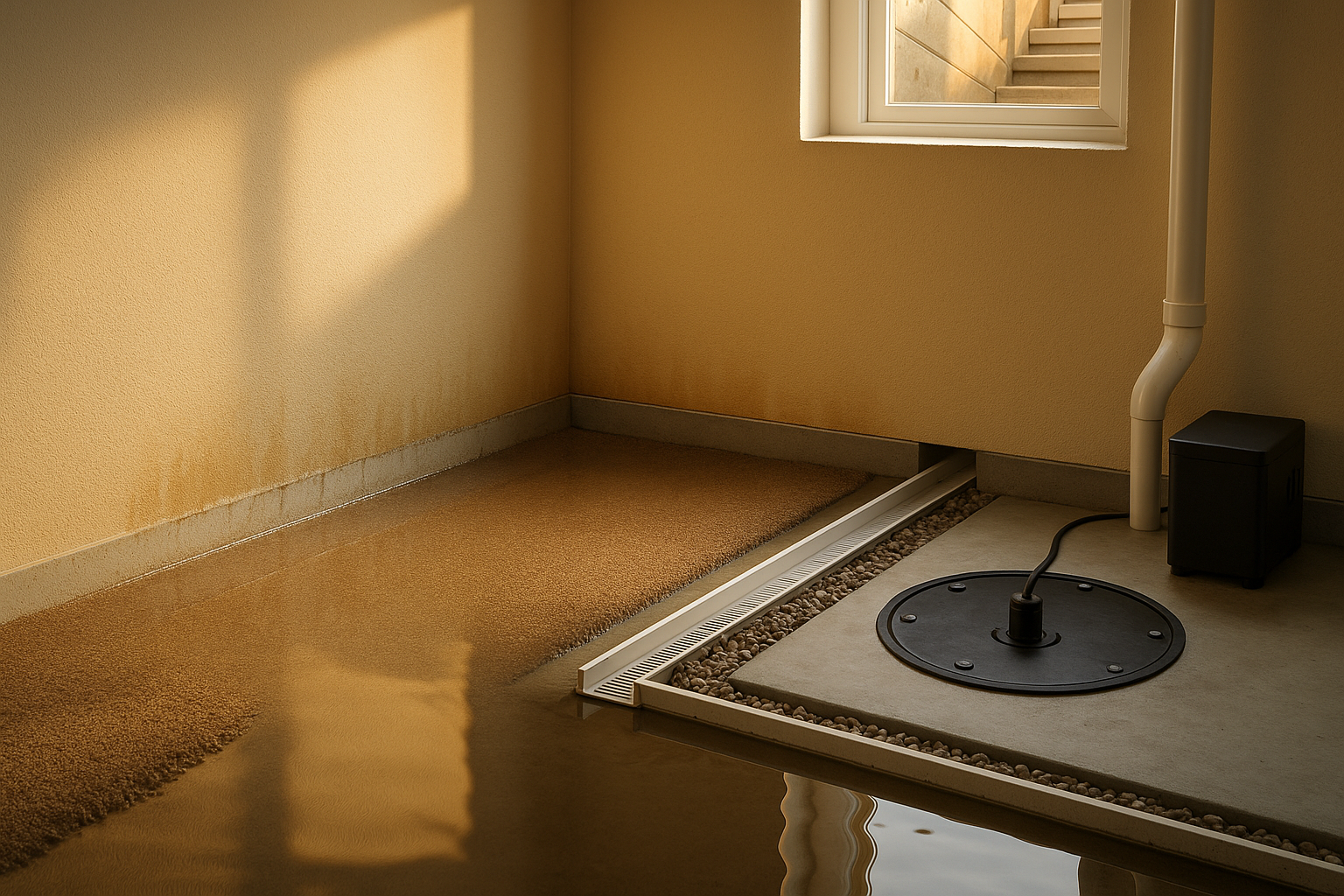
If your water heater sits in a basement, you want a drain pan underneath. Better yet, plumb that pan to a floor drain or a condensate pump. I’ve been in older Irvington homes where the mechanical room has no drain—a leaking tank floods the basement. Even if you have a sump pump, be careful: a constant stream of hot water can overload the pump or mess with a septic system if you’re on one. If you’ve got a septic system, a big leak can saturate the drain field. So, a pan with a proper drain is non-negotiable in my book.
Well water? Extra caution needed.
Quite a few folks in rural pockets of Hamilton County or outskirts of Brownsburg rely on private wells. Well water can be heavy in sediment and iron, which clog up a water heater faster than city water. If you’re on a well, a sediment filter plus a water softener is smart. And if your well pump is old, a sudden heavy draw from a leaking heater can stress it. That’s a different call—maybe even a well drilling contractor if you need a new well pump or a better setup.
Repair or Replace? Let’s Talk Age and Cost
First, check the age. Look at the rating plate (usually near the top or side). The serial number encodes the date. Most manufacturers’ websites have a lookup tool. If your heater is more than 10 years old and leaking at the bottom, replacement is the only sensible move.
In Indianapolis, a standard tank replacement runs around $1,500 to $2,800, depending on venting and extras. If you need a power vent (common when there’s no chimney), it’s higher. Same-day or next-day is doable—we do it all the time. Don’t let a pushy sales pitch scare you; a straight-shooting plumber will tell you if it’s a simple fix or a swap.
And yes, in Indianapolis and most suburbs, you need a permit for a water heater replacement. A good plumber pulls it and schedules the inspection. That way you know it’s up to code with proper venting, expansion tank, and gas connections.
Keep Your Next Heater Healthy
Once the new tank is in, a little care goes a long way.
- Flush a few gallons out of the drain valve once a year to battle sediment.
- Check or replace the anode rod every 3–5 years—it’s the sacrificial metal that rusts so the tank doesn’t.
- Set the thermostat to 120°F. Hot enough to shower, not hot enough to scald or waste energy.
- If you have a water softener, keep it fed with salt (or potassium). The link above has the pros and cons.
- Make sure that expansion tank’s air pressure is checked annually.
These steps can stretch your heater’s life well past the 8–12-year average.
If you’re staring at a puddle right now, don’t wait. You can request a no-pressure inspection and quote from us at WaterPros. We cover Indianapolis, Carmel, Fishers, Zionsville, Westfield, Noblesville, Greenwood, Brownsburg, Avon, and Plainfield. We’ll tell you straight what you need—fix or replace—and get it done same-day if it’s an emergency. No scare tactics, no hidden fees. Just a plumber who shows up on time and treats your home like it’s his own.
Need a plumber you can call back?
Licensed Indiana plumbers, flat-rate pricing, and a written warranty on every job.