Last spring, my neighbor Anna in Zionsville called in a panic. She’d just gotten her well water test back and it lit up positive for coliform bacteria. With two toddlers at home, she felt sick about every glass of water she’d poured over the past year. Her husband was already pricing bottled water delivery and talking about moving. They started pricing uv water purifier well systems that afternoon. That’s when they called us at WaterPros, still half-believing they’d have to live on bottled water forever.
A uv water purifier well setup is basically a stainless steel chamber with a special lamp inside. Water flows through, and ultraviolet light scrambles the DNA of bacteria, viruses, and protozoa so they can’t reproduce. It adds zero chemicals, so the taste never changes. But here’s the thing that trips people up: a UV system does one job—disinfection. It won’t filter dirt, iron, sulfur, or soften your water. So if your well water is cloudy or loaded with minerals, that UV light can’t penetrate, and bugs slip through right alive. Think of it like a flashlight in fog—the beam gets blocked, and you never kill what’s lurking.
When UV Makes Sense for Your Indiana Well
Most folks around Indianapolis—Carmel, Fishers, Noblesville, Greenwood, all the way to Plainfield—don’t start thinking about UV until they get a bad test result. Coliform or E. coli shows up, and suddenly the whole house feels dangerous. Shallow wells, especially, can pick up surface contamination after heavy rains. A couple of wet springs in a row and we see a jump in tests from Hamilton County and Hendricks County wells where the White River basin affects groundwater. If your well sits in a low spot or has an old, leaky cap, a UV water purifier becomes a must-have, not a maybe.
Even if your well tests clean today, a lot of homeowners install UV for everyday peace of mind. It’s the same reason you lock your doors at night—maybe nothing bad ever happens, but you sleep better knowing you’ve got a plan. WaterPros also does well drilling, so if we find your well casing is cracked or the well is just too shallow to stay clean, we can talk about drilling a new well (we hold a well drilling contractor license). But for most people, adding UV to a sound well is the smart, affordable fix.
The Setup: More Than Just Zapping Bacteria
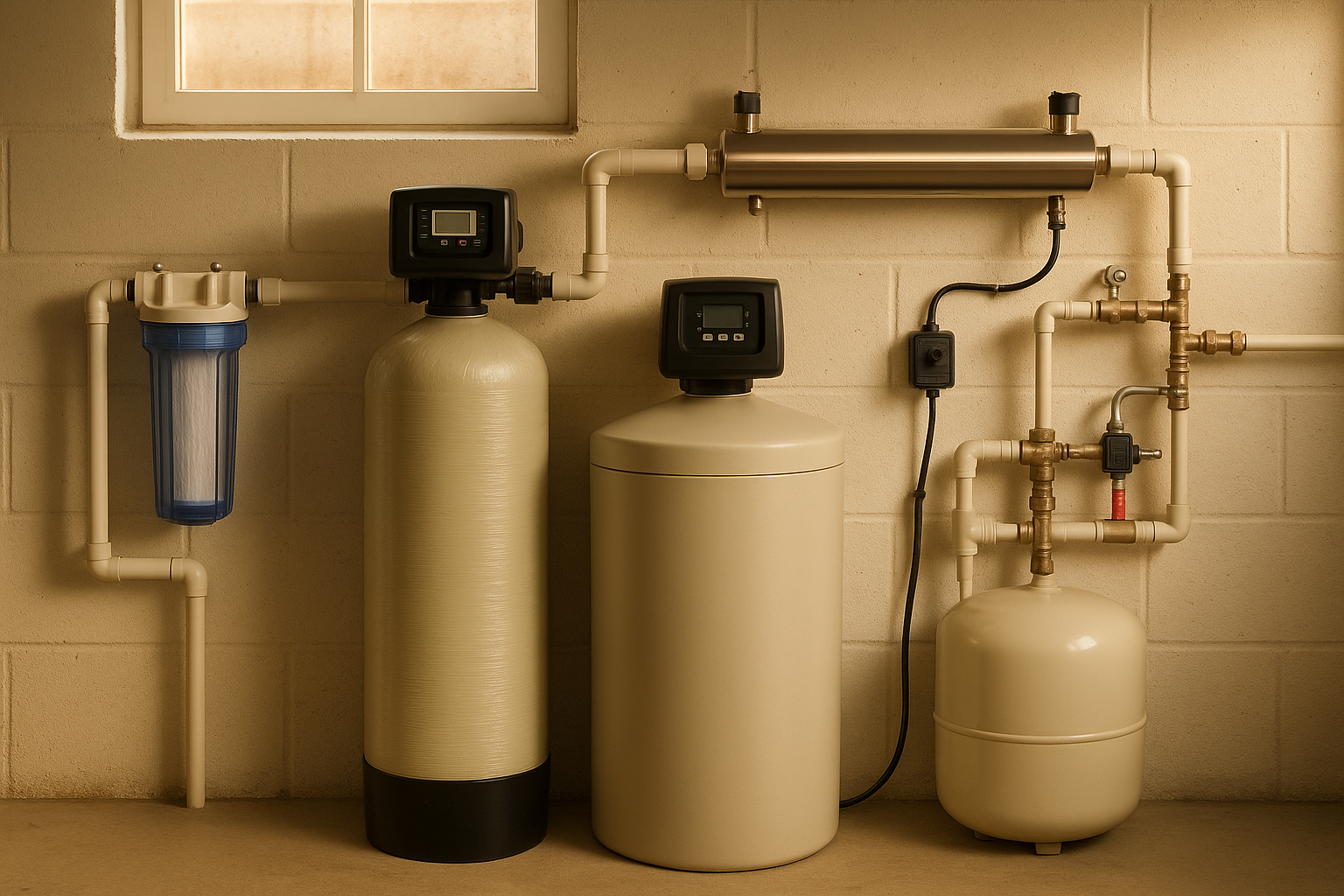
The UV lamp itself is the easy part. The real work is getting the water clear enough that the light can do its job. At minimum, you need a 5-micron sediment filter right before the UV chamber. That catches rust flecks, sand, and silt. But around Indy, our well water often has iron and hardness that will foul the quartz sleeve in no time.
Pre-Treatment: The Unsexy Step That Makes It Work
Iron stains everything orange and sticks to the sleeve like baked-on crud. A water softener—yep, WaterPros supplies and installs those too—is your best friend here. Softener first, then UV, no exception. The softener grabs calcium, magnesium, and some iron, keeping the sleeve clear. If you’ve got more than a whisper of iron or the sulfur smell, you might need an iron filter or a chlorine injection system ahead of the softener. We wrote about that in our iron and sulfur treatment guide. Short version: don’t skip pretreatment, or you’ll be changing a $100 lamp every three months and still not killing bacteria. If your water’s hard enough to leave white crust on faucets, a softener isn’t just for UV—it’ll save your dishwasher and washing machine too. (We geek out about that in our hard water appliance damage post.)
Sizing and Placement: Don’t Guess, Do the Math
A UV system can’t just be any old size—it gets matched to your home’s peak flow rate. If your family runs two showers plus the dishwasher at once, you could be pulling 12 gallons per minute. A system that’s too small lets water speed past the lamp too fast, and the UV dose drops below what’s lethal to pathogens. We size them with a flow test at your pressure tank, usually in the basement or utility room, right after the softener. The whole setup needs a bypass valve so you can change the lamp or clean the sleeve without shutting off water to the house. Most Indy homes have a mechanical wall that fits the chamber, pre-filter, and softener side by side—tight, but it works.
“Will It Work When the Power’s Out?” and Other What-Ifs
Here’s a scenario: a summer storm knocks out power for three hours while you’re asleep. Without electricity, that UV lamp goes dark, and untreated well water could slip through. The fix is a normally-closed solenoid valve that snaps shut when the power fails. That way, no power means no water—an inconvenience, but a safe one. Pair it with a surge protector, and you’re set.
UV vs Chlorine: Which One Actually Fits Your Life?
Some people ask, “Why not just dump bleach down the well? It’s way cheaper.” So when a uv water purifier well system gets compared to chlorine, remember: chlorine works, but you taste it and smell it, and it doesn’t kill certain cysts like Giardia quickly without a long contact time. Plus, you’ve got to store chemicals and babysit the dosing. UV gives you disinfection on demand, no taste, no hassle. We often tell folks: UV is your day-to-day protection; shock chlorination is only for after we pull a pump or do major plumbing work. WaterPros handles all that—we’re a full plumbing shop, so we can shock the well and install the UV in the same visit.
Maintenance: The Real Cost of Ownership
Once a year, that lamp needs replacing. It’s about the cost of a nice dinner out for two—not painful, but it’s not free. The quartz sleeve that protects the lamp gets cleaned every year or two, depending on how gunked up it gets. We set calendar reminders for our customers so they never miss a cycle. Skip maintenance, and you’re practically paying for a system that’s off.
The WaterPros Way: From Panic to Peace of Mind
When you call us about a UV water purifier for your well, we don’t just drop a box on your porch. We start with a water test—bacteria plus minerals—to see what we’re actually fighting. Then we measure your max flow, check your softener and filters, and draw up a clear, line-by-line quote. Installation usually takes us half a day, and we walk you through everything before we leave.
And while we’re at it, we keep an eye out for the stuff that can wreck your water comfort: a backed-up septic system (yep, we do septic service too) can contaminate groundwater if you’re not careful. A swampy yard around your wellhead? That’s a drainage problem that invites trouble. WaterPros does drainage fixes—French drains, grading—so your well stays high and dry after every downpour. It all ties together.
We serve all the usual Indy suspects: Indianapolis, Carmel, Fishers, Zionsville, Westfield, Noblesville, Greenwood, Brownsburg, Avon, Plainfield. If you’re on a well anywhere in the metro, we can get you set up.
If a positive test has you worried, or you just want to stop crossing your fingers every time you pour a glass, let’s talk. Get a no-nonsense quote and a plan that actually fits your water. Hit this link to get started. Your uv water purifier well system can be safe and good-tasting—no bottled-water aisle required.
Need a plumber you can call back?
Licensed Indiana plumbers, flat-rate pricing, and a written warranty on every job.