Last February, I got a frantic call from a friend in Broad Ripple. His sump pump had been running nonstop during a cold snap, and then—silence. An hour later, he heard water gurgling in the basement. The sump pit had overflowed, soaking boxes, carpet, and drywall. The culprit? A frozen discharge line. He'd thought it was no big deal—just a little ice, it'll thaw. But that freeze-up cost him thousands in cleanup and repairs.
Now, every winter, I hear similar stories from homeowners all over the Indianapolis area. Sump pump discharge freezing isn't just a nuisance; it's a serious risk. And the way most discharge lines around here are built, they're practically inviting trouble.
Why Sump Pump Discharge Lines Freeze in Indianapolis
So, why do these lines freeze? It's usually pretty simple: water gets trapped inside the pipe.
Maybe the pipe isn't sloped right. A lot of older homes in Indy have sump discharges that run almost flat from the foundation to the yard—that leaves a puddle of water sitting in the line after the pump kicks off. When temperatures drop into the teens for days on end, that standing water turns solid.
Or maybe the pipe is the wrong material. Corrugated hose is cheap and flexible, but those ridges catch water like a gutter. Smooth-wall PVC, on the other hand, drains completely. But even PVC can freeze if the outlet gets buried under snow or mulch. I've seen discharges pushed into a garden bed where the homeowner thought it'd be fine, but then a snowplow berm or drifted snow covers it entirely.
Then there's the check valve. It should be near the pump, not up high near the wall, because if it leaks or is stuck open, a long column of water sits in the cold exterior section. Speaking of valves, hard water here in Indianapolis—lots of calcium and lime—can build up on the seals, making them stick open or closed. If you've been thinking about a water softener for your home anyway, this is one more reason it's a good investment. (WaterPros supplies and installs water softeners, by the way—we've seen how our hard water wreaks havoc on plumbing.)
And don't forget the outlet itself. If it's a pop-up emitter that sits in a low spot or gets buried in snow, it won't open, and the water backs up. Or if it's just an open pipe pointed down, ice can climb right up inside.
The Real Risks When Your Discharge Freezes
It's not just about a little ice. A frozen discharge can wreck your sump pump and flood your basement.
When the pump can't push water out, it short-cycles—turning on and off rapidly. That's like revving your car engine constantly; it burns out the motor fast. I've seen pumps fail after just one winter of freezing episodes.
Then comes the water. When a frozen line blocks flow, and the pump is dead, any meltwater or rain-on-snow (which Indy gets a lot) has nowhere to go. The sump pit overflows, and water spreads across your basement. Even if you have a battery backup pump, it won't help if the discharge line is frozen—that backup pump will just pump water into the same blocked pipe.
And if your sump discharge is tied into a septic system (something you should never do, by the way—it overloads the tank and the drain field), you're looking at a whole other level of mess. We work on septic systems all the time, and a sump pump hammering a septic tank with clear water is a recipe for failure. Keep those separate.
How to Install a Freeze-Proof Sump Discharge (the Right Way)
So, what's the fix? It's not just about adding heat tape or crossing your fingers. A truly freeze-resistant sump discharge takes some planning and the right materials. Here's how we do it at WaterPros.
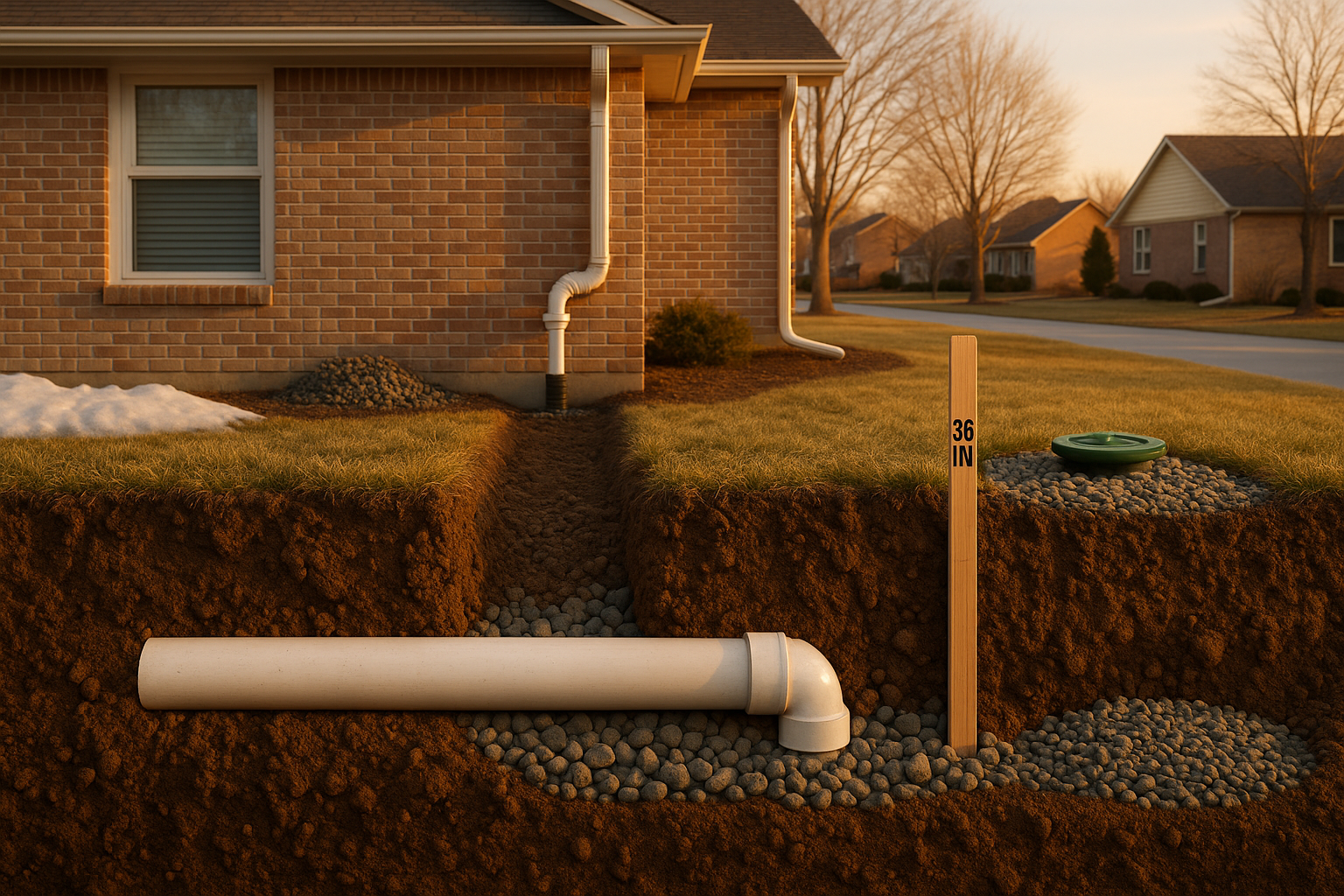
Dig deep enough. In Central Indiana, the frost line goes down to about 36 inches. You want to bury your exterior run at that depth if possible. But where the pipe comes out of the foundation, you can't be that deep—so you protect that section with slope, gravel, and a freeze relief fitting.
Use rigid PVC, not corrugated hose. Smooth-wall pipe drains every drop after pumping. No ridges to trap water. It's more work to install, but it's permanent. We only use schedule 40 PVC for all exposed or shallow sections. It won't sag or kink.
Get the slope right. The pipe needs a consistent fall of at least 1/8 inch per foot, all the way to the termination. That means no dips, no bellies. We use a laser level to confirm slope before we bury anything. On flat yards—common in places like Fishers or Zionsville—we sometimes have to custom-engineer a shallow trench with gravel drainage to maintain the fall.
Install an ice guard / freeze relief fitting. This is a small, cheap vent near the foundation wall that lets water shoot out if the buried outlet is blocked by ice. It's like a pressure-release valve. It might make a little splash during a freeze, but that's a thousand times better than flooding your basement. Best part? It's completely passive—no electricity, no maintenance.
Terminate smartly. Don't just point the pipe down into a flower bed. The best terminations for our climate are pop-up emitters or bubbler pots set in a gravel basin in a sunny, well-drained area—at least 10 feet from the house. That keeps water away from your foundation and gives it a chance to soak into the ground without creating a skating rink. Our drainage service team often handles the whole-yard grading to make sure that water doesn't pool or run back toward the house. It's all part of the same system.
Check valve placement matters. The check valve should be near the pump, inside the warm basement, to stop backflow from refilling the pit—but not so far downstream that a tall column of water hangs in the cold part. A good plumber will size and locate it correctly.
If you're in an area with a high water table—like along the White River or in parts of Greenwood—your sump pump might run a lot. That's where having a well-designed discharge is even more critical. And if you're on a private well (we drill wells too, over in Hamilton County), you know that managing groundwater is a full-time job. We understand the local water table better than most.
Winter Maintenance and What to Do if It Freezes
Once the system is in, a little routine care goes a long way. After every heavy snow, walk the discharge path. Clear snow away from pop-up emitters or outlet pipes. In the fall, rake leaves and mulch back so the opening stays clear.
Listen to your pump. If you hear short cycling or a gurgling sound on a freezing night, that's a red flag. Go look—the outlet might be iced over. If you have a high-water alarm in your sump pit (which we recommend), it'll warn you before you get water on the floor.
If you suspect the discharge is frozen, don't panic. First, clear snow and ice around the termination. You can pour warm water over the area or use a hairdryer on a low setting—never a torch or open flame. That's just dangerous. If the pipe is frozen underground, you'll need a pro to safely thaw it. While you wait, unplug the pump to prevent it from burning out, and watch the water level.
Frequently Asked Questions
How deep should a sump discharge be buried in Indianapolis? At least 36 inches to get below the frost line, but where it exits the wall, we use slope and stone to keep it draining even if shallow.
Is PVC really better than corrugated pipe? Absolutely. Corrugated is quicker but leaves water in the ridges; smooth PVC drains completely and won't collapse under soil pressure.
Do I need an ice guard? For about the cost of a nice dinner out, an ice guard buys you peace of mind every cold snap. It's cheap insurance against a flooded basement.
Can I connect my sump pump to the storm or sanitary sewer? Not in Indianapolis. Sanitary connections are a code violation, and storm sewers usually require permits that aren't worth the hassle. The best solution is a proper daylight discharge.
Will this project tear up my yard? We trench carefully and backfill with clean soil, replacing sod neatly. In a few months, you won't even know we were there. We treat your landscaping like our own.
Bottom line: a frozen sump pump discharge is fixable, and it's a lot cheaper to solve before you're bailing water out of your basement. WaterPros has been dealing with Indianapolis freeze-ups for years—we know the soil, the slopes, the codes, and the typical shortcuts that cause problems. If you'd rather not gamble every time the forecast drops below 20, give us a call.
We'll come out, walk your property, and write up a clear, no-nonsense plan for a freeze-proof sump discharge. You can even schedule an assessment online right here. No pressure, no fluff—just a solid solution that lets you sleep easy when the January wind howls.
Need a plumber you can call back?
Licensed Indiana plumbers, flat-rate pricing, and a written warranty on every job.