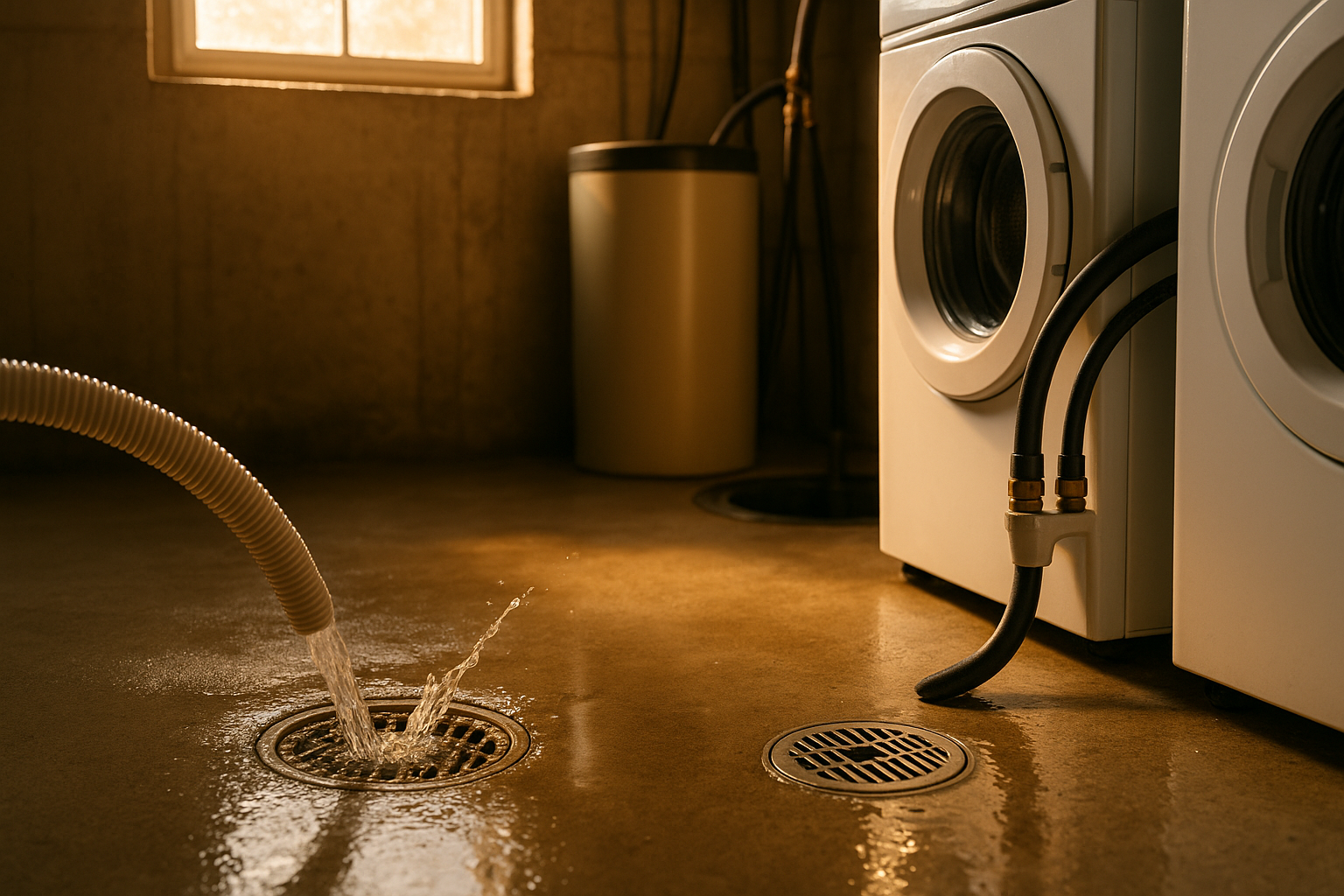
My buddy over in Irvington called me last Tuesday, voice half panic, half annoyance. "The tub won't drain, the toilet's gurgling, and now the basement floor drain is spitting up water when the washer runs." He'd already dumped two bottles of drain cleaner down the sink—a classic rookie move that only made things smell like a chemical swamp. His house isn't alone. When multiple fixtures turn sluggish at once, you're not dealing with a stray hairball. Something bigger is going on deeper in your system.
Why Whole-House Slow Drains Are Usually a Main Line Problem
Think of your plumbing like a tree: all those little branch lines from sinks, tubs, and toilets eventually join one thick trunk—your main sewer line. If water can't flow out through that trunk, every fixture upstream backs up. Gurgling from the toilet when you run the bathroom sink? Classic sign. And if you've got a floor drain in the basement that's suddenly wet and smelly, that's the lowest point in the system trying to relieve pressure.
In Indianapolis, main line clogs aren't random bad luck. Our older homes—especially in spots like Meridian-Kessler, Butler-Tarkington, and Broad Ripple—often sit above clay tile laterals installed decades ago. Those clay joints were never perfectly sealed, and our big mature maples and sycamores have been sending fine root hairs straight into the seams for years. What starts as a pinhole becomes a sponge that catches everything else: grease, soap scum, hair, you name it.
What Makes Indianapolis Drains So Prone to Slowdowns
Our weather doesn't help. Spring and summer storms saturate the soil around your foundation, and if your lateral has even a tiny crack, the pipe can shift or fill with grit. If you live in one of the older neighborhoods served by a combined sewer system—where stormwater and sewage share the same pipe—a heavy downpour might push water back toward your house. Even in separated systems, saturated ground puts extra pressure on aging clay, Orangeburg, or cast-iron lines.
Then there's hard water. Marion County sits on limestone, so our tap water carries a heavy mineral load. Over time, calcium and lime scale coat the inside of your pipes like cholesterol in arteries. That narrowed passage catches debris easier and slows everything down. A whole-house water softener doesn't just save your appliances—it can actually keep your drains running freer for longer. (And yes, WaterPros handles water softening systems, so you can kill two birds.)
Quick Checks You Can Do Yourself
Before you call us, walk a lap around the house and do this: - Run water in every sink and flush every toilet. Listen for gurgling in other fixtures—if the toilet bubbles when the lavatory drains, the vent or main line is obstructed. - Find your exterior cleanout cap. It's usually a black or white plastic disc near the foundation, often hiding in a flower bed or poking through the grass. Unscrewing it (slowly, with gloves, and back up—sewer gas stinks) lets you peer down—if you see standing water, the clog is between the cleanout and the street. If it's dry and the house is still slow, the blockage is inside or at the vent. - Don't reach for another bottle of chemical cleaner. Those fumes can corrode old metal pipes and the heat reaction can warp thin PVC. One friend fried his 1920s cast-iron kitchen stack that way and ended up with a $3,000 repair.
Why a Camera Inspection Pays for Itself
A common pushback: "You already know there's a clog—why do you need to look at it?" Because snaking or jetting the wrong way can turn a partial blockage into a collapsed pipe. A sewer camera inspection shows us exactly what we're dealing with: root fuzz, a belly where the pipe has settled and holds water, a broken section, or just years of sludge. In Indianapolis, where the frost line and clay soil heave seasonally, bellies are surprisingly common. We've seen lines where the decades-old pitch completely reversed—water tries to run uphill. No amount of snaking fixes gravity.
For soft clogs like toilet paper and grease, a traditional cable snake can punch a hole and restore flow. But for root intrusion or heavy scale, hydro jetting at the right PSI scours the pipe walls without grinding away old clay or cast iron. WaterPros always runs a camera first, then chooses the tool based on your pipe's material and condition. That way you're not paying for a temporary fix that leaves half the roots still waving inside.
Don't Overlook Your Roof Vents
Sometimes the whole house runs slow not because the drain is clogged, but because the air can't get in. Your plumbing vents poke through the roof and let sewer gas escape while keeping pressure balanced. In fall, sycamore leaves and twigs plastered to the vent cap can choke off air. I had a customer in Carmel who swore his main was plugged—turns out a squirrel had stashed a winter's worth of acorns down his vent stack. The fix was five minutes with a shop vac.
Septic vs. City Sewer: Different Troubles, Different Fixes
If your home is on a septic system—common in outlying areas like parts of Brownsburg, Avon, or Plainfield—a whole-house slowdown doesn't always mean a clog. It could be a full tank that needs pumping, or a failing drainfield where the soil can't absorb any more liquid. WaterPros provides septic system services, so we can check your tank levels and field saturation before you spend money on drain cleaning that isn't needed. On city sewer, you own the lateral from your house all the way to the main under the street. Citizens Energy Group handles the public side, but that line on your property is your responsibility. Keeping it clear and knowing your cleanout location saves you time and mess when things go sideways.
Outdoor Drainage and Basement Backups
A slow basement floor drain can be a red herring. Sometimes the problem isn't inside your pipes at all—it's the ground outside pressing water against your foundation. If your downspouts empty right next to the house, or your yard slopes toward the basement, every heavy rain sends hydrostatic pressure through the walls and into the floor drain system. WaterPros handles drainage service too, so we can regrade problem areas, install exterior French drains, or tie sump pumps into a proper storm line. That keeps your basement dry and your main sewer from getting an extra load during storms.
For Homes on Private Wells
While this article focuses on drains, a quick note for folks in the more rural pockets of Noblesville or Zionsville on private well systems: your water supply and your drains are separate, but hard water still flows through every pipe. If your iron or calcium levels are high, that scale buildup accelerates drain narrowing. As a licensed well drilling contractor, WaterPros can test your well water, install treatment systems, and connect you with the right softening equipment to protect your entire plumbing network from the source to the city hookup.
Next Step: See Exactly What's Happening
Stop guessing and stop throwing money at chemical quick fixes that don't last. A whole-home drain diagnostic with a camera costs a fraction of replacing a collapsed line, and it gives you a clear roadmap: clean, repair, or monitor. Most of the time, regular maintenance—like periodic hydro jetting or root control treatments—will keep your ancient pipes humming for another decade.
If you're tired of babysitting a gurgly toilet or mopping a basement floor drain, reach out today. We'll camera the line, show you the video, and give you a straight answer on what it takes to get every drain in the house moving again at full speed. No pressure, no up-sells—just a clear picture of your plumbing.
Need a plumber you can call back?
Licensed Indiana plumbers, flat-rate pricing, and a written warranty on every job.