My neighbor in Broad Ripple called me last winter, panic in her voice. “It smells like a sewer exploded in my bathroom!” She’d been sniffing around for two days, convinced something died in the walls. Turns out, it was just a dry P-trap in the guest tub nobody used. Ten minutes and a bucket of water later, the smell was gone. Not every sewer gas smell is that simple, but that experience reminded me: the fix is often smaller than you think.
That rotten‑egg, musty stink? That’s sewer gas—a mix of stuff like hydrogen sulfide and methane wafting back out of your drain‑waste‑vent system. If it’s strong, open some windows and don’t use open flames. We’re going to walk through the usual suspects, what you can check in ten minutes, and how we handle it when a homeowner calls WaterPros.
Why Your House Suddenly Smells Like a Sewer
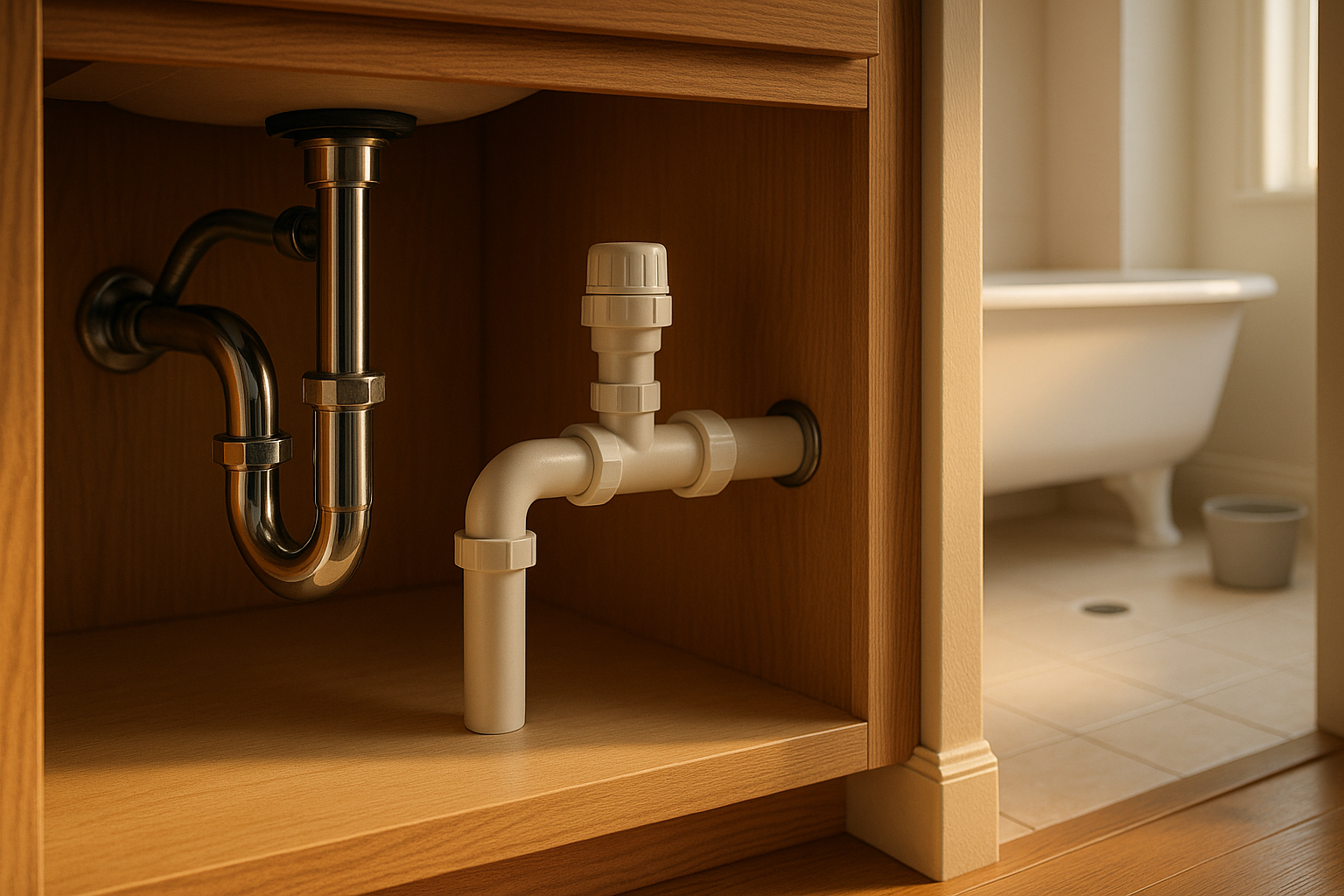
The most common culprit? A dry P‑trap. That U‑shaped bend under every sink, tub, and floor drain holds water to block sewer gases. When a guest bath or basement floor drain goes unused for weeks, the water evaporates and—bingo—sewer gas smell sneaks up. Just run the water for a minute and it’s usually fixed.
If you’re on a septic system outside city limits—places like parts of Noblesville or Greenwood—your tank might be overdue for a pump. When the tank’s full, gases can push back through house drains. We service septic systems too, and regular pumping prevents backups and odors. It’s something we see a lot in the spring after heavy rains soak the drainfield. (Check out our guide on septic tank pumping frequency in Indiana.)
Toilets are another biggie. Give yours a gentle rock—side to side, front to back. If it moves, the wax ring sealing it to the floor flange is probably shot. That broken seal lets sewer gas leak out around the base every time you flush. No amount of bleach will fix that; you need a new ring.
Vent stacks on your roof can get blocked by leaves, bird nests, or ice in the winter. In tree‑lined Indy neighborhoods like Irvington and Fountain Square, fall leaf drop often clogs them up. A blocked vent means the whole drain system can’t breathe, so when you flush or run the washer, the air has to go somewhere—often back into a sink or toilet. You might hear gurgling first.
Old houses around Meridian‑Kessler or Speedway often have cast‑iron drain pipes. After 50 or 60 years, those can rust through or crack open in the wall, letting gas escape. You won’t see the leak, but your nose will know.
And if you’ve got those little air admittance valves (AAVs) under a sink—they look like a plastic cap on a pipe—they can stick open. They’re designed to let air in but not let sewer gas out. When they fail, the gas just comes right through.
Ten‑Minute DIY Checks Before You Panic
- Run water everywhere. Sinks, tubs, showers, and that weird floor drain in the utility closet. Pour a quart of water down basement floor drains—then add a tablespoon of mineral oil on top. It floats and slows evaporation a lot, especially in dry winter months.
- Toilet rock test. If it moves, the wax ring is likely gone.
- Listen for gurgles. When you run the sink, does the toilet bubble? That’s a venting issue.
- Sniff the drains. Get close—sometimes the smell sits right at one fixture.
- Check under sinks. AAVs can be unscrewed and replaced with a new one from the hardware store in five minutes.
- Peek at the ejector pit lid. If you have a sewage ejector pump in the basement, the lid needs to be bolted down and sealed. A loose lid is a straight path for sewer gas smell into your rec room.
Basement floor drains are often tied into your home’s drainage system. If the trap dries out, sewer odors creep up. Many older Indianapolis basements lack trap primers—a little valve that automatically keeps the trap filled. Adding one is a quick fix we do all the time. Good drainage means fewer odors and no standing water issues.
Now, if you’re on well water, you might notice a rotten‑egg smell coming right out of the faucet. That’s hydrogen sulfide in the water itself—different from sewer gas. We drill and service wells all over Hamilton County, and we can test your water to pinpoint the source. Don’t assume it’s the sewer; it could be the well.
When Indy Winters Make Sewer Smells Worse
We see a spike in calls every January. The freeze‑thaw cycle ices over roof vent stacks, so the system can’t vent. Cold, dry air also speeds up evaporation in floor drains. A tiny bit of mineral oil in those traps goes a long way. In neighborhoods with big old trees—think downtown Lebanon or Zionsville—leaves and twigs love to jam up vents in the fall, and then the first freeze locks it all in place.
Water softeners don’t directly cause sewer smells, but if your softener’s drain line is plumbed into a laundry standpipe or floor drain, and that trap dries out, the smell might seem like it’s coming from the softener. We’ve seen this confuse plenty of Fishers homeowners. As a water softening equipment supplier, we can check both your softener and your drains to be sure.
When to Stop Sniffing and Call a Pro
If you’ve refilled all the traps and the sewer gas smell sticks around, it’s time. Same deal if the odor comes from one specific bathroom or you notice sewer flies—those little moth‑like bugs breed in stagnant drain gunk. Also get help if the smell gets worse after rain; that can mean cracks in the sewer line letting in groundwater and pushing gas indoors.
A persistent sewer gas smell in the house isn’t just gross—low levels of hydrogen sulfide can give you headaches or nausea if it goes on too long. (If you ever smell rotten eggs near a gas appliance or your meter, that’s natural gas—leave immediately and call the utility. That’s a different emergency.)
How WaterPros Finds the Source (No Mess, No Guess)
We don’t just start cutting holes. We follow a methodical path: - Visual check of all exposed DWV piping, trap primer connections, and ejector lids. - Fixture‑by‑fixture isolation so we know which drain line has the problem. - Smoke test. We push non‑toxic smoke through your vent stack. Wherever the smoke escapes inside the house is exactly where sewer gas is escaping. The smoke doesn’t stain, doesn’t set off alarms, and doesn’t leave a smell after we vent the house. It’s safe, fast, and we’ve never had a homeowner complain—more like relief that we found the leak. - Camera inspection from a cleanout when needed. We can show you on screen what’s going on. (See our post on when a camera inspection makes sense before buying a home.)
Once we have the full picture, we give you a clear written scope, photos, and pricing options before any repair starts.
Fixes That Stomp the Stink for Good
Most sewer gas smell repairs we do are straightforward: - Reset a toilet with a new wax ring and flange repair (the wax ring is cheap, the labor is fast). - Install or repair a trap primer for that basement floor drain so it never dries out again. - Swap a failed AAV under a sink—two minutes, done. - Clear a blocked vent stack—sometimes it’s as simple as pulling out a squirrel’s nest or an ice cap from the roof. - Reseal a sewage ejector pit with a new gasket and vent it properly. - Patch or replace a cracked section of PVC or cast iron. Older cast iron often requires replacement with PVC for a lasting fix.
We live in the same neighborhoods you do—so we get that you don’t want a sales pitch, you just want the smell gone. WaterPros has seen every variation of this problem from downtown to Plainfield, and we’re pretty sure we can make your house smell right again.
If you’re still holding your nose, give us a shout. Get a quote or schedule an odor diagnostic visit here. We’ll send someone who listens, explains things plainly, and leaves your home cleaner than they found it.
Need a plumber you can call back?
Licensed Indiana plumbers, flat-rate pricing, and a written warranty on every job.