My buddy Dave closed on a cute 1950s ranch in Home Place last fall. Four months later, the downstairs toilet gurgled, the shower wouldn’t drain, and he had raw sewage backing up into the basement. The culprit? Fifty feet of cast iron pipe collapsed under the front lawn. A $12,000 repair that a simple sewer camera inspection would’ve flagged before he ever signed. Dave’s story isn’t rare—especially in Carmel, where older homes and mature trees create a perfect storm for hidden sewer nightmares.
I’ve heard versions of this from real estate agents and homeowners all over the northside. The drains work fine, the inspection looks clean, then a year later you’re tearing up the flowerbeds. A pre-purchase sewer inspection Carmel IN is cheap insurance compared to what can lurk underground.
What a Sewer Camera Inspection Actually Uncovers
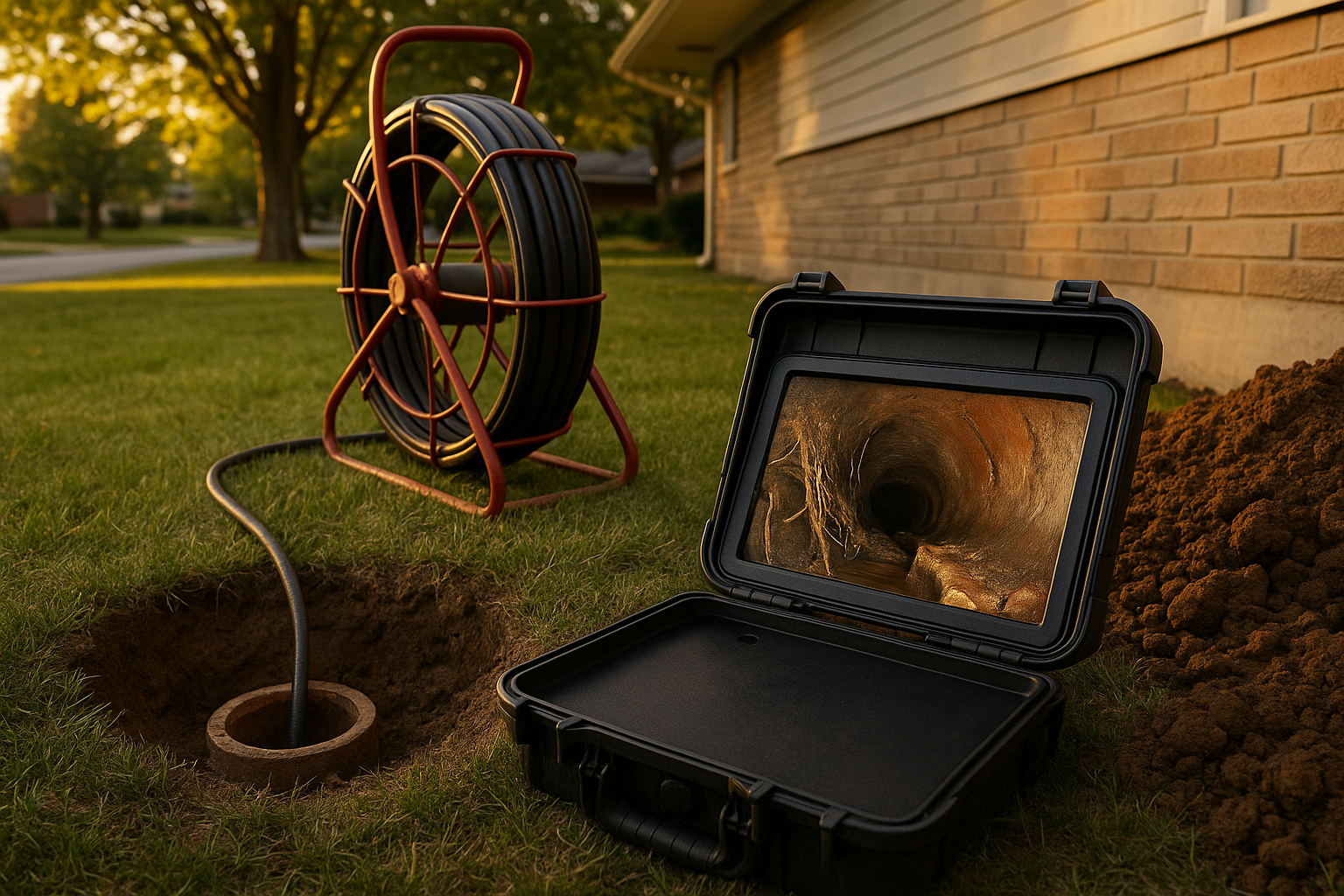
When we run a camera down your sewer lateral, we’re looking at everything from the house to the city main. That’s usually 60 to 100 feet of pipe. A general home inspection won’t touch this—they might run a faucet, but they aren’t peering inside your drain line. With a sewer scope, you see it all.
Common problems we spot in Carmel: root intrusion from those gorgeous old street trees, cracks and bellies from shifting clay soil, grease buildup from decades of kitchen abuse, and collapsed or misaligned joints. I’ve found a intact looking cleanout that hid a completely crushed clay pipe three feet downstream. Slow drains are often the first clue, but lots of problems are silent until they’re catastrophic.
And the pipe material matters. Pre-1980 homes here often have cast iron or clay—cast iron rusts from the inside out, clay cracks and lets roots in. 1980s and ’90s you see a mix, maybe some Orangeburg that’s basically tar paper at this point. 2000 or newer is usually PVC, but we’ve still found construction debris, bad glue joints, or a plumber’s rag left inside. A camera doesn’t care what the pipe’s made of, it just shows the truth.
Why Carmel Homes Are Extra Vulnerable
If you’ve driven around the Arts & Design District or up through Woodland Springs, you’ve seen those big old trees. Beautiful for shade, brutal on sewer lines. Roots sniff out the tiniest crack and wedge their way in. Then add our heavy clay soils—they expand when wet, shrink when dry, and our freeze–thaw cycles make everything underground shift. I’ve scoped lines in Westfield that had three separate offsets from soil movement alone.
Long driveways are another thing. Properties set back 150 feet from the curb mean a long lateral with more joints—every joint is a potential failure point. And if you’re near a creek or the White River corridor, groundwater can saturate the soil and stress older pipes. We’ve done scopes in Fishers where the line ran under a driveway and a hollow spot under the asphalt was the only hint of a belly.
One situation a lot of people don’t think about: older homes that have had a well. On some properties we’ve worked on near Noblesville, an abandoned well casing was right next to the sewer line, and ground settling around it cracked the clay pipe. That’s the kind of weird stuff a camera catches. WaterPros also handles well drilling and well service, so we know how old wells can affect landscaping and underground infrastructure.
How Inspection Findings Can Save Thousands (or Make the Deal)
So the camera found a belly with standing water, or maybe some roots but no break yet. Now what? This is where a sewer camera inspection before buying home Carmel becomes your best bargaining chip. You can ask the seller to fix it before close, negotiate a credit at closing, or just walk in with eyes open and budget for it later.
Agents love having the video and a written report—it takes the guesswork out. We mark the distance and depth of every issue, so everyone knows exactly what’s what. No vague “maybe there’s a problem.” And if the pipes are clean, you’ve got peace of mind. Either way, you’re not the guy with sewage in the basement six months later.
While we’re talking about the whole plumbing picture, I’ll mention this: if the house has a water softener, its discharge line usually ties into the main drain. A failing sewer can back that up and stop the softener from working. We’ve seen it create a mess of brine and sewage. WaterPros supplies and services water softening equipment, so we look at how everything connects. A scope is part of seeing the full system.
If you’re looking at a place with a septic tank—common in Brownsburg, Avon, or Plainfield—we can scope that line from the house to the tank, too. Same idea: see if roots or a broken baffle are about to cause trouble. We do septic system inspections and repairs, so we can tell you if that drainfield looks stressed before you buy. (And yes, that’s tied to our drainage service work—poor surface drainage often points to the same soil issues that mess up sewer lines.)
Trenchless Fixes: Less Yard Torn Up, Less Headache
When we do find a problem, the fix doesn’t always mean a backhoe tearing up your new front yard. Depending on pipe condition, we can often do trenchless repair. Spot repairs can replace a short section with minimal digging. Hydro-jetting can blast out roots and buildup if the pipe is still sound. And for longer stretches, cured-in-place pipe (CIPP) lining is a game-changer—we basically insert an epoxy-saturated liner and cure it in place, giving you a brand-new pipe within the old one. We’ve done CIPP in Carmel neighborhoods where tree roots were relentless and the homeowner didn’t want to lose a 60-year-old maple.
Is CIPP approved in Carmel? Yes, it’s widely accepted, but we always handle permits and 811 utility locating first. Some HOAs have rules about access pits and restoration, so scheduling early matters. And if the pipe is completely collapsed, trenchless won’t work—you’re back to excavation. That’s why you want the camera first.
When to Schedule (and What It Costs)
I get it, you’re short on time before closing. But a sewer scope takes about 60 to 90 minutes, and we work around the seller’s schedule. We don’t damage anything—we go in through a cleanout if there is one, or we pull a toilet if we have to. Water stays on, no mess. Cost-wise, a sewer camera inspection in Carmel typically runs between $300 and $500, depending on access and length. That’s nothing compared to a five-figure dig.
“But the house is only five years old!” We’ve found collapsed PVC from improper backfill in a 2018 build in Zionsville. “The drains work fine.” So did Dave’s, until they didn’t. “The city should cover it.” Nope—from the house to the main is your responsibility. Sometimes the lower lateral under the street is the city’s, but you need to know where the problem lies. We can locate the line and mark the boundary.
If you’re buying anywhere in the Indianapolis area—Carmel, Fishers, Westfield, Noblesville, Greenwood, Brownsburg, Avon, Plainfield—don’t skip this step. Get the sewer scope done before your inspection objection deadline. That way you have time to get quotes and negotiate if needed.
Let’s Get a Camera Down Your Line
At WaterPros, we scope first, show you exactly what’s there, and then talk options. No scare tactics, just straight video and a plan. If you want to schedule a pre-purchase sewer inspection, hit our quote page or give us a call. We’ll get you on the calendar fast—because the last thing you need is a surprise under the flowerbeds.
Need a plumber you can call back?
Licensed Indiana plumbers, flat-rate pricing, and a written warranty on every job.