My neighbor in Broad Ripple, let's call him Dave, learned the hard way. It was one of those July thunderstorms, the kind that barrel in fast and knock the lights out. Dave's sump pump had been chugging along, but when the power cut, it fell silent. Within an hour, his finished basement—the one with the new carpet and sectional—was taking on water. He told me later, "I thought I was covered. I had a pump." But what he didn't have was a battery backup sump pump. Indiana flooding doesn't wait for the electricity to come back.
That story isn't unique. If you live in Indianapolis or any of the surrounding towns—Carmel, Fishers, Zionsville, you name it—you've probably seen those summer storms roll through. Power flickers, the sump stops, and suddenly you're staring at trouble. A battery backup sump pump for Indiana flooding isn't just nice to have. It's the difference between a dry basement and a ruined weekend.
Why a Battery Backup Matters Here
Indiana basements have a tough job. The clay-heavy soil around Indianapolis holds water, so after a hard rain the ground swells and hydrostatic pressure pushes against your foundation. Then a spring storm or a fast snowmelt dumps even more water into your sump pit. Your primary pump works hard, but what happens when the power goes out? That's when a backup sump pump for a power outage earns its keep.
I've heard from homeowners in Greenwood and Avon who said, "My basement has never flooded." But that's before the storm that knocks out electricity for two hours while the rain keeps coming. A battery backup system doesn't get tired and it doesn't care about the grid. It just runs. For anyone with a finished basement, storage, or even just a furnace and water heater down there, that peace of mind matters.
What's Inside a Good Backup System
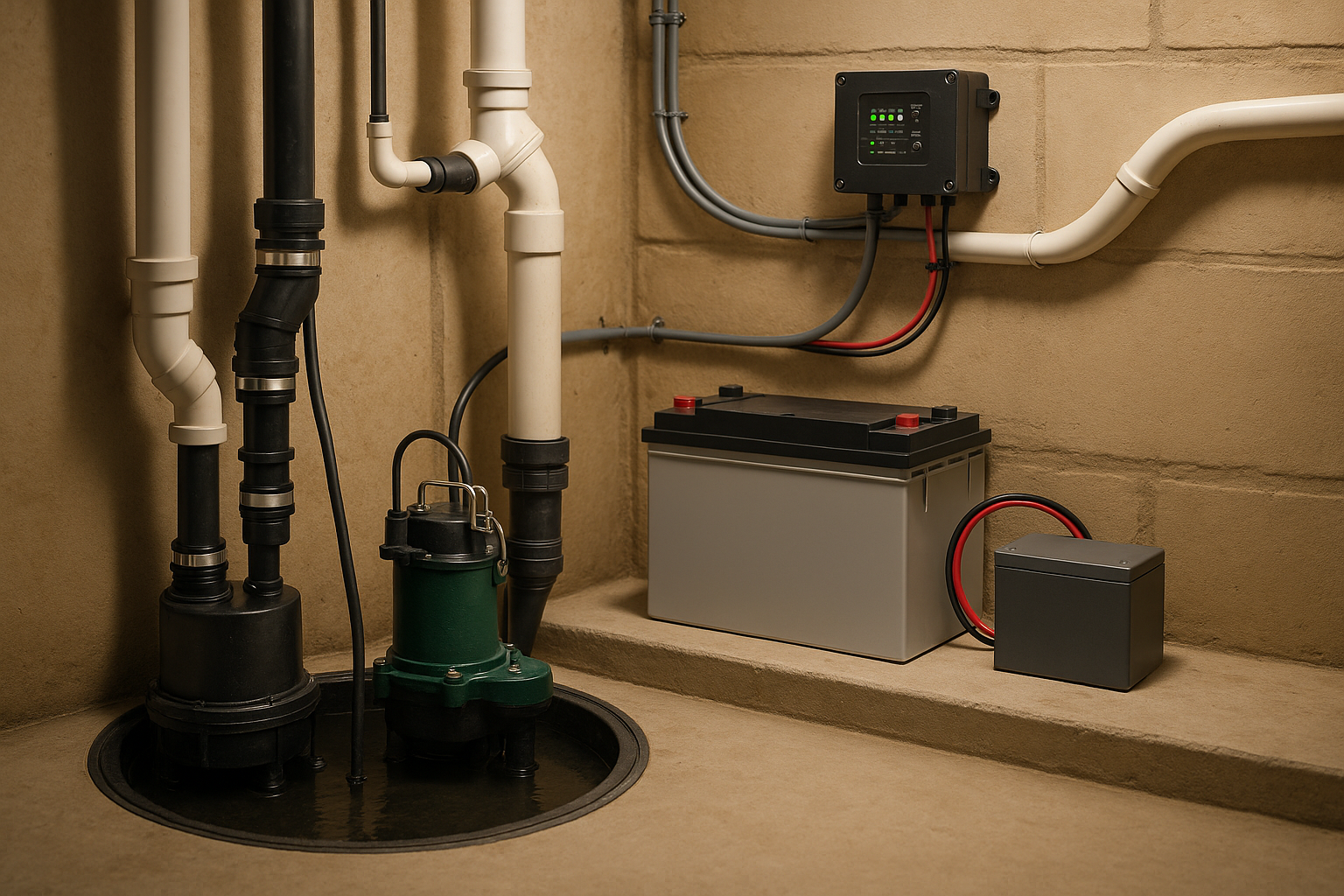
A solid battery backup sump pump setup isn't just a second pump sitting in the corner. It's a matched set: a secondary pump, a sealed battery bank with a smart charger, a controller that runs self-tests and fires off an alarm if something's wrong, and a dedicated discharge line with its own check valve. When the power fails, the controller switches on automatically and the battery takes over.
Sizing the system right is key. You need to match the pump's gallons–per–hour (GPH) to how much water your pit sees during a storm, and the head height—how high the water must be pushed to get out. A pro pump-down test figures that out. We've seen basements in Noblesville and Westfield where a cheap, too-small backup just couldn't keep up. A proper sizing means the pump runs enough, but not so much it kills the battery too soon.
Battery Choices: AGM vs Lithium
You'll mostly pick between AGM (absorbed glass mat) and lithium. AGM batteries are the workhorses—proven, low-maintenance, and they don't mind sitting on a charger. Lithium packs pack more energy into a smaller, lighter box and tend to last longer. But they cost more upfront. For most Indiana basements, an AGM unit gives solid runtime per dollar and doesn't need babysitting. If you want the absolute most runtime during those extended outages, lithium is the upgrade.
Talk to anyone who's been through a 3-hour storm in Plainfield without power—they'll tell you runtime matters. A good AGM might give you 6–8 hours of intermittent pumping. A lithium setup could stretch that to 12 or more. Factor in how often your lights go out and how long the storms last.
Smart Monitoring Keeps You in the Loop
You can't camp out in the basement every time it rains. That's where a smart sump pump alarm with Wi‑Fi comes in. A controller that sends a text or app alert the second water rises too high—or if a pump fails—means you can relax, even when you're stuck at work or out of town. I've had customers in Zionsville who were on vacation in Michigan and got a high-water alert. They called a neighbor, who checked and found a stuck float switch. A quick nudge fixed it, but without that alert they'd have come home to a mess.
Most of these controllers also self-test the battery and pump once a week. That tiny routine makes surprise failures a lot less likely.
Generator vs Battery Backup: Which Saves Your Basement?
A lot of folks say, "I already have a whole-home generator." That's great for keeping the lights on, but here's the catch: generators take a few seconds to start. If your sump pit is rapidly filling, those seconds matter. A battery backup engages the instant power drops—no gap. Plus, generators can fail to start or run out of fuel. A battery backup just works. It's a belt-and-suspenders approach.
There's also the option of a water-powered backup pump. If your home has decent water pressure and you're on city water, it can work. It sips a lot of water, though, and if your pressure drops it loses oomph. For folks on a well, this gets tricky. A well pump needs electricity, so in an outage, a water-powered backup becomes a paperweight. A battery backup doesn't care where your water comes from. As a well drilling contractor, we've helped plenty of homeowners in Brownsburg switch to battery backups after finding out the hard way that their water-powered unit failed during a blackout.
Discharge Smarts and Winter Prep
A sump pump is only as good as its discharge. In Indiana, freeze-thaw cycles can turn a discharge line into an ice plug. That's why we use pitched Schedule 40 PVC, quiet check valves with an air gap, and termination away from the foundation. A good drainage service will make sure the water ends up far from your basement, not pooling near the wall. And here's a key rule: never tie your sump discharge into your septic system. That floods the drainfield and violates code. If you have a septic system, keeping it safe starts with proper sump routing. We see that mistake in older homes around Indianapolis way too often.
If you've ever dealt with a frozen discharge line, you know it's a nightmare. A little slope and maybe a freeze-resistant termination are cheap insurance.
Protect the Gear in Your Basement
Many basements house more than just stored boxes. If you've got a water softener, a whole-house water filter, or other equipment, a backup sump pump shields them from a soaked floor. A whole-house water filtration system in Carmel isn't cheap, and flood water can ruin the media and controls. For anyone with a finished basement, combine a backup sump with an eye on your plumbing—like knowing how to avoid burst pipes in winter—and you've got a home that can handle Indiana's mood swings.
Keeping It Running with Simple Maintenance
Battery backup systems don't ask for much. Twice a year, glance at the charger's status lights, clean any debris from the pit, and pour some water in to make sure the backup pump kicks on. Test the float switch with your hand. Most batteries need replacement every 4–5 years for AGM, longer for lithium. Write the install date on the battery with a Sharpie—that's the kind of low-tech reminder that works.
If you ever inherit a house with an old system, the first thing to check is the battery age. I've walked into homes in Fishers where the battery was 8 years old and the homeowners had no idea. They'd been lucky, but that luck runs out.
What WaterPros Actually Does
When you reach out, we don't throw a brochure at you. We come by, look at your pit, measure your inflow, talk about your budget and what you need the system to do. Then we give you a clear, line-by-line written scope—pump model, battery type, labor, and any pit upgrades if you need space for a dual-pump setup. We use premium pumps and tidy up the wiring so it's labeled and code-compliant. No upsell, no pressure. If you've got a tight pit, we'll tell you if a liner upgrade makes more sense than cramming in a second pump.
If you're tired of holding your breath every time a storm rolls in, we can fix that. Grab a time for a no-pitch assessment and quote—we'll figure out what your basement actually needs, whether that's a basic backup or a full system upgrade with smart alerts. And if you're nearby in Plainfield, Greenwood, or anywhere around the Indy metro, we'll be there quick.
Need a plumber you can call back?
Licensed Indiana plumbers, flat-rate pricing, and a written warranty on every job.