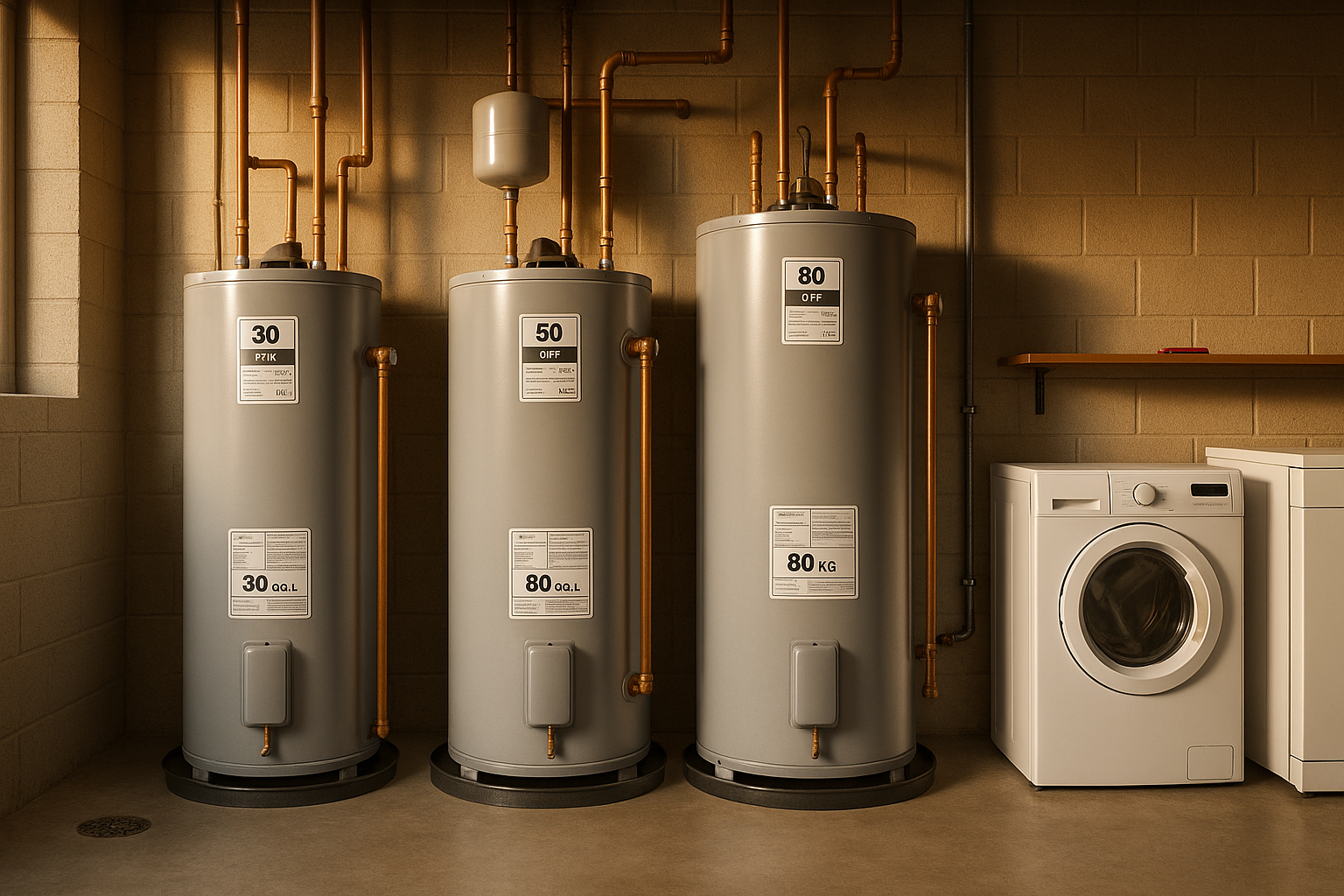
You know that moment when you’re the last one in the shower on a cold winter morning in Carmel, and the water suddenly goes from toasty to freezing? Yeah, that happened to one of our neighbors last February. Their old 50-gallon tank heater just couldn’t keep up after two teenage showers and a load of laundry. They ended up calling us, not just to replace it, but to figure out: should we go tankless or stick with a tank?
If you’re in the Indianapolis area—places like Fishers, Noblesville, or Greenwood—you’re probably asking the same thing. The “tankless vs tank water heater Indiana” debate isn’t just about saving space; it’s about whether one of these systems actually fits your home, your water, and our Midwest winters. So let’s talk real talk, not sales brochures.
How Tankless Handles Indiana Winters
Here’s the deal with tankless: it heats water on the fly. No storage tank, no standby losses. That sounds great, but when the incoming water temp drops to 40–50°F in January—which is common in Indianapolis—a tankless unit has to work a lot harder to raise that water to 120°F. That means its advertised “gallons per minute” rating can drop. A unit rated for 6 GPM might only give you 4 GPM in the dead of winter. And if you’re running two showers and a dishwasher at the same time, you’ll feel it.
So sizing really matters. A lot of homeowners in Carmel or Zionsville who go tankless without proper sizing end up disappointed. You need someone who asks the right questions: how many bathrooms, do you have a soaker tub, how many people in the house at peak times? That’s not stuff you guess at.
Upfront Costs vs Long-Term Savings
Okay, money. Tankless costs more to install—sometimes double or triple a standard tank. That stings. But here’s what a lot of folks in Indianapolis don’t realize: a tankless can last 20 years or more if you maintain it. A typical tank might die after 10-12 years. So you’re paying more now, but you might replace one tank instead of two or three over the same period. Plus, tankless is more efficient. With natural gas from Citizens Energy, a high-efficiency condensing tankless can hit UEF ratings of 0.95 or higher. That means less energy wasted, and lower bills month to month. Tanks keep cycling on and off to keep water hot, even when you’re asleep. That standby loss adds up.
If you’re over in Avon or Plainfield on AES Indiana electric, you might think about an electric tankless. But those often need a ton of power—you might have to upgrade your electrical panel, which can get expensive. Gas is usually the cheaper route in Indiana. But always check what your home’s got before you commit. A quick call or a home assessment (like we do at WaterPros) can clear that up.
The Hard Water Reality in Indianapolis
Let’s talk about the elephant in the mechanical room: hard water. Most of central Indiana is sitting on limestone, so the water’s full of calcium and magnesium. In Indianapolis, typical hardness runs 14–20 grains per gallon. That stuff builds up scale like crazy, especially inside a tankless heat exchanger. If you don’t deal with it, that fancy tankless will lose efficiency fast, and you’ll be flushing it more often just to keep it alive.
That’s why we almost always recommend a water softener when you go tankless around here. Without one, you’re signing up for yearly descaling, and even then, the unit might scale up internally. With a softener, you can extend the life of your tankless and keep it running at its best. WaterPros does water softening too—it’s part of the package. (And hey, if you’re on well water from a local well-drilled system, you probably already know you’ve got hard water plus maybe iron or sulfur. A softener and whole-house filter might be non-negotiable for a tankless to survive. We do well work, so we can look at your whole setup.)
What About Maintenance?
People hear “descaling” and think it’s a huge hassle. It’s not that bad. Once a year, or maybe every 18 months if you’ve got a softener, you just flush a cleaning solution through the unit. Most tankless units come with isolation valves that make it a quick job for a pro. We do it for folks all the time in Brownsburg, Greenwood, you name it. It’s way less messy than draining a giant tank full of sediment.
Speaking of sediment, if you’ve got a septic system—common in some of the more rural parts of Hamilton County or out near Avon—it’s one more reason to flush your system regularly. A tankless doesn’t store water, so it won’t suddenly dump a rusty muck into your drain field the way a corroded tank might. But you still need to be thoughtful: we use descaling solutions that are septic-safe, and we route the flush water appropriately. If you’re worried about your septic, just mention it. We’ll take care.
And that condensate line from a condensing tankless? It has to go somewhere. A floor drain, a sump pit, or outside if it won’t freeze. We make sure the drainage is right. WaterPros does drain work too, so if you need a new drain run for that condensate, we’ve got you. No need to call a second guy.
Recirculation: Getting Hot Water Faster
One complaint we hear: “But I’ll have to wait longer for hot water with tankless!” Not exactly. Whether you have a tank or tankless, the distance from the heater to your upstairs bath in a two-story Fishers home is what creates the wait. That cold water sitting in the pipes has to clear out before hot arrives. With a tank, the water in the pipes still goes cold between uses.
A recirculation system can fix that. You can add a pump and either a dedicated return line (best but rare in older Indy homes) or a crossover valve under a sink. The pump cycles water until it’s hot, so you get near-instant hot water at the tap. Some tankless units even have built-in recirc controls. Just be smart about it—you don’t want the pump running 24/7 eating gas. We usually set them on timers or with push-button activation. If you’re in Westfield with a modern build, maybe you’ve already got a recirc line. If not, we can retrofit.
When a Tank is the Better Choice
Honesty time: tankless isn’t for everyone. If you’re on a tight budget and need hot water tomorrow, a good 50-gallon gas tank might be the way. They’re cheaper, simpler, and if you’re planning to move in a few years, you might not see the payoff. Also, if your home can’t support the venting (like a brick bungalow in Indianapolis with no good path for exhaust), a tank might be easier. And if you’re all-electric and your panel can’t handle an electric tankless, you’re stuck with a tank—unless you want to pay for a panel upgrade.
But if you’re staying put for a while, and you want endless hot water and lower bills, tankless starts looking really good.
Installation: What Your Home Needs
Converting to tankless isn’t just a swap. You need to check: is your gas meter big enough? (Most older ones in Marion County can handle it, but some need upsizing.) Is the gas line sized right? You need a 120V outlet nearby for the controls and fan. For condensing units, you need a place for the condensate to drain—often a neutralizer first because the condensate is acidic. Venting is a big one: stainless steel, often through a rim joist or brick wall, with proper clearances. WaterPros does this all the time in Indianapolis, Carmel, Zionsville—we pull permits, handle inspections, the works. You don’t want some guy cutting corners on venting; that’s a safety issue.
And don’t forget the drip pan. In a second-floor install or if it’s over finished space, you’ll want one.
Why Planning Matters (And How WaterPros Helps)
Here’s my honest opinion: the biggest mistake people make is buying a tankless unit online or from a big box store without planning. Then they call a plumber to “just install it.” But sizing, water quality, gas, venting—all that should be figured out first. WaterPros does it differently. We come out, test your water, measure your demand, check your mechanical room, and map the whole project. Then we give you a flat-rate quote and a plan. No surprises.
If you’re in Indianapolis, Carmel, Greenwood, or anywhere around, and you’re stuck on the tankless vs tank question, let’s talk. We’ll help you sort it out based on your house, not some generic guide. Just hit our quote page or give us a ring. We’ll get you sorted.
Need a plumber you can call back?
Licensed Indiana plumbers, flat-rate pricing, and a written warranty on every job.