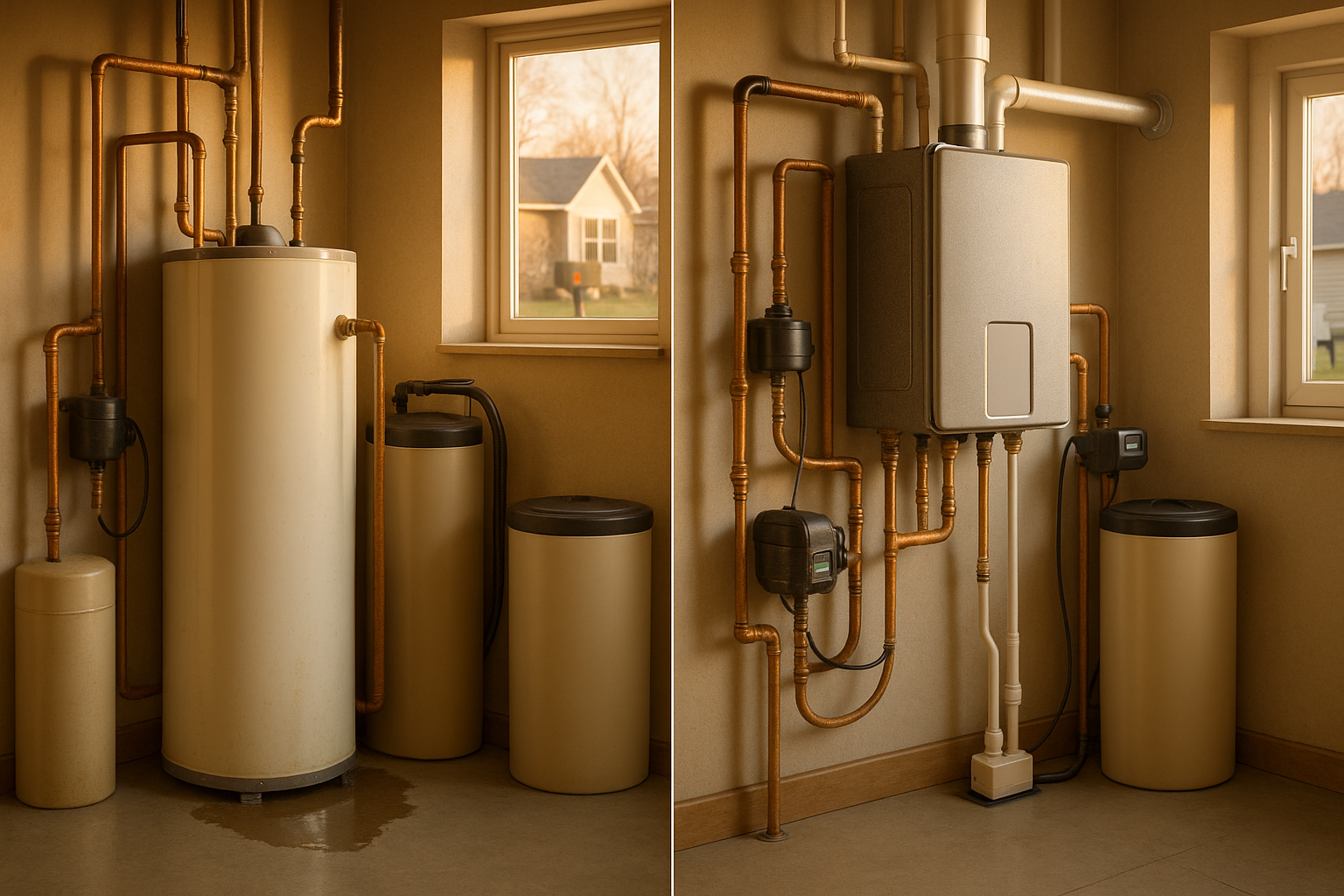
I remember a cold February morning a few years ago. My neighbor Dave texted at 6 AM: "Dude, my water heater just died. I'm standing in a puddle in the basement. Help." He's a smart guy, but he had no idea what to replace it with. He'd heard about tankless water heaters saving space and energy, but he also heard horror stories about cold showers during family rush hour. Sound familiar? If you're an Indianapolis homeowner weighing tankless vs tank water heater options, you're not alone. Let's walk through what actually matters for your house.
How They Work (In Plain English)
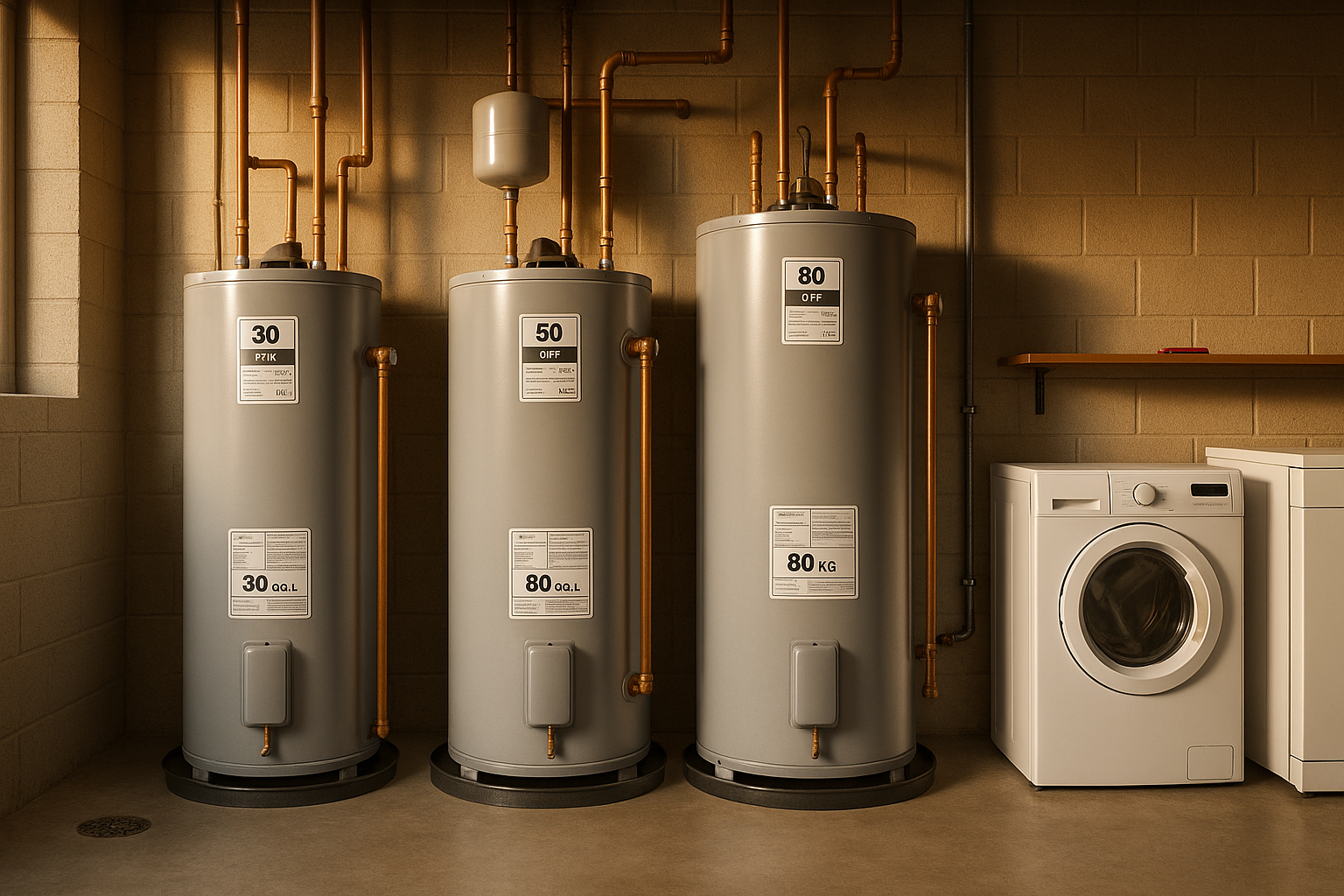
A traditional tank water heater is just a big insulated metal tank—usually 40 or 50 gallons in Indy homes—that keeps water hot all the time. When you open a tap, hot water flows out while cold water refills the tank. It's simple and reliable. A tankless unit, on the other hand, heats water on demand. It uses a powerful gas burner or electric element to raise the temperature as water flows through a heat exchanger. No storage tank means no standby heat loss, but it also means the unit has to be sized to handle your peak demand—especially when winter groundwater is ice-cold.
Cold Indiana Winters Slash Tankless Output
Here's a big local gotcha: Indianapolis winter inlet water temps can drop to around 40°F. Most tankless units are rated at a 77°F rise (say, 50°F in to 120°F out). But in January, your incoming water might be 40°F, so you need an 80°F rise. That can cut the unit's flow rate by about a third. A tankless rated for 8 GPM at a 77°F rise might only deliver 5 GPM in the dead of winter. That's fine for one shower and a faucet, but two showers plus a washing machine? You could run short. With a tank, you've got a reservoir—as long as you don't exceed the first-hour rating, you're golden. So winter performance really matters in places like Fishers or Zionsville where you've got cold wells or city water coming in at ground temp.
Hard Water: The Silent Killer for Both
Indianapolis water is notoriously hard—like 15-20 grains per gallon hard. That scale builds up inside any water heater. For a tank, it settles at the bottom, reducing efficiency and eventually burning out the elements. For a tankless, scale coats the heat exchanger, reducing flow and heat transfer, and can void warranties if not managed. I've heard from a WaterPros tech who descales tankless units every year for clients in Carmel and Avon, and those that skip it start seeing error codes after two years. A water softener is your best defense, and if you're on a well in Greenwood or Noblesville, it's almost mandatory. Check out our guide on water softener costs in Indianapolis to budget ahead.
Upfront Cost vs. Long-Term Savings
Let's talk money. A standard 50-gallon tank runs about $800-$1,500 installed. A tankless unit? $2,500 to $4,500 installed—sometimes more if your gas line needs upsizing or you need new venting. But tankless units last 20+ years vs. 10-12 for tanks, and they use 20-30% less energy. Over the life of the unit, you might save money, but it takes years to break even. If you plan to stay in your Broad Ripple bungalow for five years, maybe stick with a tank. If you're in your forever home in Westfield, tankless might pay off. Also, check for utility rebates—Indiana's not great on this yet, but some things may change.
Gas vs. Electric Tankless: What Works in Indy?
Most Indianapolis homes have natural gas, and a gas tankless gives you higher flow rates than electric. But older homes (like in Irvington or Meridian-Kessler) might have 1/2" gas lines, which are too small for a high-BTU tankless—you'd need an upgrade, which costs more. Electric tankless can work if you have enough electrical capacity (200-amp service preferred), but in cold weather, they require huge amperage—often 100+ amps for a whole-house unit. That load might not be available in older homes without a panel upgrade. You can run two smaller electric units (one for each bathroom) to spread the load, but that's more complex. For most Indy homes, gas tankless is the go-to.
Venting and Space: Real-World Considerations
A non-condensing gas tankless uses stainless steel venting that must go straight up through the roof or horizontal to a sidewall—no shared flues. If your Indiana basement has a chimney, you can't just connect to it. Condensing tankless units are more efficient and use inexpensive PVC venting, but they need a condensate drain (just like a high-efficiency furnace). That means you need a floor drain or a small condensate pump. In a finished basement in Fishers, that's easy. In a crawlspace in Plainfield, it's trickier. On the space front, a tankless frees up floor area—great for a cramped utility room in a small bungalow—but it needs clear access for service. A tank is a simpler swap: pull the old, drop in the new, connect the same pipes.
Simultaneous Showers and Recirculation
If you've got three bathrooms in your Zionsville colonial, you need enough hot water at once. A tank with a 70-gallon first-hour rating can handle that. For tankless, you'd need a unit with at least 6-7 GPM in winter—or you can install two units in parallel. Another fix: a recirculation pump keeps hot water circulating in the pipes, so you don't wait 45 seconds in the shower. But recirc reduces the efficiency of a tankless because the pump keeps firing the burner to maintain loop temperature. Some newer tankless units have a built-in recirc, but that's an added cost. For tank heaters, recirc is also possible but can accelerate tank wear.
Water Quality and Septic Systems
A less obvious link: hard water doesn't just damage your heater—it also affects your pipes and fixtures. Many Indianapolis suburbs have municipal water, but if you're in Noblesville or rural parts of Avon, you might have a well. Well water can be hard, contain iron, or even have sulfur. A water filtration system is your friend. And if you have a septic system, think about water heater efficiency—less energy use means less heat dumped into the ground, but that's minor. What matters more: a tankless can produce more gallons per day if you run long showers, which affects septic tank load. Not a big deal, but something to consider.
Maintenance Matters
Tank heaters need an anode rod check every 3-5 years to prevent rust. In hard water, replace it sooner. Tankless units need descaling every year to 18 months, depending on water hardness and usage. It's a $150-$300 service call if you don't DIY. Skip it, and you'll be replacing the heat exchanger sooner. WaterPros offers descaling services—it's worth it. And if you're on a well, your tankless needs more frequent maintenance because of sediment.
Decision Time: What Should You Do?
Here's a simple way to think about it. Go tankless if: you want to save floor space, you plan to stay put for 10+ years, you have the budget for the upfront cost, and you're okay with annual maintenance. Go with a tank if: you want the lowest upfront cost, you have a tight timeline (tank replacements can be done in a day), you have older gas lines, or you don't want to think about descaling. For most Indianapolis homes, a high-efficiency tank heater is a safe, affordable choice. But if you have a large family or lots of simultaneous demands, a properly sized tankless (maybe with recirc) can be a game-changer.
The best way to know for sure? Let WaterPros come out and look at your actual setup. We'll measure your gas line, check your venting, test your water quality, and size a system that works with your lifestyle and your home. No pressure, just a clear quote. Schedule a consult online or give us a call. We've helped homes in Indianapolis, Carmel, Fishers, Zionsville, and all over the Indy metro get reliable hot water without the headache.
All I'm saying is: don't be Dave, standing in a cold puddle at dawn. Think ahead, get the right system, and enjoy your hot showers.
Need a plumber you can call back?
Licensed Indiana plumbers, flat-rate pricing, and a written warranty on every job.