A few months back, I got a call from a homeowner in Meridian-Kessler. She said her toilet gurgled every time she ran the washing machine. Then the basement floor drain started backing up. She’d had it snaked twice already, but the problem kept coming back. She was frustrated, and honestly, a little embarrassed—she thought she was doing something wrong. But her issue wasn’t a simple clog. It was a failing sewer lateral that needed replacement.
If you’re dealing with similar symptoms, you might be wondering: is this just a stubborn clog, or is it time for a full replacement? Here are seven signs you need sewer line replacement before it turns into a messy backup.
1. Multiple Fixtures Draining Slowly at Once
When one sink drains slowly, it’s probably a local clog. But when your toilet, shower, and kitchen sink all gurgle or drain slowly at the same time, that points to a main sewer line issue. The blockage or damage is somewhere between your house and the city main, affecting everything at once.
2. Toilet Water Rises and Falls After Nearby Fixtures Drain
This one’s weird but common. You flush, the water level goes up, then down. Or after you run the bathroom sink, the toilet bowl level changes. That means air pressure is shifting in the line—usually from a partial blockage or a break. It’s a classic early sign you need sewer line replacement.
3. Gurgling Toilets and Drains
Gurgling sounds mean air is trapped in the pipes, trying to escape. It happens when there’s a clog or damage that disrupts normal flow. If you hear that after every flush or drain use, don’t ignore it. I once worked with a family in Fishers who had gurgling for weeks before a full backup flooded their basement.
4. Sewer Odors Inside or Outside Your Home
A sewer smell in your house or yard is never normal. It means sewage gases are escaping from a crack, joint separation, or broken pipe. In older Indianapolis neighborhoods like Irvington or Fountain Square, clay or Orangeburg pipes can crack from shifting soil or freeze-thaw cycles. That odor is your warning: get it scoped.
5. Soggy, Spongy Patches or Unusually Green Grass in Your Yard
If you have a consistently wet area along the path of your sewer line—even in dry weather—that could be sewage leaking into the soil. The grass might be greener there, too, from the extra nutrients. That’s not a good thing. I’ve seen this in homes near Broad Ripple where mature tree roots cracked the clay pipe, causing a slow leak. Eventually, that soggy patch turned into a small sinkhole.
6. Tree Roots in Your Sewer Line (and They Keep Coming Back)
Tree roots love moisture and nutrients. They’ll sneak into tiny cracks at pipe joints and grow over time. If you’ve had roots cleared by a plumber but they return within a year or two, the pipe is likely damaged beyond what snaking can fix. In neighborhoods like Carmel and Zionsville, silver maples and willows are notorious for invading laterals. Root intrusion is one of the most common reasons we recommend full replacement over just cleaning.
7. Repeated Backups Despite Professional Cleaning
This is the big one. If you’ve had a plumber come out multiple times to clear a backup, and it keeps happening, the underlying pipe is probably broken or collapsed. Each cleaning might buy you a few months, but it’s not a fix. Eventually, you’ll face a full backup during a holiday dinner or heavy rain—ask me how I know.
Sewer Line Repair vs. Replacement
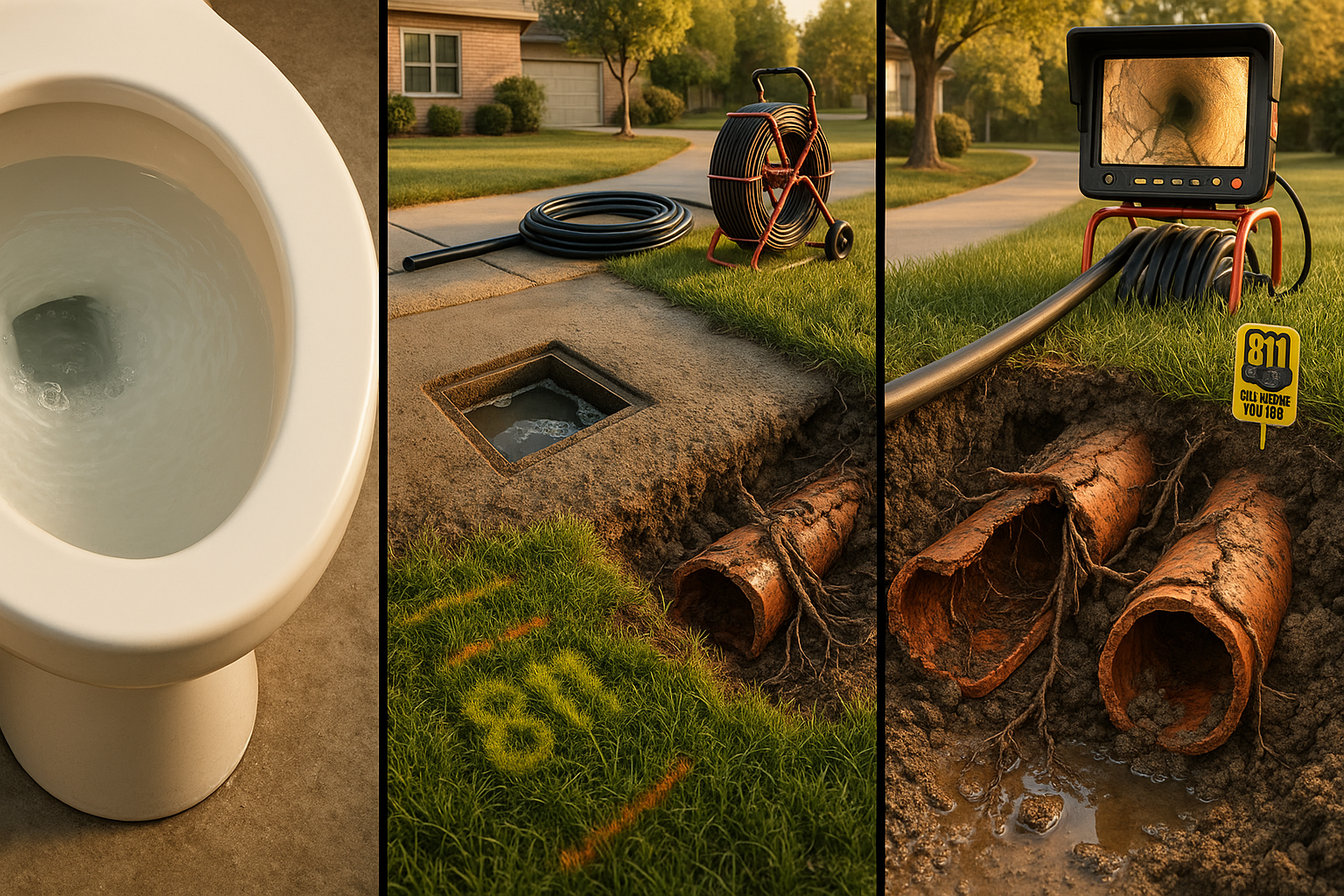
So how do you know if repair or replacement is right? A sewer camera inspection is the only way to tell. The plumber sends a camera down the line to see cracks, offsets (where two sections of pipe no longer align), root masses, bellies (dips where waste collects), and collapsed sections. If there’s just one small crack, spot repair or trenchless lining might work. But if you have multiple issues—common in old clay or cast iron pipes—replacement is more reliable in the long run.
What About Orangeburg and Clay Pipes?
Homes built before the 1970s in Indianapolis often have Orangeburg (a pressed wood and tar pipe) or clay sewer lines. Orangeburg degrades over time, becoming soft and collapsing under pressure. Clay pipes are brittle and crack easily from tree roots or soil movement. Both materials have a limited lifespan—typically 40 to 60 years. If you have one of these, and you’re seeing any of the signs above, full replacement is usually the best path.
Trenchless Options: Pipe Bursting vs. Lining
Trenchless sewer replacement (like pipe bursting or cured-in-place lining) can save your yard and driveway from major excavation. Pipe bursting breaks apart the old pipe while pulling a new one in. Lining slips a resin-soaked tube into the existing pipe and cures it in place, creating a pipe within a pipe. Both methods work great for many homes, but they aren’t always possible—if the pipe has collapsed severely or has major offsets, you may need open-cut replacement. A good plumber will explain both options and what works for your property.
For example, a homeowner in Greenwood with a collapsed clay lateral needed open-cut because the line had too much debris and shift. But I’ve done trenchless pipe bursting in Westfield that took just one day with minimal lawn disruption.
Local Considerations for Indianapolis Homeowners
If you live in Indianapolis or any of the surrounding metro areas—Carmel, Fishers, Zionsville, Westfield, Noblesville, Greenwood, Brownsburg, Avon, Plainfield—here are some local factors to keep in mind.
Clay Soils and Frost: Central Indiana’s heavy clay soils expand and contract with moisture, and freeze-thaw cycles can shift your sewer pipe over time. This often creates bellies or separations in older laterals. Homes in established neighborhoods with big trees are especially prone.
Combined Sewer Areas: Some older parts of Indianapolis have combined sewers—meaning stormwater and sewage travel in the same pipe. During heavy rains, the system can surcharge, causing backups. If you live in a combined sewer area, a backup might not mean the lateral is failed, but it can reveal preexisting weakness.
Permits and Inspections: For sewer replacement in Indianapolis, you usually need a permit from the city or utility (Citizens Energy Group for many areas). You also need to call 811 for utility locates before digging. A professional contractor should handle all that for you.
Insurance: Most homeowners insurance policies don’t cover sewer line replacement from age, roots, or normal wear. You might have a separate sewer line endorsement, but it’s rare. The best protection is getting the work done right the first time with a warranty.
What to Do If You Notice These Signs
If you’re nodding along to any of these symptoms, the next step is straightforward: get a sewer camera inspection. That’s the only way to know what’s happening underground. A good plumber will show you the video, explain what they see, and give you options—repair, lining, or replacement—with a clear cost breakdown.
At WaterPros, we serve Indianapolis and all the surrounding areas. We do same-week camera inspections and give you a written proposal so you can decide without pressure. Whether you need a simple cleanout or full trenchless replacement, we’ll walk you through it.
Get a free quote for your sewer line project here.
Don’t wait until the backup floods your basement. Those signs you need sewer line replacement are your home’s way of asking for help. Listen to them.
Need a plumber you can call back?
Licensed Indiana plumbers, flat-rate pricing, and a written warranty on every job.