Last spring, my neighbor Jake stood in his backyard staring at a patch of grass that looked like a golf green after a rainstorm—lush, dark, and squishy underfoot. He shrugged it off. “Just the wet spring,” he said. Two weeks later, his basement toilet gurgled like a coffeemaker and the backyard smelled like a campground outhouse. That’s when he finally called a pro. Jake’s drainfield was failing, and ignoring the early clues nearly cost him a whole system replacement.
If you live in Plainfield or anywhere around Hendricks County, you already know our soil doesn’t mess around. Clay-rich glacial till holds water like a sponge, and when spring storms or a fast snowmelt roll through, even a healthy drainfield can struggle. But when you combine that with an aging system (think 20+ years old, like many homes from the 90s and early 2000s), you’ve got a recipe for trouble. The trick is knowing when those wet spots and slow drains are just a blip, and when they’re screaming for a septic repair.
The Telltale Signs of a Failing Drainfield
A struggling drainfield doesn’t exactly send you a text message. But it does leave clues—you just have to pay attention. Here’s what most Plainfield homeowners notice first:
Wet, Spongy Ground Over the Laterals
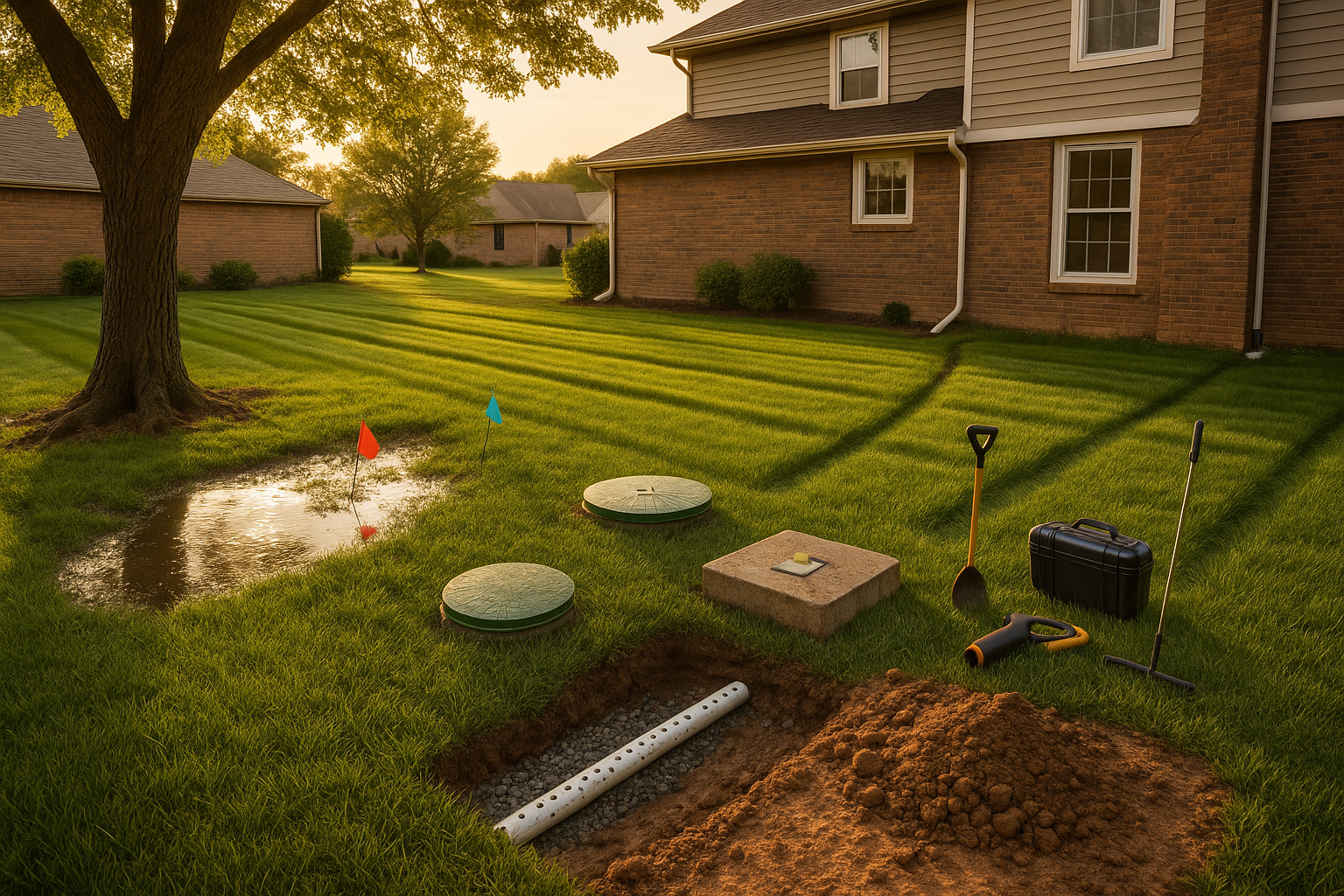
If part of your yard stays damp when the rest is dry, your drainfield might be saturated. Sometimes the grass gets unrealistically green in stripes, right over the trench lines. That’s basically undigested sewage fertilizing your lawn. (Gross, but true.) After a heavy rain, you might even see gray water pooling. Don’t write this off as a weather thing—especially if it smells.
Sewage Odors in Your Yard or Near the Tank
A whiff now and then near the tank riser is normal. But if you catch that rotten-egg smell wafting across the yard or into your windows, that’s effluent surfacing or gases escaping. It’s a health hazard, and in Plainfield, where many of us are on wells, you really don’t want that stuff seeping toward your water supply. (More on well safety in a bit.)
Gurgling Drains and Slow-Moving Fixtures
A single sluggish sink? Probably just a hair clog. But when every drain in the house backs up at once—shower, kitchen, laundry—that’s a septic issue. You might hear a glug-glug from the toilet after the washer cycles, or notice the bathtub draining like molasses. If these things get worse after rain, you’re not dealing with a simple clog; the drainfield can’t accept more water.
Backup After Heavy Storms
This one’s classic. The sky opens up, and the next thing you know, the basement floor drain spits back at you. Those clay soils we mentioned? They percolate awfully slow, so when the water table rises, your leach field has nowhere to go. The effluent pushes back into the house. It’s messy and urgent.
Why Drainfields Fail Around Plainfield
It’s rarely one thing. Usually, a few factors gang up on you.
Our local soil is the biggie. Glacial till—a fancy term for sticky, compact clay—doesn’t let water sneak through easily. Over time, biomat (a slimy layer of bacteria) builds up in the trenches, and if the soil can’t percolate, you get a backed-up system. Add a settled distribution box (those frosty winters shift the ground, tipping the box so one trench gets flooded while others sit dry) and you’ve got uneven load. Root intrusion from a thirsty silver maple, parking a truck on the field during a graduation party, downspouts routed straight onto the laterals—all common here.
I once met a couple in Avon whose front yard looked like a putting green—except one stripe was neon. Turned out their D-box had tilted, sending all the effluent to a single lateral. We leveled the box and gave the overloaded trench a rest. No digging up the whole yard, just a targeted fix. Not every problem requires a demolition crew.
What About Water Softeners and Drainage? (Yes, They’re Connected)
If you have a water softener—like many folks in the area, especially up in Westfield and Carmel where hard water is a rule—the regeneration discharge goes into your septic. That extra water volume, plus the salt, can stress the drainfield and affect soil structure. If your system’s already borderline, a softener cycling every other day can be the straw that breaks the camel’s back. It’s worth asking your plumber if rerouting that discharge is an option.
And speaking of drainage, those downspouts I mentioned? They’re a huge deal. In neighborhoods like Brownsburg where lots can be tight, a single downspout dumping a roof’s worth of rain right over the drainfield will drown it. A good drainage service can extend leaders, install a dry creek, or grade the yard so stormwater heads toward a swale instead of your leach lines. It’s often the cheapest and fastest way to give a struggling field breathing room.
When to Worry About Your Well Water
A bunch of acreage properties around Zionsville and Noblesville have both a septic system and a private well. If your drainfield starts leaking unfiltered effluent into the ground, there’s a real risk of contaminating your water with bacteria or nitrates. Even if you don’t smell it, that contamination can happen. I always tell people: if your septic’s acting up, test your well water. A simple bacteria and nitrate test gives you peace of mind or a heads-up that your drinking water might not be safe. (We talked about that in more detail in our guide to well water testing.)
First Things to Do When You Suspect a Problem
Don’t panic, but do act. Here’s the playbook I give friends when they call at 9 p.m. in a cold sweat:
- Cut water use. Space out laundry loads, take shorter showers, fix that dripping faucet. Every gallon you send down the drain buys time.
- Stop using the garbage disposal. Food scraps add solids to the tank and put more strain on the field.
- Keep vehicles and foot traffic off the drainfield. Compacted soil is the enemy of percolation.
- Note where you see wet spots or smell odors. Take a photo or mark it with a flag. The technician will love you for this.
Don’t just pump the tank and hope. If the drainfield is shot, pumping buys you a few days at best—then the tank fills again and the symptoms come right back. I’ve seen too many homeowners throw good money at unnecessary pumping because they wanted a quick fix.
What a Professional Diagnostic Looks Like
When WaterPros rolls up, we don’t just scratch our chins and guess. We go through a systematic check: tank level and baffle condition, distribution box inspection (often leveling it right there), a camera/locator on the laterals to spot root intrusion or crushed pipe, probing the soil for saturation, and checking that downslope drainage isn’t your real problem. Our septic inspection process digs into all of that.
The goal is to find the cheapest, least invasive fix that’s legal. Sometimes it’s just leveling the box and redirecting a sump pump. Other times we need to replace a section of collapsed lateral or add a trench where the soil’s still viable. In clay-heavy spots like Greenwood, we might even discuss a treatment called hydro-jetting to clear buildup—though that only works if the pipes aren’t crushed and the soil is still accepting water. (My rule: diagnose first, jet later.)
Repair Costs and Permit Realities
Nobody likes this question, but yes, drainfield repairs cost real money. A minor fix like a D-box level or a single new lateral might run a couple thousand bucks. A full drainfield replacement in Plainfield can easily climb past $10,000 once permits, excavation, and new gravel are factored in. Hendricks County requires a permit for most repairs, and they’ll want a design sealed by a soil scientist. That takes some lead time—so don’t wait until the basement floods. We help homeowners navigate the paperwork because, honestly, it’s a headache if you’re not used to it.
Keeping Your Drainfield Healthy Long Term
Prevention isn’t sexy, but it’s a whole lot cheaper than a new field. Pump your tank on schedule (every 3–5 years for most families), fix leaky toilets immediately, and spread out your laundry. Plant trees far away, keep cars off the grass, and make sure your gutters don’t dump water onto the field. If you’re on well water, staying mindful of your softener’s discharge goes a long way, too.
And one more thing: if you’re buying an older home in Plainfield, get a septic inspection before closing. Don’t just rely on the home inspector—they often miss drainfield issues because the ground’s dry that day. A separate, thorough check can save you from a giant headache.
Ready to Figure Out What’s Really Going On?
If your lawn’s acting weird or your drains are protesting, don’t wait for the next rainstorm to make it obvious. WaterPros serves the whole metro area—Plainfield, Fishers, Carmel, Noblesville, you name it. We’ll come out, do a fair and honest diagnostic, and give you a clear plan with numbers. No hype, no unnecessary excavation. Give us a shout or hit the quote button right here to schedule a look. Better to catch it now than when you’re ankle-deep in a soggy backyard.
Need a plumber you can call back?
Licensed Indiana plumbers, flat-rate pricing, and a written warranty on every job.